


Vintage Silver Decanter Stand
A vintage silver decanter stand holds bottles securely on the dining table, combining precious metals with crystal for formal hospitality.
Vintage Silver Decanter Stand
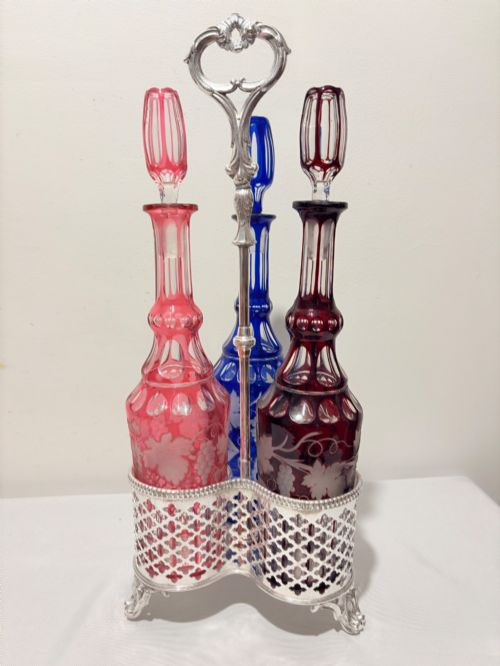
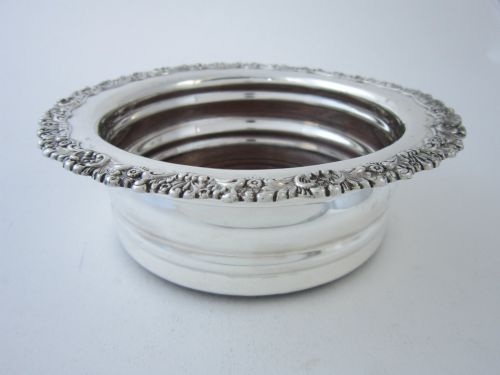
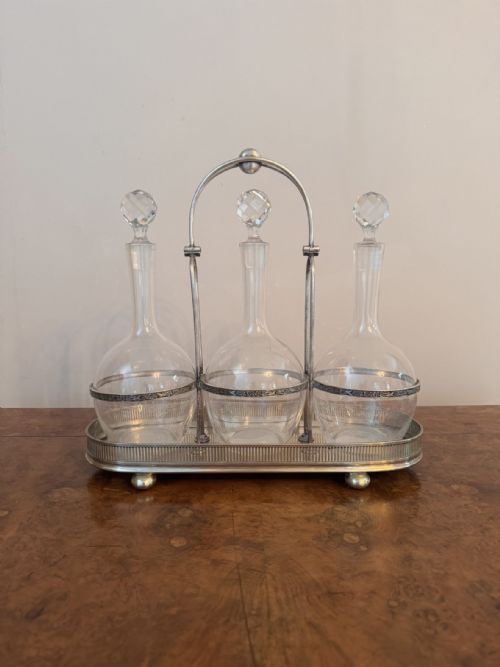
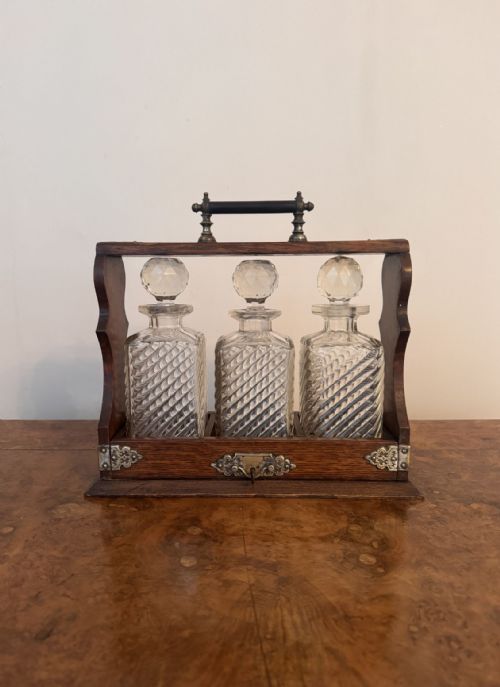
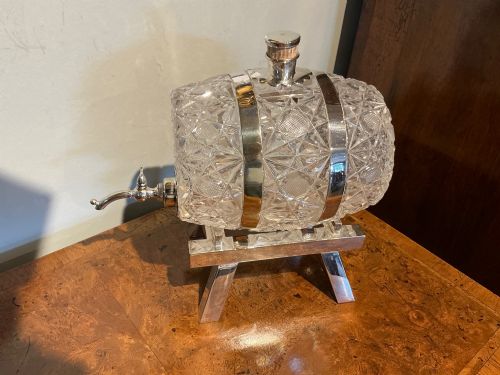
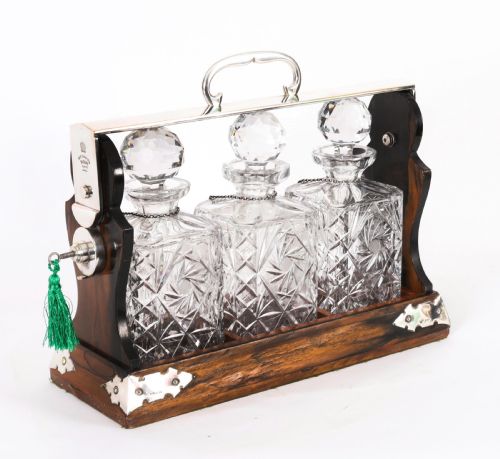
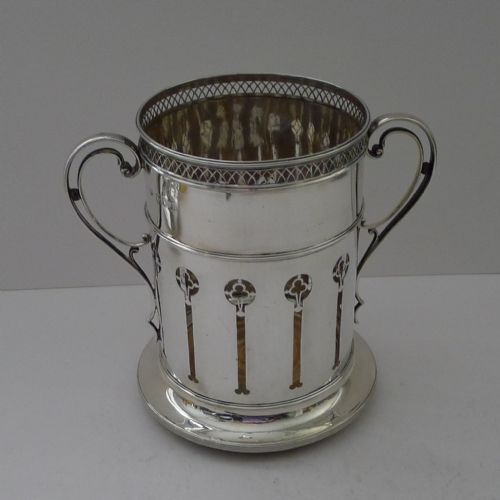
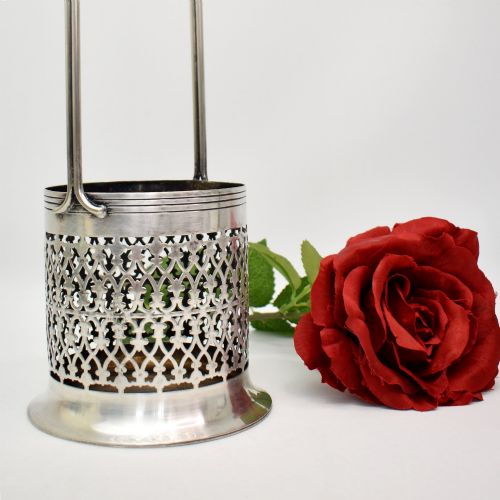
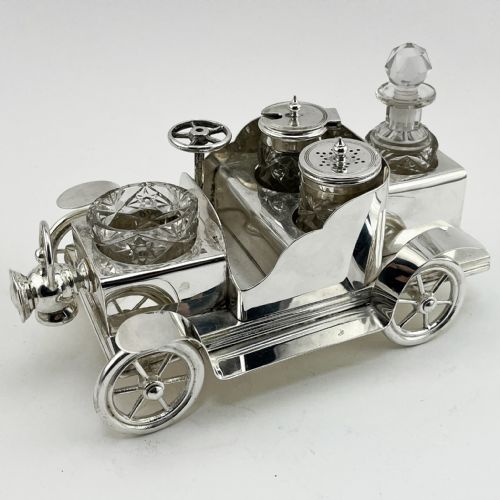
A vintage silver decanter stand encompasses a range of dining and bar accessories designed to present and secure bottles, including wine coasters, multi-bottle cruet sets, and locking tantalus frames. These pieces originate from various eras spanning the Georgian, Victorian, and Edwardian periods, extending into the twentieth century with silver plate and sterling silver constructions.
The most frequent examples encountered on this page combine silver plated or solid sterling silver mounts with heavy cut glass, crystal, or turned wood bases. Forms vary from single bottle coasters and pairs of wine wagons to elaborate three-bottle tantalus units fitted with key locks and decorative handles.
Materials and construction
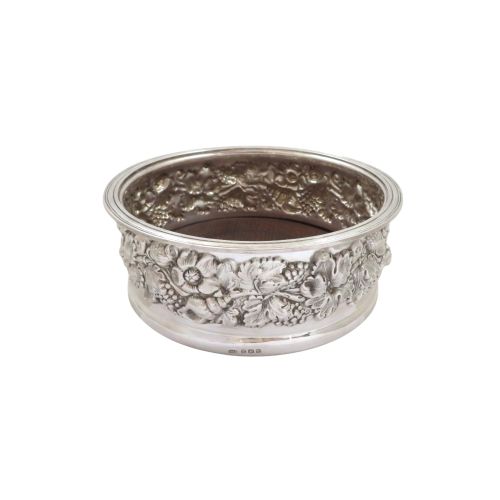
Makers utilised heavy gauge silver plate, Old Sheffield Plate, and solid sterling silver for the structural frames, rims, and handle assemblies. These metal elements were often pierced, chased, or cast with botanical motifs such as grapes and vines.
Vessels and bases incorporate cut crystal, moulded glass, and dense timber foundations including oak, mahogany, and coromandel. Wooden elements feature turned circular profiles with inset metal buttons or central coasters designed to receive bottle bases.
Engineers once locked up the gin so the butler would not sample the household spirits.
Assessing quality and manufacture
Quality rests in the heaviness of the silver deposition over base metals, the crispness of cast decorative borders, and the depth of hand-cut facets on glass decanters. Superior examples display substantial weight in the metal mounts and precise joinery where wood and silver meet.
The integrity of locking mechanisms on tantalus frames and the matching of original crystal stoppers to their respective decanters separate standard production items from distinguished workshop outputs.
Betjemann·Brook and Son·Elkington·Asprey·Matthew Boulton·Hukin and Heath
The Vintage Silver Decanter Stand Glossary
- Tantalus
- A locking drink stand that holds decanters securely within a metal framework to prevent unauthorized access. The wooden or metal bar locks the stoppers in place until a key is turned.
- Wine coaster
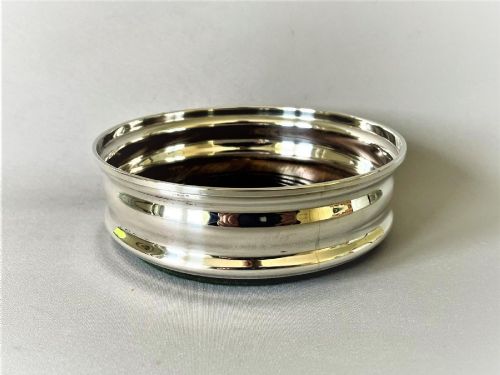
- A small, wheeled or stationary tray designed to hold a wine bottle and protect table surfaces from drips. These items frequently feature turned wood bases lined with baize or felt.
- Cruet set
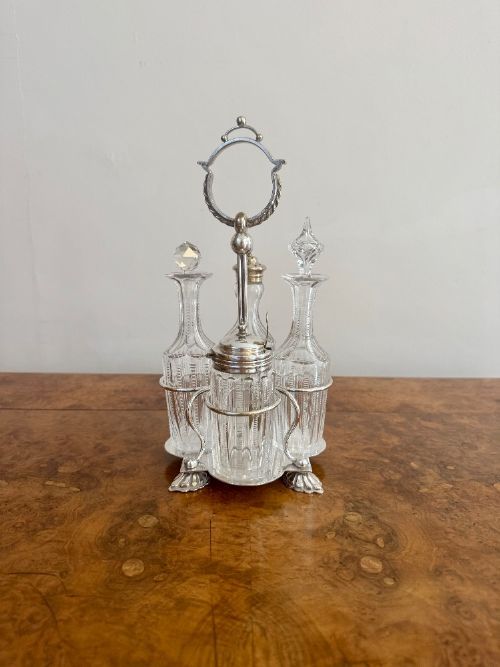
- A multi-bottle frame holding condiments, oil, vinegar, or sauces for dining table use. Frames incorporate multiple cut glass bottles fitted with silver mounts.
- Old Sheffield plate
- An early form of composite metal produced by fusing a thin sheet of silver to a thicker copper base before rolling. This technique leaves the underlying copper visible at cut edges or wear points.
- Silver plate
- A manufacturing method where a thin layer of silver coats a base metal such as brass, white metal, or copper. Items carrying these surfaces date across the Victorian and Edwardian periods.
Vintage Silver Decanter Stand: Frequently Asked Questions
What is a decanter tantalus?
A decanter tantalus is a locking barware stand designed to secure spirit decanters inside a wooden or metal frame. The locking mechanism prevents removal of the bottles without a key.
These pieces typically house two or three cut crystal decanters and appeared frequently in late Victorian and Edwardian dining rooms or studies.
How do I date a silver bottle coaster?
Dating relies upon hallmarks on sterling silver pieces, stylistic cues such as Art Nouveau curves or Regency borders, and construction methods like Old Sheffield plate. Maker marks also help establish the decade of manufacture.
Unmarked silver plated items are generally dated by their overall design characteristics and accompanying hardware styles typical of the nineteenth or twentieth century.
Were wine coasters used on wheels?
Wine coasters often featured small inset wheels or rollers to allow diners to pass bottles smoothly across the mahogany dining table. This prevented lifting heavy glass vessels.
Stationary coasters were equally common, possessing flat wooden or metal bases lined with fabric to protect polished furniture surfaces.
What is the difference between a cruet set and a decanter stand?
A cruet set holds smaller bottles and jars intended for condiments, oils, and sauces during a meal. The frames accommodate multiple small cruet jars.
A decanter stand or tantalus specifically supports large drinking bottles and spirits decanters designed for post-dinner hospitality.