



Vintage Silver Brush
These vintage silver brush selections bring functional elegance to dressing tables, crafted across periods from the Victorian era to the mid-twentieth century.
Vintage Silver Brush
When you search for a vintage silver brush, you are examining vanity and dressing table accessories primarily from the Edwardian, Art Deco, and mid-century periods. The examples found here span decades of personal grooming habits, reflecting both daily utility and decorative vanity set coordination.
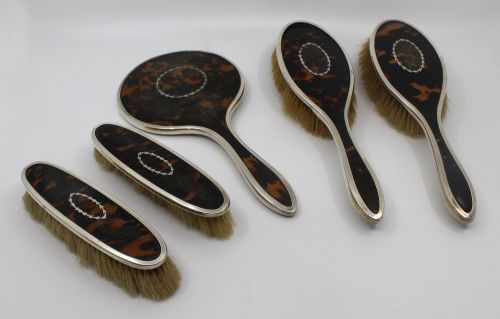
You are most likely to meet pieces originating from the 1920s and 1930s, often bearing Birmingham or London hallmarks. These frequently incorporate complementary materials such as natural bristle and faux tortoiseshell to enhance their visual appeal on a dressing table.
How they were made
Silversmiths shaped sterling silver and plated metal shells to house dense natural bristle heads, securing the fibres firmly into the backing. Many handles and backs integrated decorative elements like guilloche enamel or faux tortoiseshell panels.
Makers utilised stamping, casting, and hand-engraving techniques to apply Art Deco geometric patterns, Art Nouveau organic curves, or Edwardian motifs directly onto the silver surface.
Vintage Silver Brush Retail Price Guide 2026
Typical asking prices for vintage silver brush among the pieces listed under this phrase on Sellingantiques today, from the lower quarter to the upper quarter. They describe what is for sale here now, not the wider market.
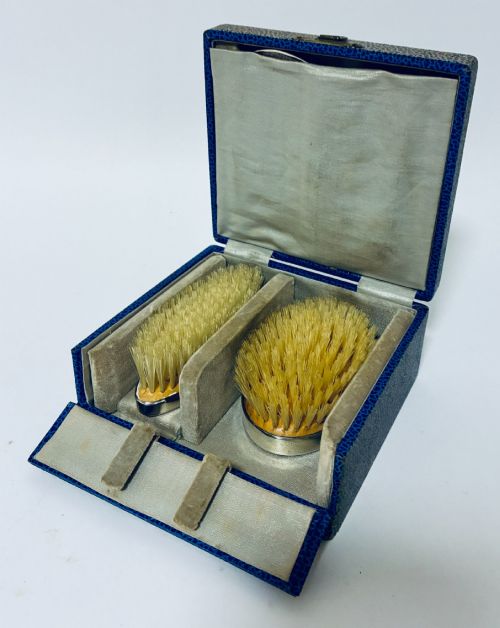
Listings feature sterling silver and metal pieces paired with natural bristle, silk, velvet, glass, and faux tortoiseshell.
What varies in quality
The weight and gauge of the sterling silver foundation separate standard production items from superior workshop output. Thicker metal resists denting during daily use and maintains crisp hallmarks.
The preservation of the natural bristle and any applied decorative panels such as enamel or faux tortoiseshell determines the overall integrity of the piece.
Asprey & Co.·Orivit·Lutz & Weiss
The Vintage Silver Brush Glossary
- Sterling silver
- A silver alloy containing 92.5 percent pure silver and 7.5 percent other metals, usually copper, ensuring structural durability for daily handling.
- Natural bristle
- Animal hair traditionally utilised for brush heads due to its stiffness and ability to distribute oils through hair or fabric.
- Guilloche enamel
- Decorative technique where a precise geometric pattern is mechanically engraved beneath a translucent layer of coloured enamel.
- Faux tortoiseshell
- Simulated shell material, often made from celluloid or plastic, used historically to imitate genuine hawksbill shell on dressing accessories.
- Hallmark
- Official stamp applied to precious metals indicating the assay office, metal purity, and date letter.
Vintage Silver Brush: Frequently Asked Questions
What is a vintage silver brush used for?
These items were historically utilised for grooming hair, smoothing clothing, or maintaining personal appearance at a dressing table. They served both a practical daily function and an aesthetic role as part of a matching vanity set.
Today, collectors use them to complete period dressing table displays or for gentle, everyday grooming tasks where natural bristles are preferred.
How do I date a silver brush?
Dating relies primarily on the hallmarks stamped into the silver frame, which indicate the assay office and the specific year letter designated by the authorities. Stylistic clues such as geometric Art Deco lines or flowing Art Nouveau curves also point toward specific decades.
Examining secondary materials like faux tortoiseshell or guilloche enamel helps narrow down the era of manufacture within the broader Victorian and mid-century periods.
How should I clean a silver brush?
Cleaning requires a soft microfibre cloth and a specialist silver polish, applied carefully to avoid damaging any bristle bed or decorative insert. Gentle circular motions remove tarnish without abrading the stamped hallmarks.
Water should be kept away from the bristle base to prevent loosening the adhesive holding the natural fibres inside the handle.
Are these brushes made of solid silver?
Many items feature solid sterling silver backs, whilst others utilise silver plating over a base metal foundation. Hallmarks stamped directly onto the metal confirm whether the piece is solid sterling or plated.
The interior backing often contains a weighted core or wooden insert to provide balance when held in the hand.