




Vintage Silhouette Artwork
Vintage silhouette artwork brings stark, striking profiles into domestic spaces through delicate paper cut-outs, ink, and watercolour.
Vintage Silhouette Artwork
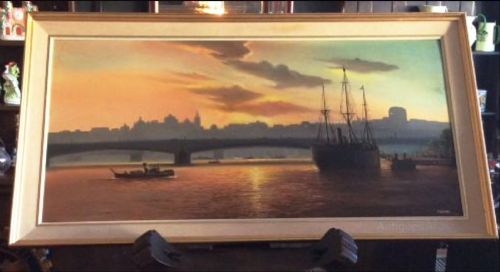
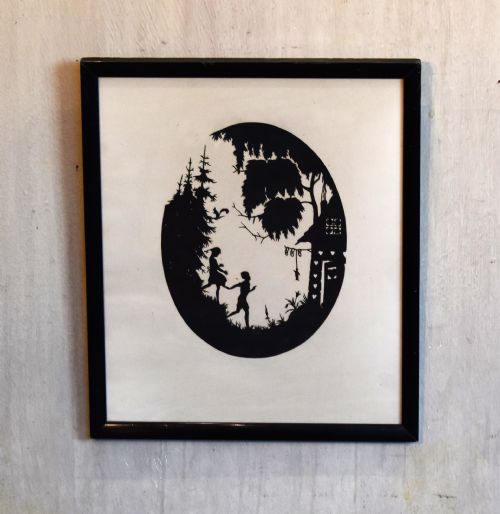
Vintage silhouette artwork comprises framed profile portraits, maritime scenes, and narrative pictures produced across the eighteenth, nineteenth, and twentieth centuries. These pieces capture likenesses or dramatic scenes in sharp monochrome contrast, frequently mounted behind glass within traditional wooden frames.
The selections available here range from early nineteenth-century Regency cut-paper and gilded portraits of ladies and young girls to later Victorian studies of jockeys and children with animals. Buyers frequently encounter nineteenth-century examples alongside folk art interpretations, Art Nouveau prints, and mid-twentieth-century oil paintings.
Makers and artists working in this medium include notable figures such as Augustin Edouart, Alfred Darbyshire, and John Smith of Edinburgh. Their works demonstrate the shift from precision cutting and painting to later decorative prints and Gothic narratives.
Materials and construction
Gilded highlights, gold leaf, and painted accents frequently enhance the borders or details of Regency and nineteenth-century portraits. These elements are enclosed within protective glass and secured inside timber frames, occasionally featuring marquetry panels or elaborate mouldings.
Vintage Silhouette Artwork Retail Price Guide 2026
Typical asking prices for vintage silhouette artwork among the pieces listed under this phrase on Sellingantiques today, from the lower quarter to the upper quarter. They describe what is for sale here now, not the wider market.
Assessing quality and execution
The refinement of the cutting or brushwork dictates the quality of a silhouette, separating hurried amateur output from the precise hand of a skilled practitioner. Crisp edges on cut paper and subtle washes in watercolour indicate superior control.
Original framing and contemporary mounts preserve the integrity of older works, while attribution to recorded artists like Augustin Edouart elevates the standing of a piece within the field.
Augustin Edouart·Alfred Darbyshire·John Smith of Edinburgh
The Vintage Silhouette Artwork Glossary
- Silhouette
- A portrait or scene represented as a solid shape of a single colour, usually black, showing the profile of the subject. This technique relies entirely on outline and contour rather than internal detail.
- Regency
- A style period spanning the early nineteenth century characterised by classical restraint and elegance. Pieces from this era often feature refined cut-paper profiles and delicate gold leaf embellishments.
- Gilded
- Decorated with gold leaf or gold paint applied to the surface. In silhouettes, this technique highlights costume details, jewellery, or decorative borders.
- Watercolour
- A paint medium where pigments are suspended in a water-based solution. Artists combined this with ink to tint monochrome silhouettes or create background settings.
- Marquetry
- The art and craft of applying pieces of veneer to a structure to form decorative patterns. This technique appears on the wooden frames and panels housing certain period works.
Vintage Silhouette Artwork: Frequently Asked Questions
How old is my silhouette?
Dating a silhouette relies on examining the materials, framing style, and costume details depicted in the portrait. Eighteenth and early nineteenth-century examples often feature hand-cut paper and specific Regency attire, while later Victorian and twentieth-century pieces employ different mounting techniques and print methods.
Looking closely at the backing paper and the type of glass used also provides reliable clues to the era of production.
Who was Augustin Edouart?
Augustin Edouart was a prominent silhouette artist working during the nineteenth century, known for his prolific output of full-length cut-paper portraits. His work often captured notable figures and families with remarkable precision and vitality.
Signed or attributed pieces by this artist remain sought-after examples within the genre.
How do I display silhouettes?
These framed works suit being hung in small clusters on a wall or placed individually where direct sunlight cannot damage the paper and ink. Matching the frame style to the period of the artwork helps maintain historical context in a room.
Keeping them away from damp environments protects both the paper and the original glass.
What is a cut-paper silhouette?
A cut-paper silhouette is created by using fine scissors or a blade to snip the profile directly from black paper without preliminary drawing. The resulting shape is then mounted against a contrasting light background to define the subject.
This method requires immense steady skill and produces sharp, clean edges characteristic of finer Regency works.