

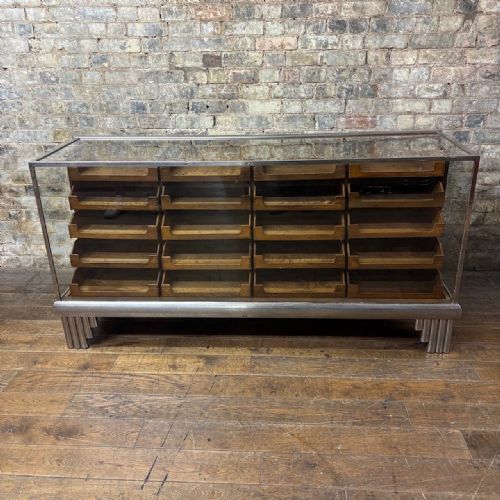


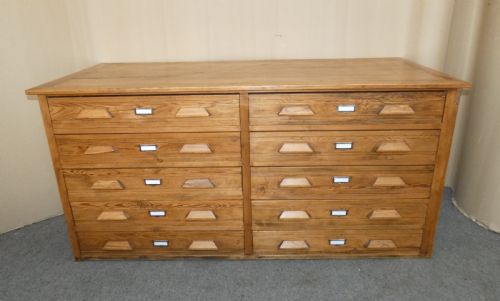


Vintage Shop Counter Unit
A vintage shop counter unit brings commercial history into a home, offering sturdy storage and display built for trade.
Vintage Shop Counter Unit
A vintage shop counter unit is a functional commercial fixture designed for retail trade, ranging from haberdashery cabinets and banks of drawers to large display counters and chemists' fittings. When searching for a vintage shop counter unit, buyers encounter diverse forms shaped by nineteenth and twentieth-century commerce, including multi-drawer chests and glazed cabinets.
The pieces on this page span the Victorian period, Edwardian era, and the 1920s and 1930s, reflecting the changing demands of shopkeepers over the decades. Common configurations include modular banks of drawers for small goods, large draper's counters, and specialised advertising display units.
Origins vary across British workshop styles, French provincial pieces, and Hungarian pine fittings, showing distinct regional preferences in retail architecture. Buyers find both natural wood finishes and original painted surfaces that survived decades of commercial use.
Assessing quality and authenticity
Quality in these commercial fixtures rests on the integrity of the original construction, the density of the timber, and the retention of working hardware such as brass pulls and glass panels. Pieces retaining their original factory paint or untouched polished patina command greater interest than those stripped or heavily restored.
The scale and complexity of the configuration also define the standard, with large multi-drawer banks and specialised maker-signed counters representing the more ambitious output of period shopfitters.
Vintage Shop Counter Unit Retail Price Guide 2026
Typical asking prices for vintage shop counter unit among the pieces listed under this phrase on Sellingantiques today, from the lower quarter to the upper quarter. They describe what is for sale here now, not the wider market.
A fifty-drawer Hungarian pine fitting offers enough tiny compartments to test the dedication of any organised collector.
Dudley & Co·Saml. Elliott & Sons·Trussant & Cie
The Vintage Shop Counter Unit Glossary
- Haberdashery cabinet
- A multi-drawer storage unit originally used in drapery shops for ribbons, buttons, and small sewing goods. These cabinets often feature shallow drawers and glass fronts.
- Chemists fittings
- Specialised shop cabinetry designed for apothecary and pharmacy use, typically incorporating numerous small drawers for herbs, compounds, and bottles.
- Draper's counter
- A long retail table or counter built for examining textiles, sometimes incorporating small specialty drawers for needles or threads beneath the main surface.
- Shop fitting
- Custom-built architectural furniture and cabinetry designed specifically for the interior layout of a retail establishment.
- Bank of drawers
- An assembly of multiple drawers housed within a single large carcass, valued for modular storage capacity.
Vintage Shop Counter Unit: Frequently Asked Questions
What were vintage shop counter units used for?
These units served as the central workspace and display area in historic retail shops, holding merchandise like fabrics, hardware, and apothecary goods while facilitating transactions.
Shopkeepers relied on specialised drawer configurations to keep small items organised and secure behind the counter surface.
How do I choose the right size unit?
Measure your available floor space and consider the height of the counter relative to your intended domestic use, whether as a kitchen island or a sideboard.
Pay attention to the depth of multi-drawer banks to ensure they fit comfortably within living or working rooms without blocking walkways.
How do I care for original painted finishes?
Dust surfaces regularly with a soft, dry cloth and avoid applying harsh chemical cleaners that might lift historic layers of paint.
Keep wooden pieces away from direct heat sources and excessive moisture to protect the timber and historic surface patinas.
How do I date a shop counter unit?
Examine the construction methods, such as dovetailing and timber selection, alongside hardware like brass pulls, chrome strips, and lock mechanisms.
Stylistic cues such as Art Deco geometry or Victorian proportions help narrow down the decade of manufacture alongside any maker stamps.