



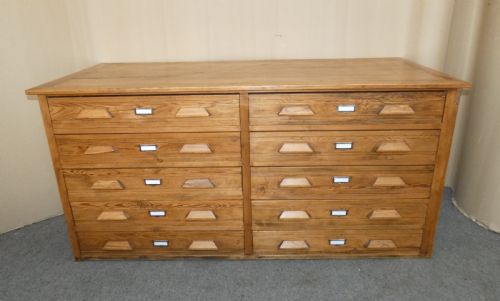


Vintage Shallow Drawers
These vintage shallow drawers bring practical storage and handsome timber character to any room, offering a compact footprint paired with multiple compartments.
Vintage Shallow Drawers
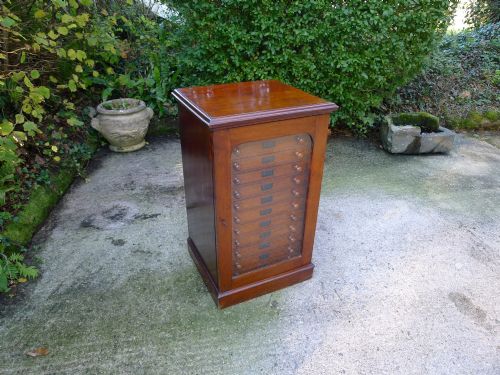
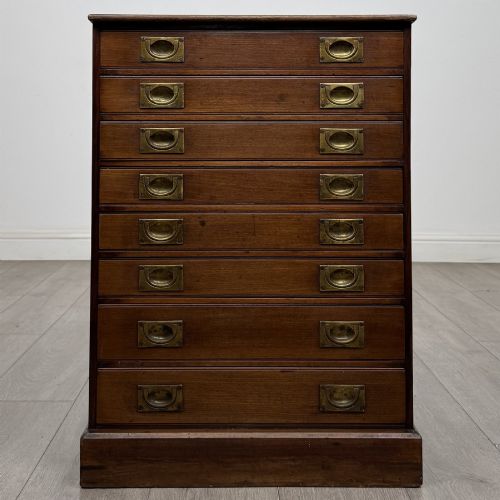
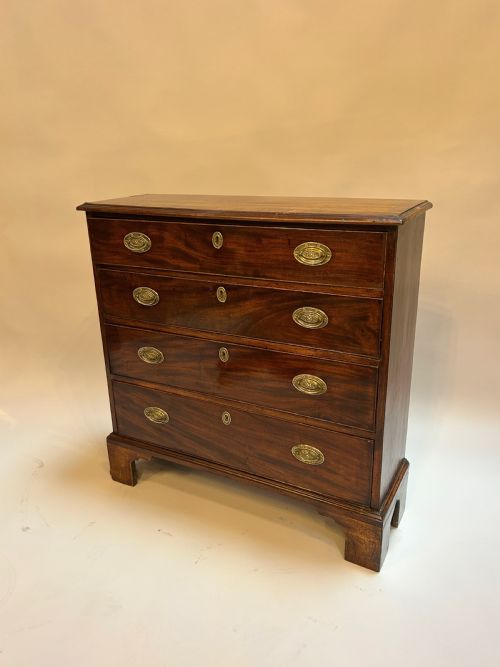
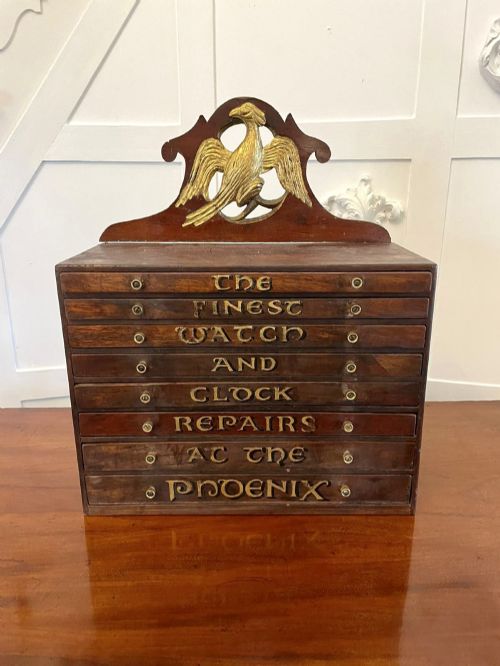
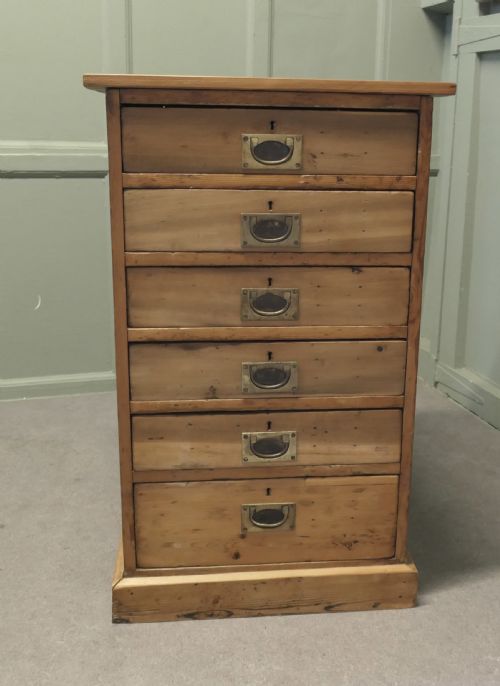
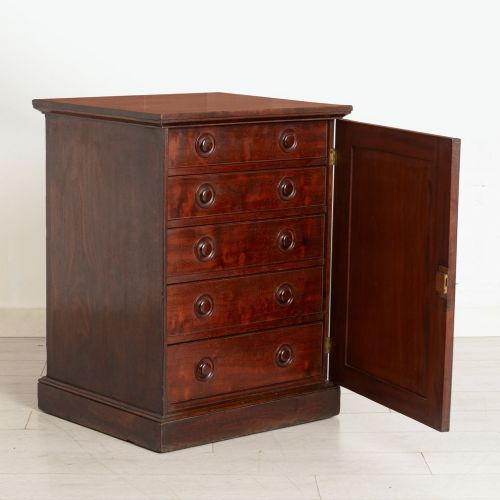
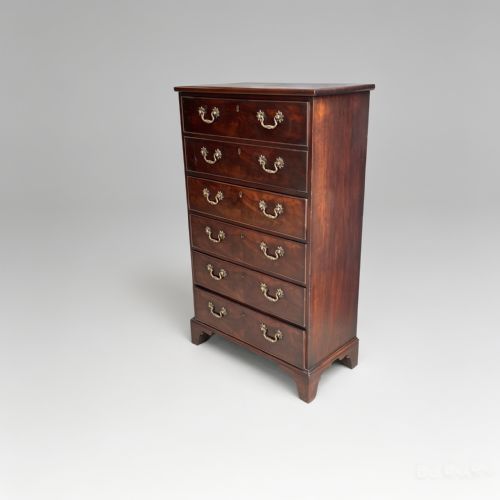
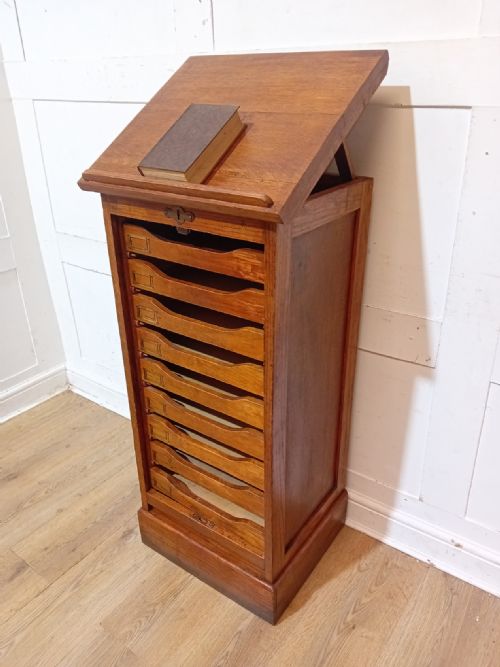
Vintage shallow drawers encompass a wide variety of compartmentalised storage furniture, from artist chests and plan chests to haberdashers' drawers and collectors' cabinets. When searching for vintage shallow drawers, buyers frequently encounter pieces originating from the nineteenth and early twentieth centuries, constructed to serve specific professional or domestic functions.
The selection ranges from tall, slender stacks of office filing drawers to broad architectural plan chests and low music cabinets. Oak, pine, and mahogany form the structural backbone of these utilitarian forms, reflecting the durable requirements of their original workshops, studios, and offices.
How they were made
Cabinet makers utilised solid hardwoods such as mahogany and red walnut alongside softwoods like pine, pitch pine, and oak to build these functional storage units. Drawers feature traditional joinery designed to withstand frequent pulling and heavy contents.
Many pieces incorporate brass handles, cardholders, or metal pulls suited to cataloguing and sorting. Surfaces often retain original painted finishes or polished timber surfaces that show the natural grain.
Vintage Shallow Drawers Retail Price Guide 2026
Typical asking prices for vintage shallow drawers among the pieces listed under this phrase on Sellingantiques today, from the lower quarter to the upper quarter. They describe what is for sale here now, not the wider market.
Musicians once kept sheet music crisp and flat inside shallow music cabinets before the era of digital folders.
What varies in quality
Quality in these storage pieces rests upon the integrity of the timber selection and the precision of the drawer construction. Cabinets built by specialised makers or workshops display finer attention to drawer runners, panel thickness, and internal dividers.
The preservation of original hardware, such as brass pulls and label holders, distinguishes standard utility pieces from more refined collectors' cabinets and architect chests.
Brady of Edmonton·Lamb of Manchester·J.T.Crockett
The Vintage Shallow Drawers Glossary
- Plan chest
- A wide, low piece of furniture with multiple shallow drawers designed originally for storing architectural blueprints and large maps flat.
- Collectors cabinet
- A specialised piece containing numerous small, shallow drawers built to house natural history specimens, coins, or small objects.
- Haberdashers drawers
- Multi-drawer cabinetry originally utilised in drapery shops to organise ribbons, buttons, and textiles by size and colour.
- Pitch pine
- A durable resinous softwood frequently utilised in late nineteenth-century industrial and office furniture for its strength and distinct grain.
Vintage Shallow Drawers: Frequently Asked Questions
What were shallow drawers originally used for?
These shallow drawers served diverse trades and professions, functioning as storage for architectural plans, artist supplies, sheet music, natural history specimens, and haberdashery items. Their low height prevented delicate contents from being crushed beneath deep stacks.
Over time, offices and workshops adapted them for filing correspondence, cataloguing samples, and organising small tools or office stationery.
How do I identify the period of a drawer unit?
Dating relies on examining the timber species, construction methods, and hardware. Earlier pieces from the eighteenth and early nineteenth centuries often employ hand-cut dovetails and solid mahogany or oak.
Later Victorian and Edwardian examples frequently utilise pitch pine or deal, incorporating machine-sawn components alongside brass label pulls and industrial metal fittings.
Are these cabinets suitable for modern home use?
Their compact depth and numerous compartments make them exceptionally practical for contemporary interiors. They fit narrow hallways, home offices, and living rooms where floor space is limited.
Owners frequently utilise the shallow compartments for organising jewellery, stationery, kitchen utensils, or craft materials while displaying decorative items on top.
What timber types are most common?
Pine and pitch pine appear frequently in utility, artist, and plan chests due to their availability and robust structural qualities. These softer woods often bear the marks of daily workshop or studio use.
Hardwoods like mahogany, red walnut, and oak are more commonly found in refined collectors' cabinets, hall chests, and apothecary units intended for public or professional display.