




Vintage Sewing Case
A vintage sewing case holds the needles, threads and tools of needlecraft, combining practical utility with fine craftsmanship from the eighteenth to the mid-twentieth century.
Vintage Sewing Case
A vintage sewing case encompasses fitted boxes, travelling containers, etuis and haberdashery displays designed to organise sewing accessories and needlework tools. These pieces range from small pocket-sized containers to substantial nineteenth-century workboxes and mid-century shop displays.
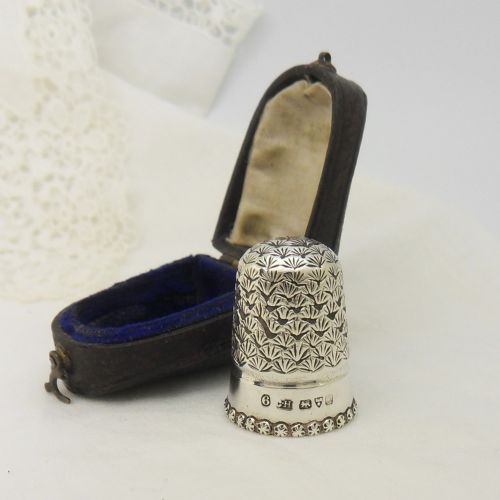
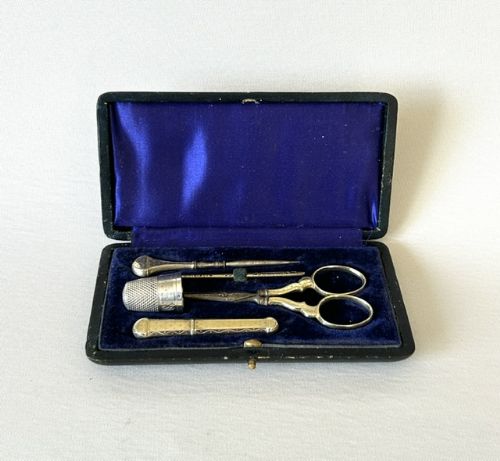
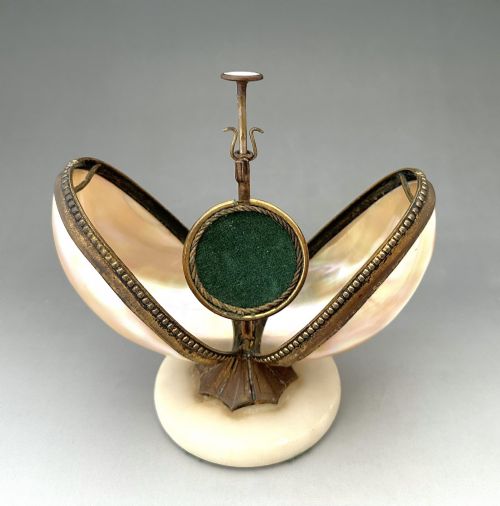
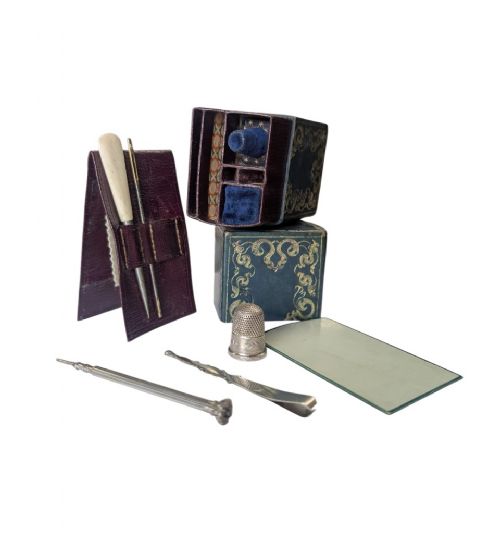
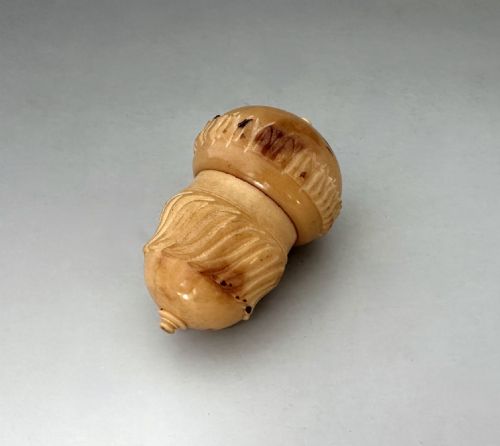
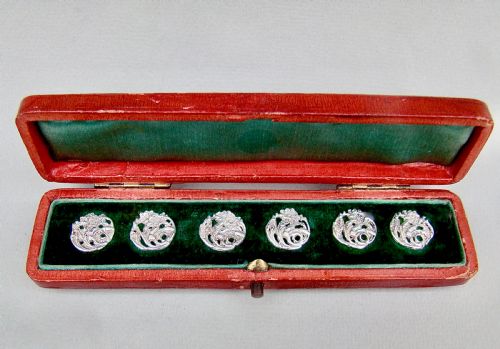
Buyers will encounter varied forms on this page, including French silver-mounted etuis, Victorian wooden workboxes, tortoiseshell or nut thimble cases, and branded cotton displays from makers like Clark's and Chadwick's. Many retain their original internal fittings, velvet linings and matched sets of implements.
The origins span English, French and German workshops, incorporating styles from the Georgian and Victorian eras through to Edwardian and Art Nouveau designs. Each piece reflects the domestic or retail sewing habits of its period.
Materials and construction
Construction relies upon traditional cabinetmaking and metalworking techniques, using woods such as walnut and oak alongside brass, ormulu and sterling silver. Interiors are frequently lined in velvet and fitted with dedicated recesses for scissors, bodkins and thimbles.
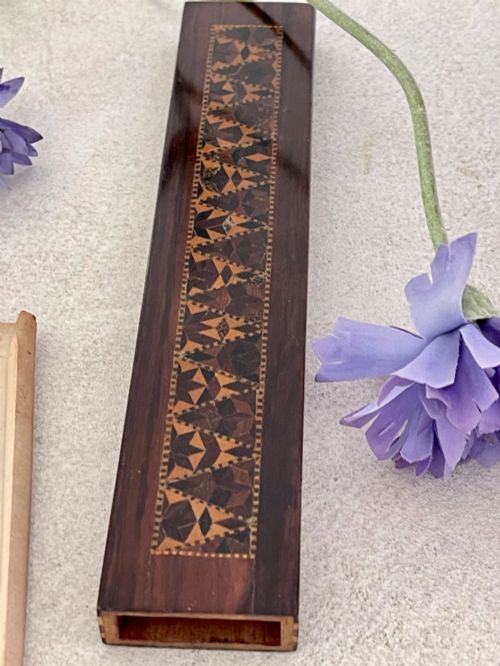
Specialised decorative methods define the finer pieces, including Tunbridge Ware mosaic woodwork, mother-of-pearl inlay and pierced floral scrollwork on silver. Porcelain mounted bodies and gilt-metal mounts show the integration of ceramic and metal crafts.
Vintage Sewing Case Retail Price Guide 2026
Typical asking prices for vintage sewing case among the pieces listed under this phrase on Sellingantiques today, from the lower quarter to the upper quarter. They describe what is for sale here now, not the wider market.
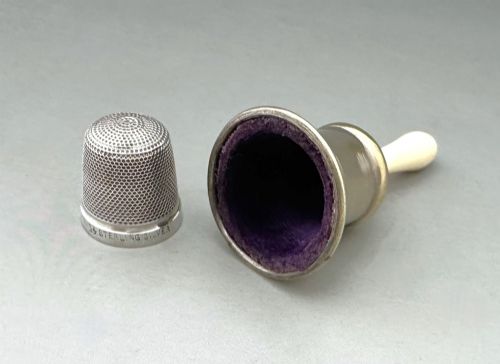
A sturdy Corozo nut proved surprisingly resilient for housing a tiny silver thimble during the Victorian era.
Factors of quality
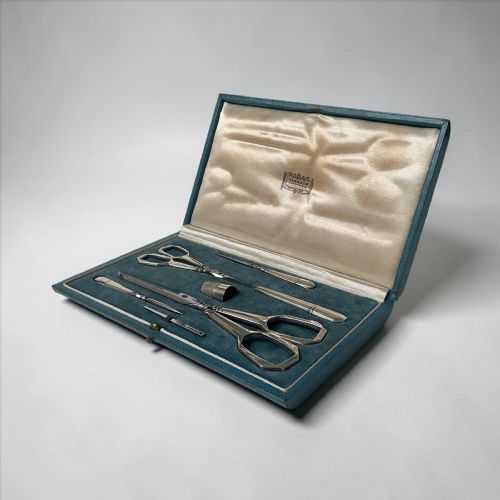
Quality rests upon the completeness of the fitted interior and the preservation of original tools such as matching silver scissors, thimbles and needle cases. Cases retaining their full complement of implements command greater interest than those with missing or replaced contents.
The fineness of the exterior decoration, whether intricate silver scrollwork, precise wood marquetry or delicate gilding, separates standard containers from exceptional pieces. Superior maker attribution and structural integrity in hinges and clasps further distinguish the work.
Asprey·Meissen·Charles Horner·James Deakin And Sons·Ermen And Roby
The Vintage Sewing Case Glossary
- Etui
- A small ornamental case used for holding needles, scissors and other small implements. These portable containers often feature precious metals and fitted velvet interiors.
- Chatelaine
- A decorative belt hook worn with suspended chains carrying everyday household tools such as sewing cases, keys or watches. They were popular in silver and gilt-metal.
- Bodkin
- A thick, blunt needle with a large eye used for drawing tape or cord through a hem. They frequently appear within fitted sewing sets and etuis.
- Tunbridge Ware
- Woodwork decorated with mosaic patterns formed from tiny coloured wood blocks to create pictorial or geometric designs. This technique decorates specialist nineteenth-century boxes.
- Haberdashery display
- Countertop or wall cabinets and cases used by retailers to showcase sewing cottons and threads. Brands utilised glass and timber to present products attractively.
Vintage Sewing Case: Frequently Asked Questions
What is inside a sewing case?
A typical case contains fitted compartments holding various needlework tools such as silver scissors, thimbles, bodkins, needle packets and silk skeins. Many retain their original velvet or silk linings designed to secure each specific implement.
Some portable etuis hold just a few essential items, while larger Victorian workboxes and travelling cases incorporate lower drawers and comprehensive multi-tier tool arrangements.
How do I date a sewing box?
Dating relies upon stylistic clues, construction methods, materials and any accompanying silver hallmarks. Georgian pieces often feature neoclassical motifs, whereas Victorian examples display heavier woods and varied internal configurations.
Makers' marks on silver components or branded labels from firms like Chadwick's and Clark's provide precise manufacturing periods from the nineteenth and twentieth centuries.
Were these cases for travel or home?
They served both purposes depending on their size and construction. Smaller etuis and chatelaine cases were portable accessories carried on the person for immediate needle repairs.
Larger wooden workboxes and travelling boxes stayed in the home parlour or bedchamber to hold comprehensive sewing projects, writing slopes and personal trinkets.
How should I clean a vintage sewing case?
Maintenance requires gentle dusting with a soft dry cloth and avoiding harsh chemical polishes on aged wood, leather or fabric linings. Silver elements benefit from careful, sparing use of appropriate metal cleaner applied away from vulnerable textiles.
Leather and wood surfaces respond well to appropriate conservation waxes if they show dryness, preserving the original finish without altering the patina.