
Vintage Sewing Box
A vintage sewing box holds needles, threads and tools in wood or fabric, offering practical desktop storage with period charm.
Vintage Sewing Box
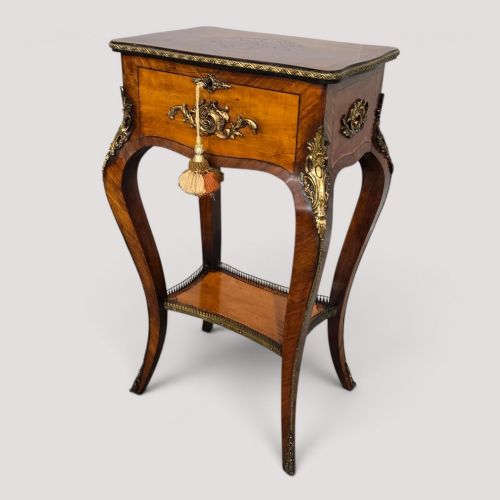
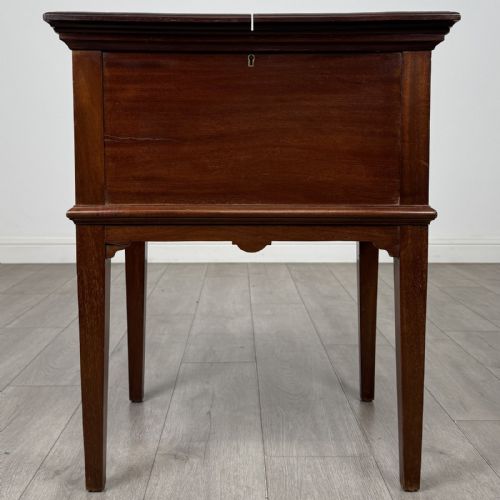
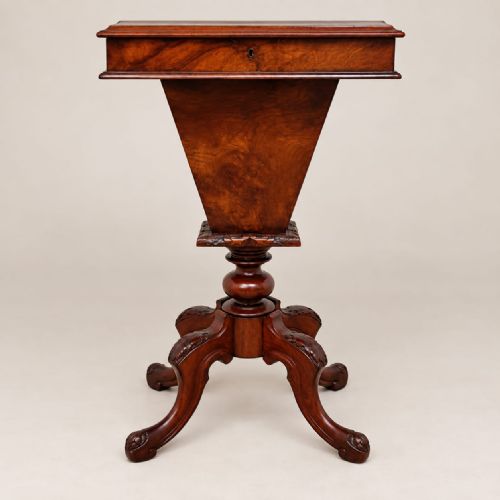
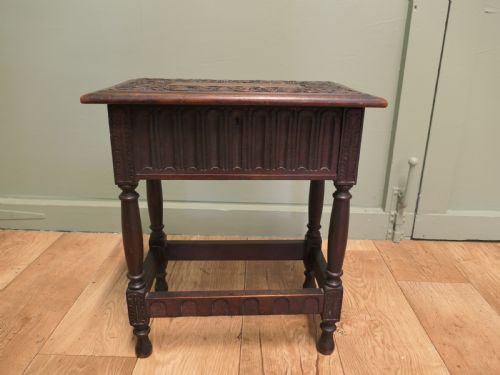
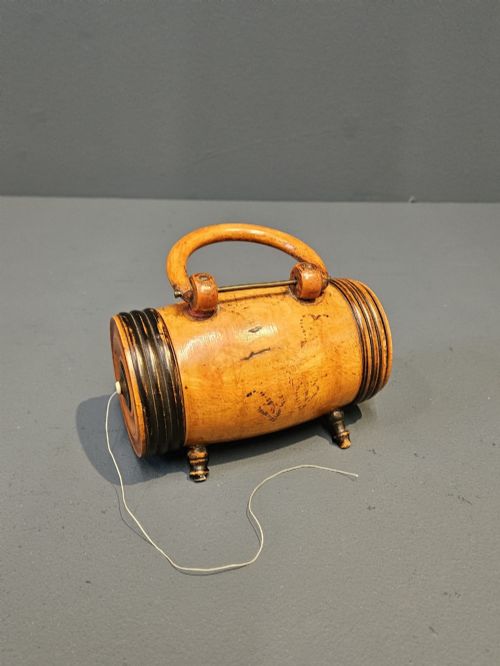
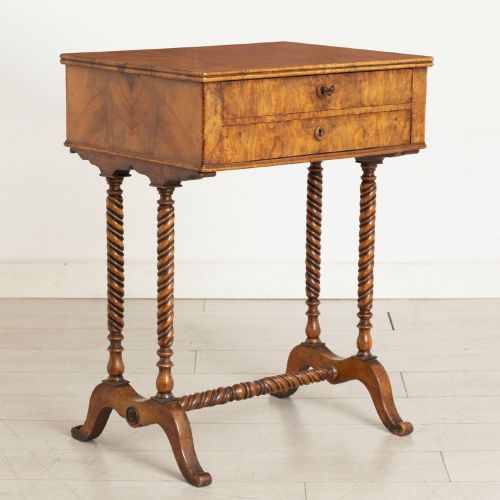
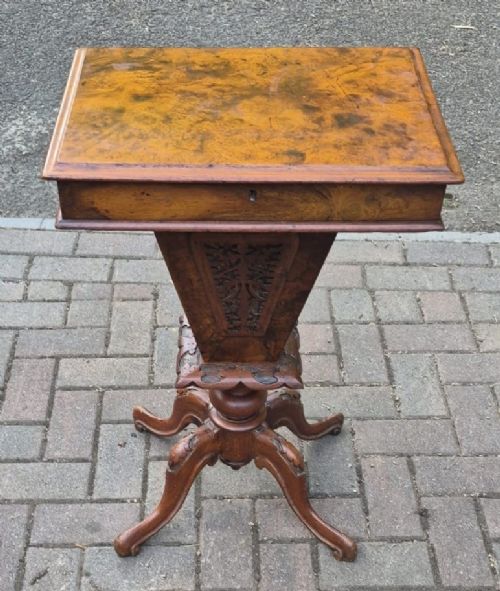
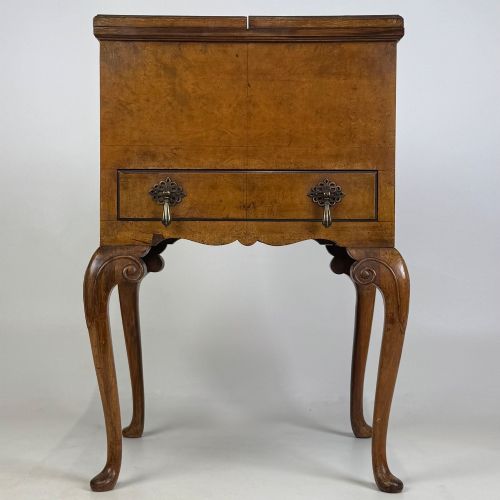
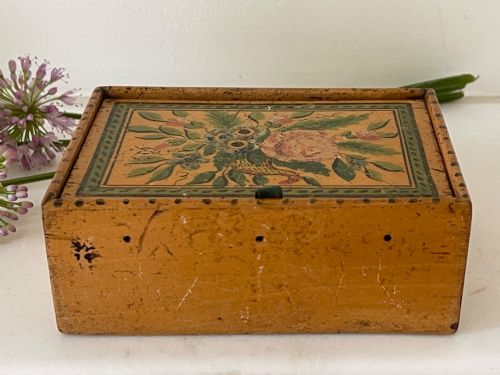
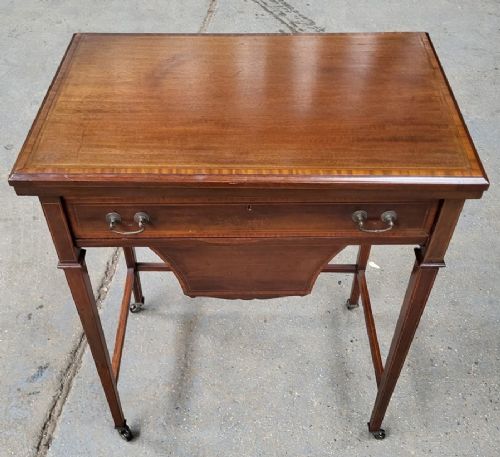
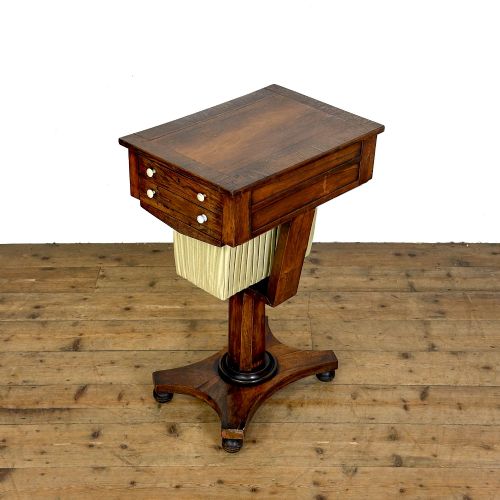
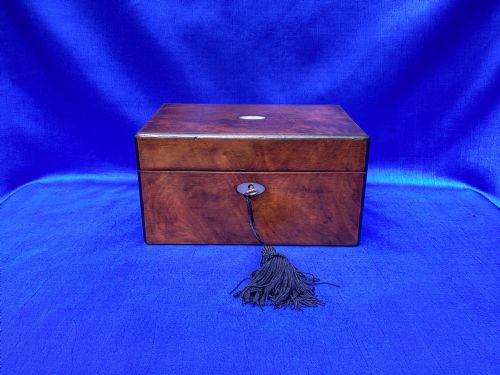
A vintage sewing box encompasses small tabletop caskets, fitted work tables, and occasional furniture designed to hold needlework supplies. These items appear across the nineteenth century, the Victorian era, the Edwardian period, and the Regency era.
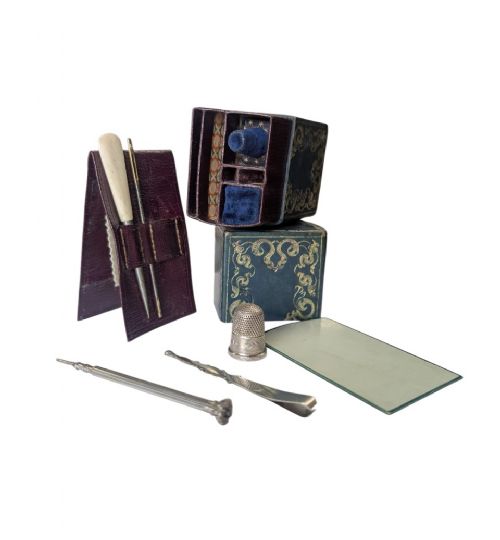
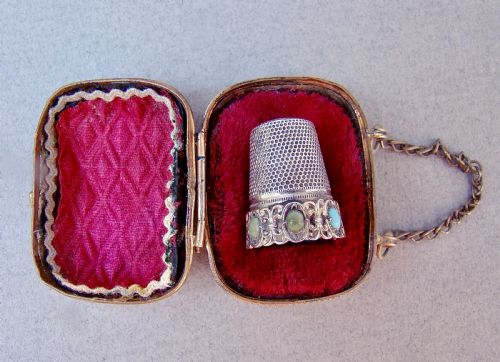
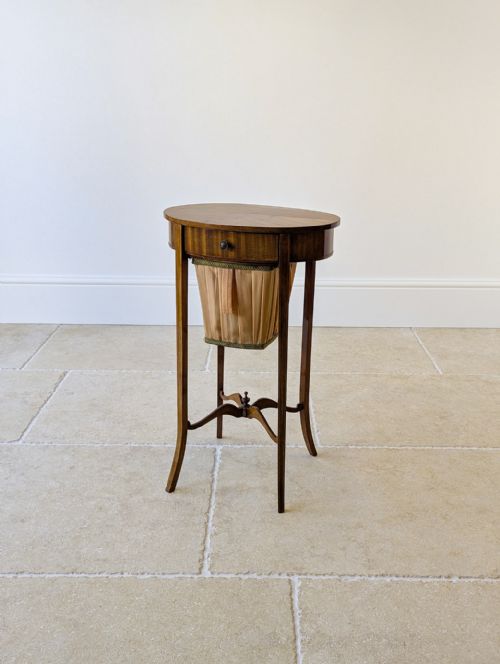
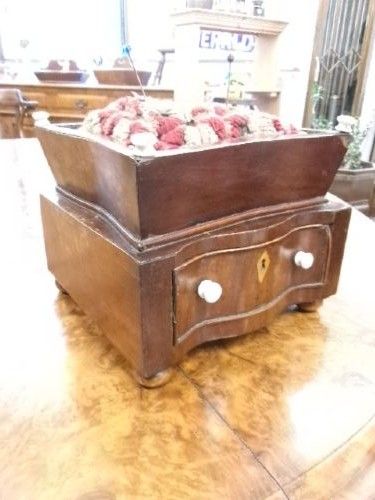
The most common formats on this page include mahogany, walnut, and rosewood work tables alongside smaller tabletop boxes inlaid with mother-of-pearl or decorated with Tunbridge ware. Buyers also encounter specialised accessories like pin cushions, etui boxes, and silver cotton holders.
Originating as practical receptacles for domestic needlecraft, these pieces often incorporate hidden compartments, folding lids, and silk baskets to organise threads, pins, and thimbles.
Materials and construction
Cabinet makers built these pieces using dense hardwoods such as mahogany, walnut, rosewood, and satinwood, frequently applying burr walnut veneer or cross-banding for decorative effect. Smaller boxes employ mother-of-pearl inlay, brass mounts, and detailed Tunbridge ware mosaics.
Interiors rely on fitted trays, silk lined compartments, and hidden drawers constructed to secure small implements. Metalwork details include ormolu mounts, sterling silver chatelaine cases, and cast brass hinges.
Silver novelty pin cushions take the form of miniature chicks, lions, and goblets to hold stray pins.
Evaluating quality and craftsmanship
Quality rests upon the selection of timber veneers and the precision of the internal fittings. Superior examples display tightly matched burr walnut or rosewood grains, intact silk linings, and original internal trays with working locks and keys.
Decorative embellishments also distinguish finer pieces, such as delicate Tunbridge ware geometric patterns, intricate mother-of-pearl inlay, or finely cast ormolu mounts rather than plain timber surfaces.
Ermen and Roby·Artificer's Guild
The Vintage Sewing Box Glossary
- Tunbridge Ware
- Woodworking technique originating in Kent utilising thousands of tiny coloured wood blocks to create mosaic pictures. These appear on the lids of boxes and trinket cases.
- Etui
- Small decorative case designed to hold needles, scissors, and tweezers. These portable containers often feature mother-of-pearl or silver construction.
- Chatelaine
- Ornamental hook or clasp worn from a belt with suspended chains for holding household and sewing implements. Silver chatelaine cases house thimbles and small tools.
- Work Table
- Freestanding piece of furniture incorporating a drawer and an attached fabric bag or box for needlework. Regency and Victorian versions often feature lyre-ends or pillar supports.
- Pin Cushion
- Small padded object or novelty silver figure used to hold pins safely during sewing. Examples include novelty silver animals like chicks and lions.
Vintage Sewing Box: Frequently Asked Questions
What is the difference between a work table and a sewing box?
A sewing box is typically a portable tabletop casket designed to hold smaller tools, threads, and needles inside fitted compartments.
A work table is a larger, freestanding piece of furniture that includes legs, drawers, and often an attached fabric basket for ongoing needlework projects.
How were these boxes used originally?
These boxes stored domestic sewing implements including spools of cotton, pins, thimbles, and scissors in dedicated compartments.
They kept delicate textile tools organised and protected on dressing tables or beside chairs in Victorian and Edwardian sitting rooms.
How do I identify a Regency sewing table?
Regency sewing tables feature clean architectural lines, often utilising mahogany or satinwood with brass mounts and distinctive pedestal or lyre-shaped supports.
They date from the early nineteenth century and prioritize classical proportions over heavy Victorian carving.
Where should I place a vintage sewing box in my home?
These pieces function well on side tables, desks, or dressing chests where they can store small everyday items while adding texture to a room.
Freestanding work tables fit easily beside armchairs or sofas as functional occasional tables with hidden storage.