



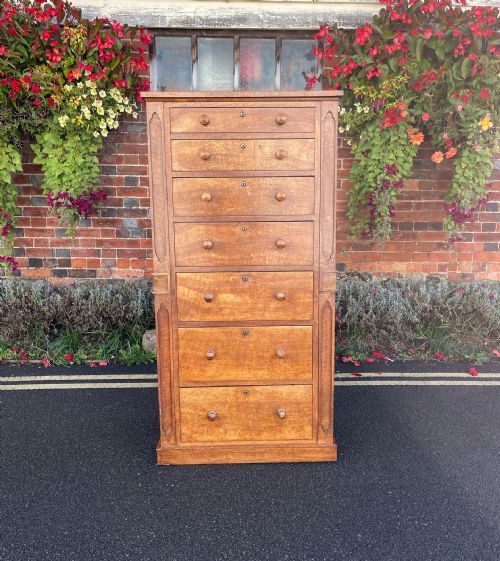


Vintage Seven Drawer Chest
A vintage seven drawer chest offers exceptional height and storage, bringing vertical elegance and period character to any room.
Vintage Seven Drawer Chest
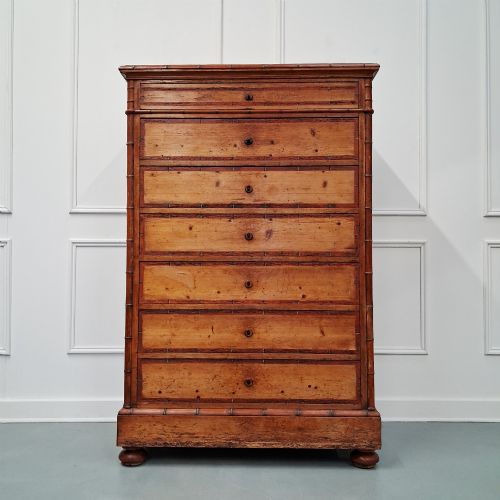
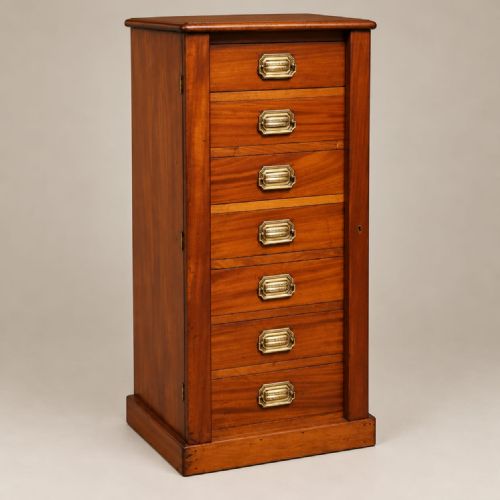
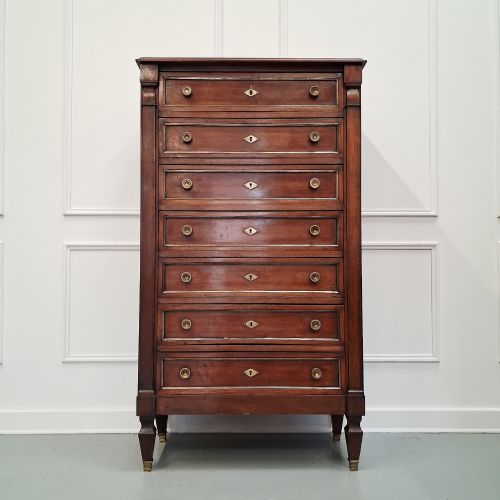
A vintage seven drawer chest primarily takes the form of tall, slender storage units designed to maximise vertical space without dominating floor area. These pieces are frequently encountered as Wellington chests, semainiers, and tall chests of drawers spanning the Victorian, Edwardian, and nineteenth-century periods.
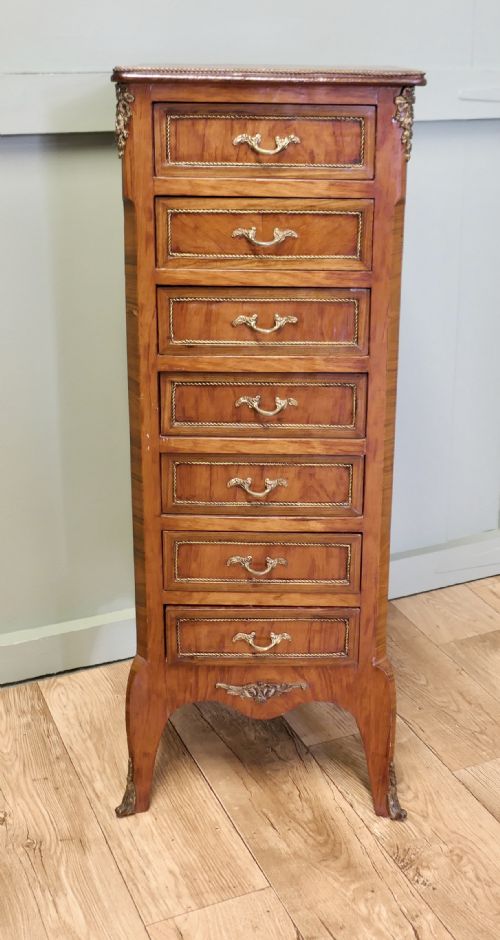
The regional origins and styling of these pieces vary distinctly, ranging from British mahogany and oak examples to French marquetry, cherrywood, and faux bamboo designs. Buyers searching for a vintage seven drawer chest will discover notable stylistic diversity, including French Louis XV and continental influences alongside traditional British cabinetmaking.
Many of these chests serve specific historical functions, such as the traditional seven-drawer semainier designed to hold a week's worth of garments. The proportions remain consistently narrow and tall, making them practical solutions for modern rooms requiring substantial storage within a compact footprint.
Materials and Construction
Cabinetmakers utilised a rich palette of dense timbers, constructing carcases and drawer linings primarily in mahogany, walnut, oak, and rosewood. Decorative surfaces often incorporated burr walnut veneer, marquetry inlays, and pollard oak to create striking visual depth and grain patterns.
Fine detailing distinguished the construction of these tall units, frequently integrating inset marble tops on continental pieces and specialised locking mechanisms on British Wellington chests. Brass hardware and delicate marquetry work completed the exterior finish, supported by traditional joinery suited to narrow, high-load cabinetry.
Vintage Seven Drawer Chest Retail Price Guide 2026
Typical asking prices for vintage seven drawer chest among the pieces listed under this phrase on Sellingantiques today, from the lower quarter to the upper quarter. They describe what is for sale here now, not the wider market.
Seven drawers mean one for every day, though modern owners usually settle for losing their keys in the top tier.
Evaluating Quality and Craftsmanship
The standard of a seven-drawer chest rests on the choice of timber selection and the precision of veneer work across its extensive vertical facade. Superior examples display continuous grain matching, intricate inlay, and uncompromised structural integrity within the numerous drawer carcases.
Hardware execution and the integration of secondary materials, such as fitted marble slabs on French semainiers, differentiate standard regional pieces from masterworks. The finesse of hand-carved details, such as those found on Anglo-Indian or French provincial models, further elevates the overall calibre of the piece.
The Vintage Seven Drawer Chest Glossary
- Semainier
- A traditional tall French chest featuring seven drawers, historically intended to hold a different garment for each day of the week. This form is typically slender and often finished with a marble top.
- Wellington Chest
- A sturdy vertical chest of seven drawers secured by a hinged locking stile on one side that fastens with a key. This distinct British furniture type gained popularity during the Victorian era.
- Marquetry
- The art of applying decorative pieces of veneer to a structure to form intricate pictorial or geometric designs. This technique appears on several continental examples.
- Pollard Oak
- Timber taken from oak trees that have been pollarded, producing wood with a dense, highly figured cluster of growth rings. It provides a heavily patterned surface for cabinet fronts.
Vintage Seven Drawer Chest: Frequently Asked Questions
What is a Wellington chest?
A Wellington chest is a tall, narrow set of drawers, typically featuring seven tiers, secured by a hinged vertical locking bar on the right side. This clever mechanism locks all drawers simultaneously with a single key.
Originating in the nineteenth century, these pieces were designed to maximise storage in smaller dressing rooms or bedrooms while keeping contents secure.
Why seven drawers?
The count of seven drawers relates directly to the traditional French semainier design, conceived to allocate one drawer for each day of the week. This configuration offered an organised system for daily attire.
Over time, British makers adopted similar proportions for tall cabinets, finding that seven shallow tiers provided ideal storage for smaller linens and garments.
How do I place a tall chest in a small room?
Due to their narrow footprints and significant height, these chests fit comfortably into alcoves or tight corners where wider furniture cannot go. They draw the eye upward, making ceilings appear higher.
Ensure the piece is anchored securely to the wall, particularly when dealing with heavy hardwood frames or marble tops, to maintain stability.
Are marble tops original?
Marble tops are entirely original to many continental pieces, particularly French semainiers and marquetry cabinets of the nineteenth century. They provided a durable, cool surface for daily grooming items.
British examples, conversely, predominantly feature solid timber tops matched to the primary carcase wood, reflecting different regional domestic traditions.