


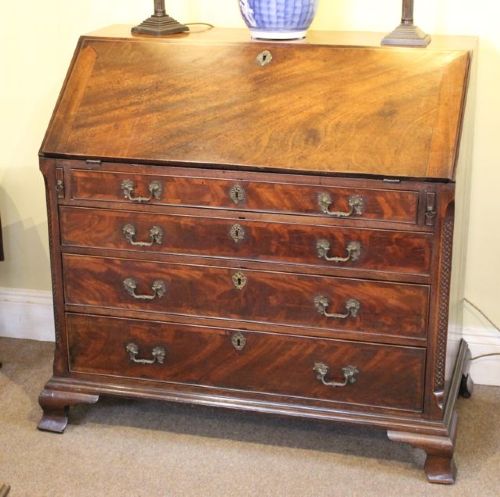
Vintage Secretary Bureau
A vintage secretary bureau combines a practical writing surface with concealed storage, offering a compact workspace suited to period and traditional interiors.
Vintage Secretary Bureau
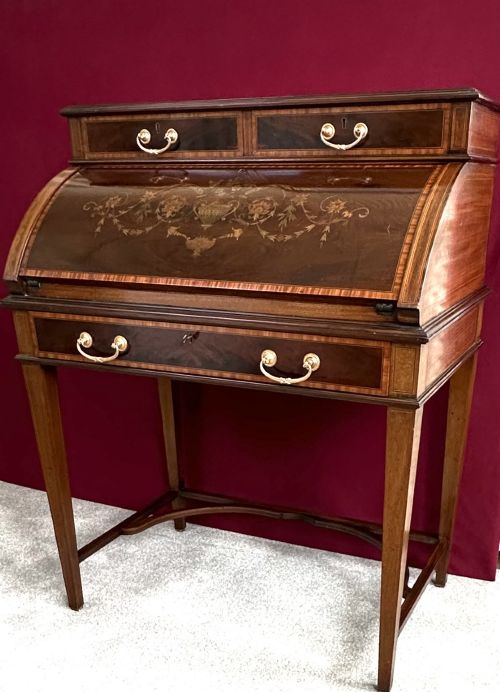
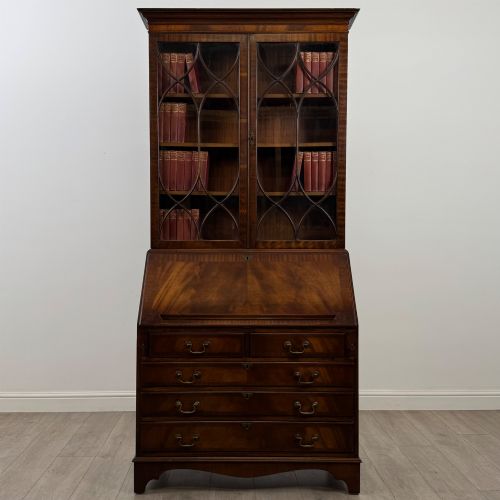
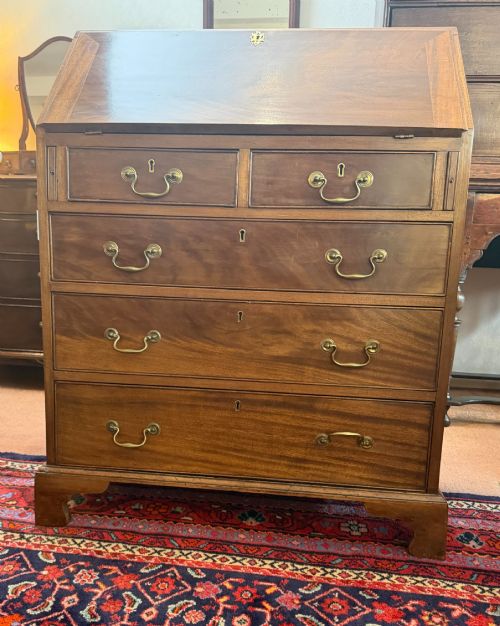
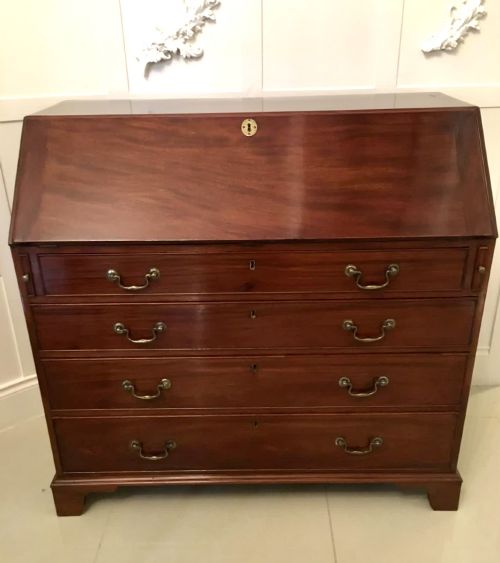
A vintage secretary bureau encompasses fall-front writing desks and tall bureau bookcases spanning the Georgian, Regency, Victorian, and Edwardian periods. These pieces combine a hinged writing flap that drops down to reveal fitted interior compartments with drawers and pigeonholes below.
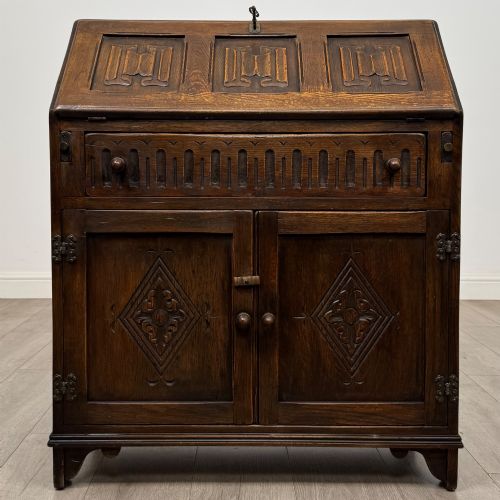
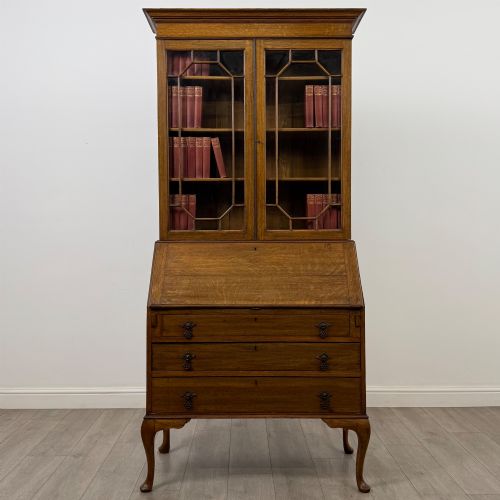
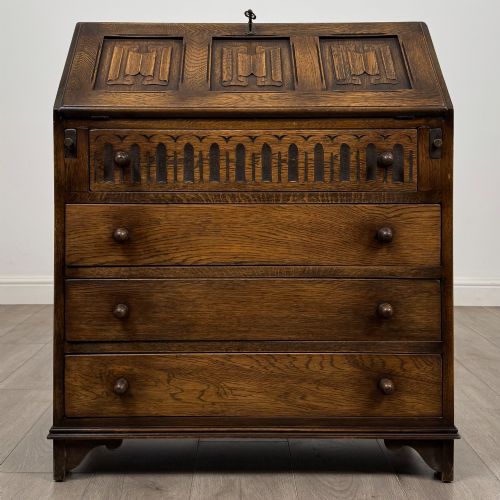
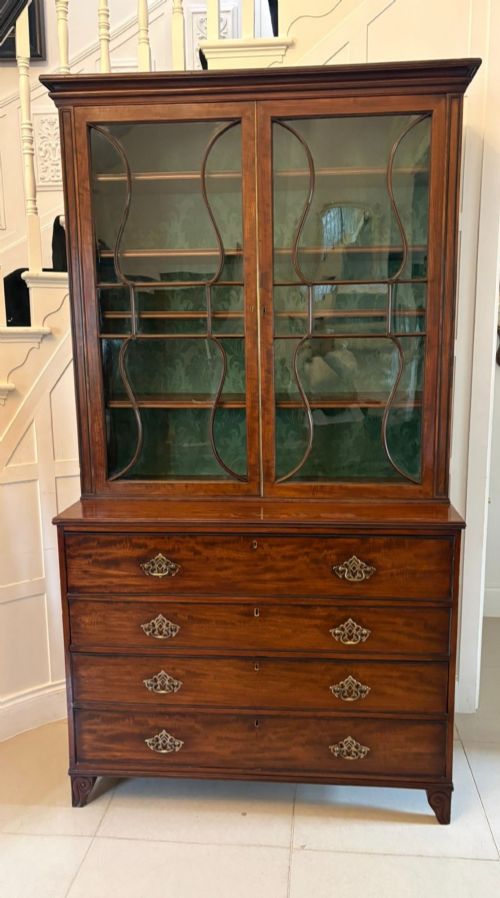
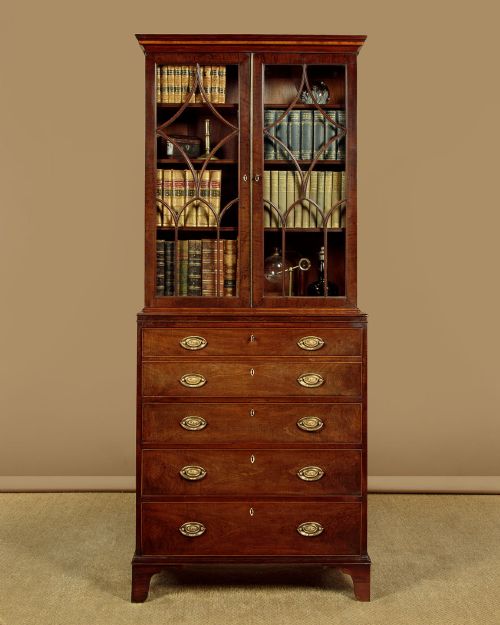
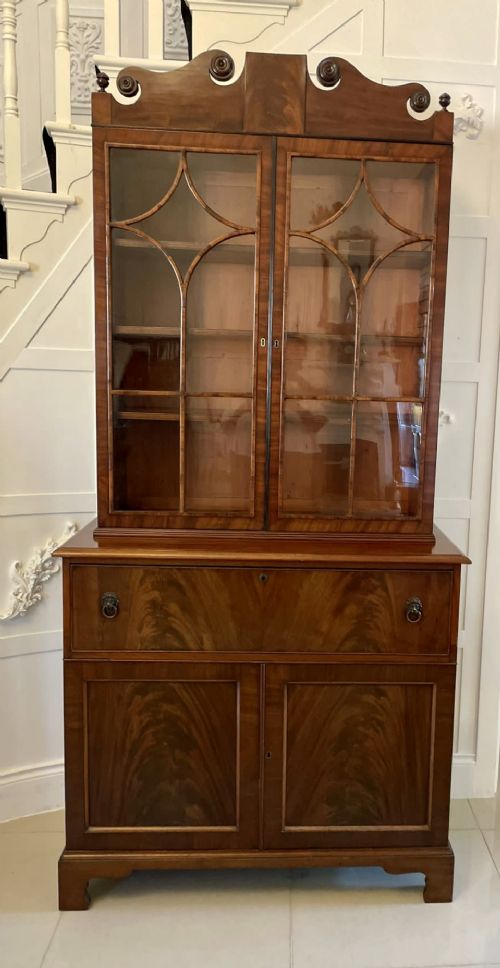
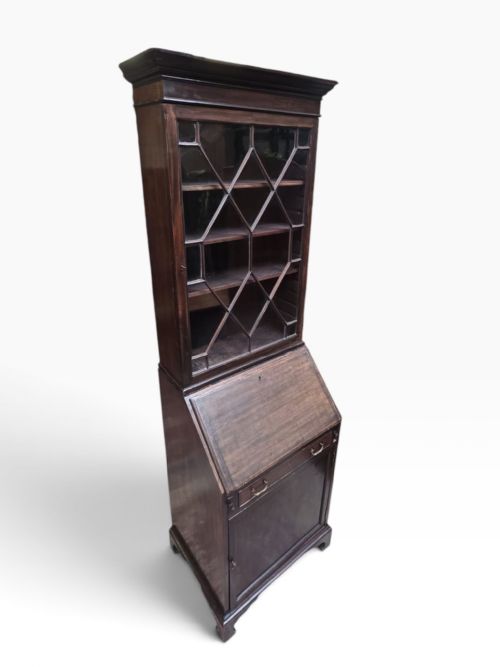
The most common examples encountered on this page date from the Edwardian era and the 1920s, typically constructed in oak or mahogany. Alongside these standard drop-front desks, buyers will find taller bookcase variants featuring glazed upper doors alongside lower writing compartments.
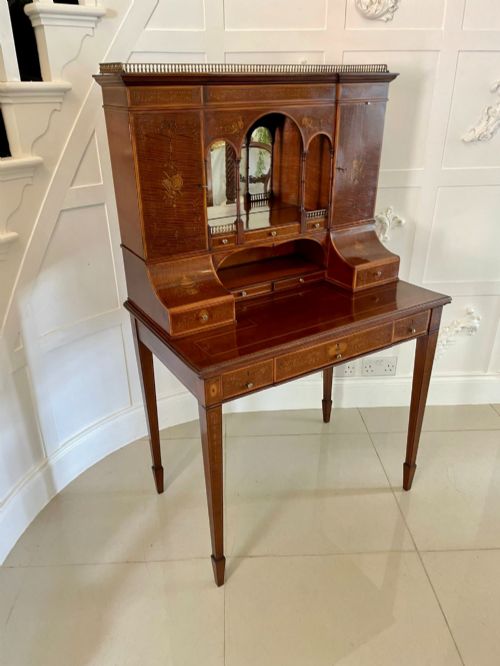
Earlier iterations trace back to the 18th and 19th centuries, utilising rich timbers such as burr walnut, yew wood, and figured mahogany. Regional and revival styles, including Arts and Crafts designs and Jacobean influences, appear frequently across the selection.
Materials and Construction
Cabinet makers relied predominantly on solid hardwoods and choice veneers, shaping oak, mahogany, walnut, and satinwood into robust carcases. Figured veneers like burr walnut and yew wood were carefully applied to primary surfaces to create decorative grain patterns.
Structural integrity relied on traditional joinery, complemented by brass handles, escutcheons, and hinges fitted to drawers and fall fronts. Glazed upper sections of bookcase variants utilised timber framing to secure individual panes of glass above the desk compartments.
Secret drawers hidden within the internal pigeonholes provided 18th-century writers a private space for confidential letters.
Judging Quality
The selection of timber grain and the precision of veneer matching set superior pieces apart from standard production models. Finely figured mahogany and burr walnut demand careful matching across the fall front and drawer faces to create a cohesive visual balance.
Internal joinery within the fitted pigeonholes and small drawers indicates the standard of craftsmanship. Well-executed pigeonhole surrounds, secret compartments, and dovetailed drawer construction signal superior workshop standards compared to simpler assembly methods.
Heals of London·Arthur Basil Reynolds·Larkin
The Vintage Secretary Bureau Glossary
- Fall front
- A hinged writing flap that drops forward to provide a flat writing surface and conceals internal compartments when closed.
- Secretaire bookcase
- A tall cabinet combining a fitted writing drawer or drop-front desk compartment with upper shelving enclosed by glazed doors.
- Fitted interior
- The arrangement of small drawers, pigeonholes, and central compartments revealed when the fall front is opened.
- Linenfold
- A carved wood panel motif resembling folded cloth, frequently seen on early 20th-century oak bureaux.
- Escutcheon
- A decorative brass plate surrounding a keyhole, designed to protect the surrounding wood from wear.
Vintage Secretary Bureau: Frequently Asked Questions
What is a secretary bureau?
A secretary bureau is a dual-purpose furniture form that combines a desk with a concealed writing compartment and storage drawers beneath a hinged flap.
Many examples also incorporate an upper bookcase section featuring shelving enclosed by wooden or glass doors.
How do I use a drop-front bureau?
The hinged writing flap lowers to a horizontal position, supported by sliding wooden arms or brass stays, creating an immediate writing platform.
Inside, the arrangement of small drawers and pigeonholes offers designated storage for stationery, letters, and small desk accessories.
Where should I place a bureau in my home?
These compact writing desks suit studies, living rooms, and bedrooms where floor space is limited yet a dedicated writing surface is desired.
Tall bookcase variants require sufficient vertical clearance and work well against principal walls in traditional or transitional interiors.
How do I identify the period of a bureau?
Dating relies on timber selection, handle styles, construction methods, and characteristic decorative motifs such as satinwood inlay or carved linenfold.
Edwardian and 1920s models often feature lighter oak or mahogany construction, whereas 18th and 19th-century pieces display heavier timber framing and distinct veneer choices.