


Vintage Secretaire
A vintage secretaire brings together fitted writing drawers and concealed compartments in mahogany, oak, and walnut forms dating from the eighteenth century onwards.
Vintage Secretaire
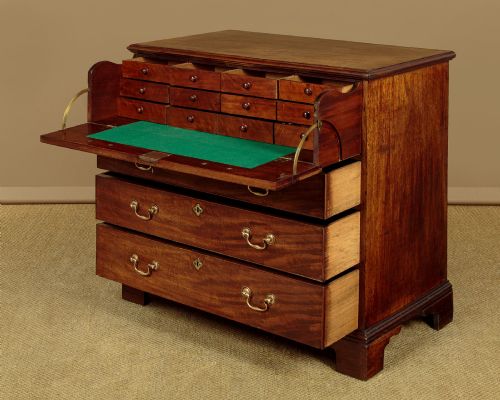
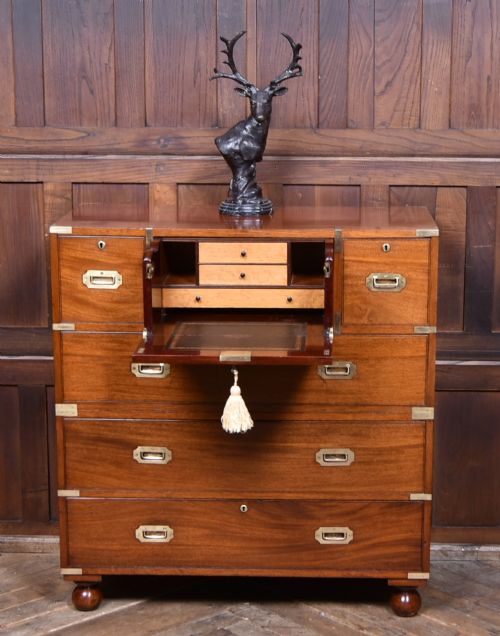
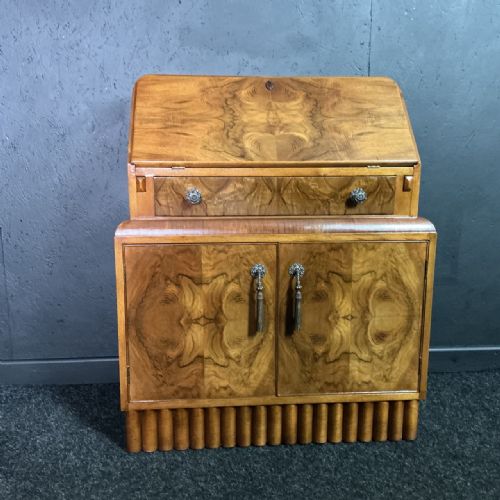
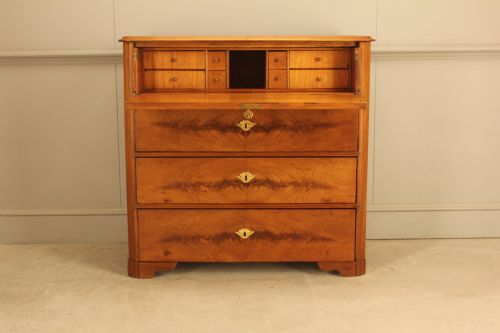
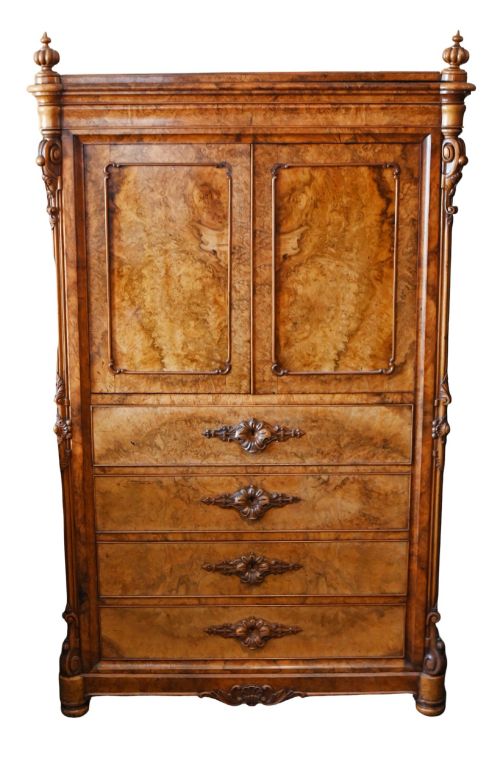
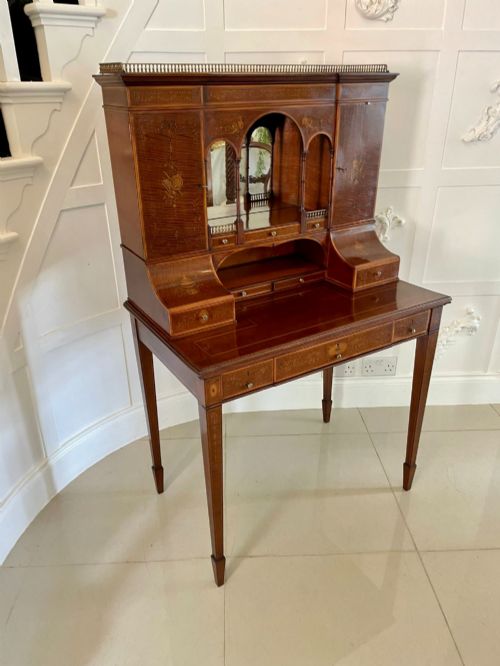
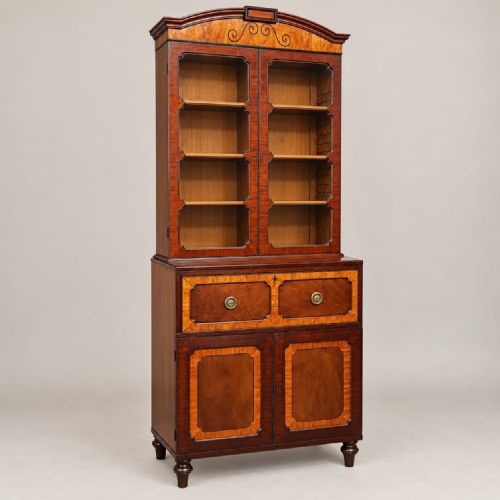
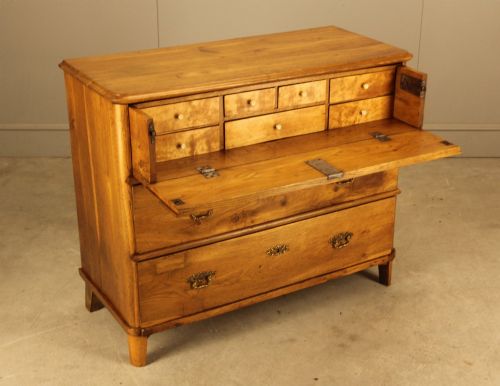
A vintage secretaire encompasses a range of writing furniture designed with a drop-front desk surface or pull-out drawer that conceals inner pigeonholes and small drawers. When you search for this phrase, you encounter forms that span grand library bookcases to compact chests and cabinets.
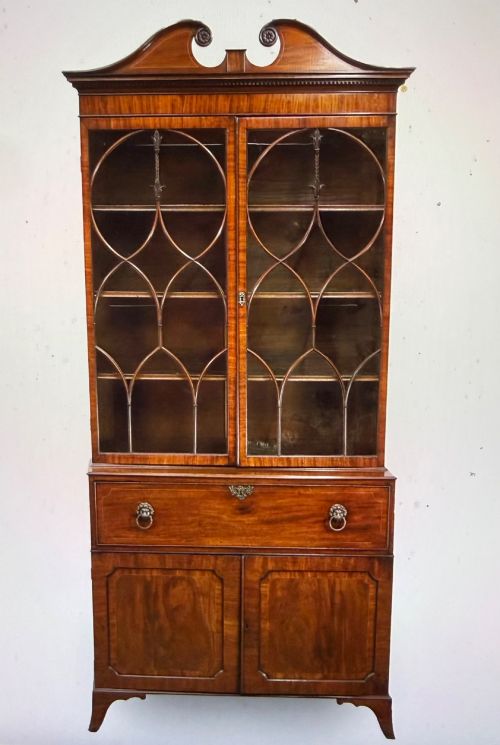
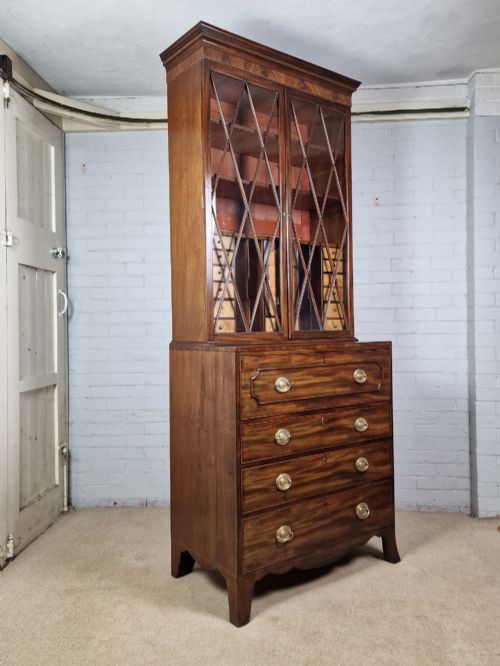
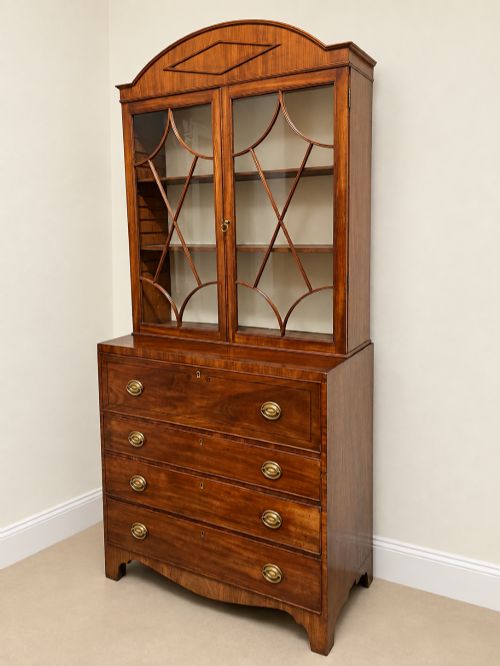
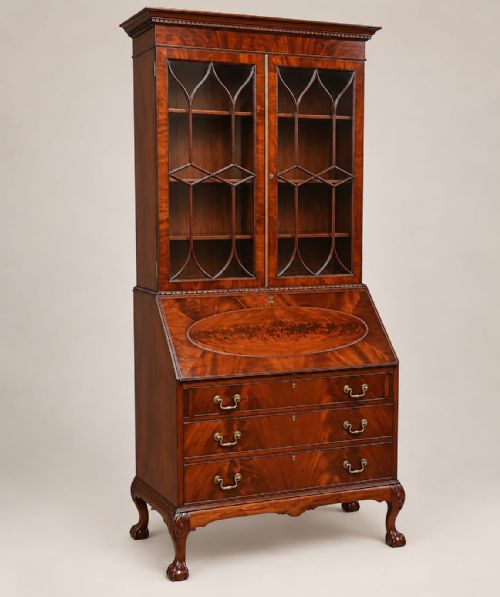
The pieces appearing on this page originate from periods including the Georgian era, the Regency period, the nineteenth century, and the Edwardian decades. Cabinets with glazed top sections and lower writing drawers dominate the selection alongside tall chests and freestanding desks.
Cabinetmakers constructed these items in regional workshops and urban manufactories across Britain, France, Sweden, and beyond. Each iteration adapts the core writing function to the domestic interior fashions of its decade.
Materials and construction
Craftsmen built the carcases of these pieces using primary timbers such as mahogany, oak, walnut, and satinwood, often applying figured veneers of burr birch, maple, or rosewood to the exterior surfaces. Solid timber construction provides structural stability for the deep drawers and heavy bookcase tops.
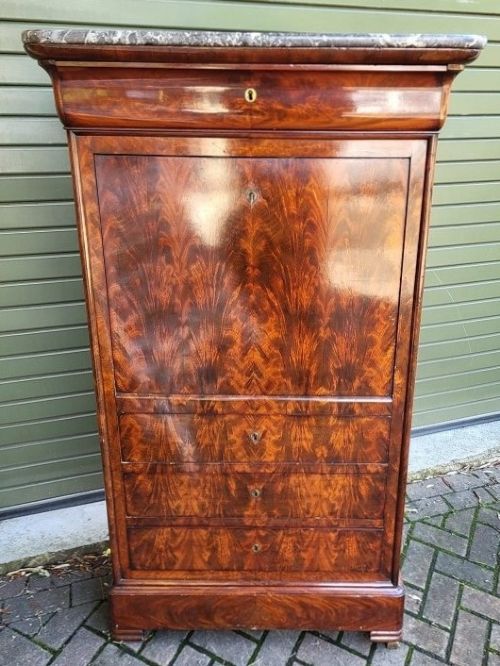
Secondary elements include brass handles, hinges, and locks, alongside glazed panels set into astragal bars on bookcase doors. French examples frequently incorporate marble tops and ormolu mounts to finish the cabinet exterior.
Interior compartments utilise careful joinery to create secret drawers and letter slots behind the main writing flap. Inlaid stringing and marquetry decoration adorn select panels, demonstrating precise hand-cut cabinetwork.
Vintage Secretaire Retail Price Guide 2026
Typical asking prices for vintage secretaire among the pieces listed under this phrase on Sellingantiques today, from the lower quarter to the upper quarter. They describe what is for sale here now, not the wider market.
Hidden mechanisms and secret drawers wait behind pigeonhole partitions, ready to reward the curious owner with long-concealed hiding spots.
Judging quality and execution
The refinement of the internal writing compartment dictates the tier of a secretaire, distinguishing standard production from exceptional cabinet work. Superior examples feature secret release mechanisms, shaped pigeonholes, and fine cock-beading around the drawer edges.
Timber selection and veneer matching across large expanses such as fall-fronts and door panels separate workshop output. Craftsmen who matched grain patterns across drawer fronts produced visually cohesive surfaces that elevate the stature of the piece.
The integrity of secondary woods used in drawer linings and carcase backs indicates the origin and period of the furniture. Original brass hardware and undisturbed structural joints preserve the historical standing of the cabinet.
Gillows
The Vintage Secretaire Glossary
- Secretaire bookcase
- A tall cabinet combining an upper section of glazed shelves for books with a lower bureau or writing drawer containing fitted interior compartments. This form served as a dual-purpose library and writing station in Georgian and Victorian homes.
- Escritoire
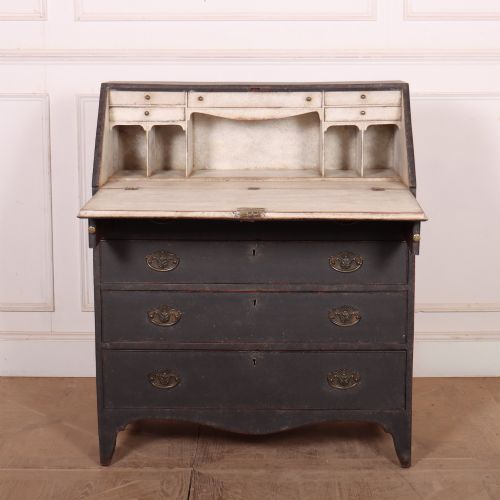
- A writing cabinet featuring a fall-front flap that lowers to reveal a fitted interior of small drawers and pigeonholes. Originating in French cabinetmaking, the term applies to drop-front desks supported on legs or fitted to a chest base.
- Astragal glazed
- A glass door divided into smaller panes by narrow wooden bars, known as astragals, arranged in geometric or Gothic patterns. This technique protected library contents while displaying book bindings.
- Wellington chest
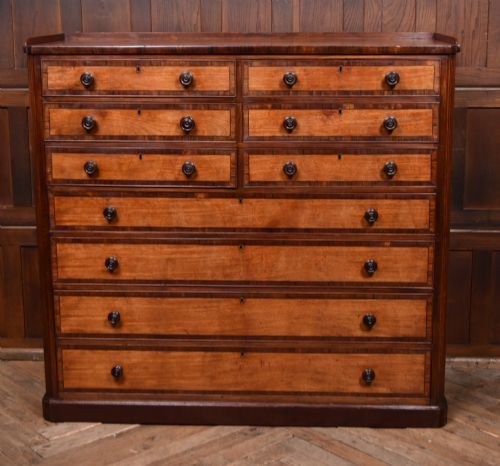
- A tall, narrow chest of drawers secured by a hinged vertical locking sidebar that fastens with a key. Named after the Duke of Wellington, this form appears in mahogany and birch variants.
- Ormolu
- Gilded bronze mounts applied as decorative ornaments to the corners, feet, and friezes of continental cabinets. Makers used these cast metal details to accent marquetry and marble surfaces.
Vintage Secretaire: Frequently Asked Questions
What is a secretaire?
A secretaire is a piece of furniture that incorporates a dedicated writing surface, usually in the form of a drop-front flap or a pull-out drawer. Behind this surface lie small drawers and compartments designed for correspondence and paperwork.
These items range from tall library bookcases to compact chests of drawers and freestanding cabinets produced across the eighteenth and nineteenth centuries.
How do I use a secretaire today?
A secretaire functions as a practical writing desk or laptop station while providing concealed storage for stationery and household items. The drop-front flap closes to hide modern technology when not in use.
Upper bookcase sections serve to display books and ceramics, while lower drawer configurations accommodate general storage needs in a living room or study.
How do I tell Georgian from Victorian pieces?
Georgian pieces from the eighteenth and early nineteenth centuries typically feature understated mahogany construction, bracket feet, and restrained proportions with astragal glazed doors. Timber choice and structural joinery reflect the prevailing neoclassical tastes of the period.
Victorian items often display heavier proportions, darker walnut or burr veneers, and more elaborate carved or inlaid decoration. Makers of this later era embraced diverse stylistic revivals and robust mechanical fittings.
Where were these cabinets made?
Cabinetmakers produced these secretaires in workshops across Britain, France, and Sweden, reflecting regional timber supplies and design preferences. British makers relied heavily on imported mahogany and native oak.
Continental makers utilised maple, birch, and walnut, frequently incorporating marble tops and marquetry into French and Biedermeier designs.