


Vintage Sea Fishing Art
Vintage sea fishing art captures coastal work on canvas and paper, bringing the rough Atlantic and local harbours straight into your interior.
Vintage Sea Fishing Art
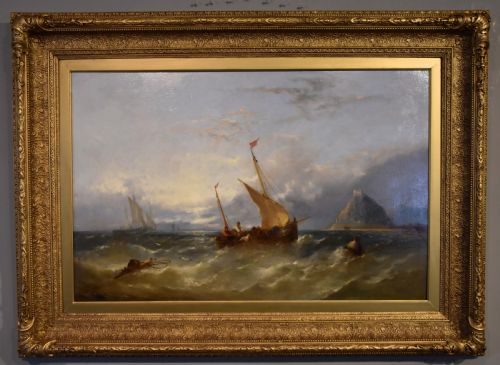
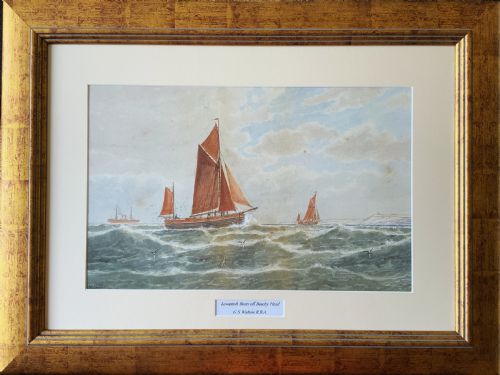
Vintage sea fishing art encompasses oil paintings, watercolours and works on card or board depicting coastal harbours, trawlers and working fishermen. You will regularly find pieces originating from the nineteenth century through to the mid-twentieth century.
The subjects range from tranquil channel waters to choppy seas and stormy weather off the Cornish coast, Lowestoft or French ports. Maritime realism and British impressionism dominate the styles available on this page.
Makers and artists vary from named nineteenth-century painters to regional British schools working in oil on canvas or delicate watercolour on paper. Most examples come fitted in period gilt wood or simple wooden frames.
How they were made
Artists painted primarily in oil or watercolour, applying pigment directly to stretched canvas, prepared board, sturdy card or heavy watercolour paper. Oil paintings often display thick impasto to render the movement of breaking waves and heavy sea spray.
Watercolour works utilise fluid washes combined with fine brushwork to capture atmospheric light over coastal waters and distant fishing vessels. Finished paintings were traditionally set behind protective glass or housed in decorative gilt wood and plain wood frames.
Many Victorian fishermen spent months at sea trusting only canvas and a stout wooden hull to bring them home safely.
What varies in quality
Quality rests upon the artist's ability to render the weight of water, the rigging of fishing boats and the natural play of coastal light. Finer works demonstrate a confident handling of medium, whether through thick oil application or delicate watercolour transparency.
The distinction also lies in the composition and the historical character of the framing, where original gilt wood enhances the presence of the maritime subject.
William Henry Williamson·George Stanfield Walters·Charles Napier Hemy·William Lee Hankey·George SHAW·PERCY BROOKE
The Vintage Sea Fishing Art Glossary
- Maritime Realism
- An artistic style focused on accurate, detailed depiction of ships, seas and coastal life. It relies on observational precision rather than abstraction.
- Impasto
- Paint laid on an area of the surface in very thick layers, usually thick enough that the brush or painting-knife strokes are visible. This technique brings physical texture to painted waves.
- Gilt Wood
- Wood that has been coated with gold leaf or a gold-coloured finish. It provides traditional framing for nineteenth and twentieth-century marine paintings.
- Watercolour
- A paint wherein the colour pigments are suspended in a water-based solution. It is typically applied to paper to create luminous coastal scenes.
Vintage Sea Fishing Art: Frequently Asked Questions
How do I care for a vintage oil painting?
Keep the canvas away from direct sunlight and damp environments to prevent the paint and wood from degrading over time. Dust the surface gently with a dry, soft cloth without applying pressure.
Avoid using water or liquid cleaning products on the paint surface or the original gilt wood frame. Professional conservation should be sought if the canvas requires cleaning.
Are these paintings original works?
The selections shown are original paintings created in oil, watercolour or media on card and board. They date from the nineteenth and twentieth centuries.
Each piece reflects the hand of the artist or regional school working at that time rather than being a modern reproduction.
What is the difference between oil and watercolour marine art?
Oil paintings utilise pigments bound in drying oils on canvas or board, allowing for textured brushwork and deep colour saturation. They often depict heavy seas and dramatic light.
Watercolours use water-soluble pigments on paper, producing lighter, more translucent effects suited to coastal atmospheres and calm harbours.
How do I identify the period of a maritime painting?
Dating relies on stylistic clues, framing materials, artist signatures and the specific types of fishing vessels shown in the composition. Nineteenth-century works often feature traditional sailing trawlers and darker palettes.
Mid-century pieces frequently display looser brushwork influenced by post-impressionism and mid-century maritime movements.