

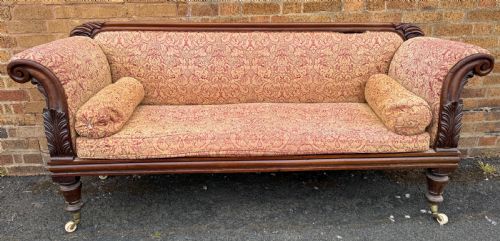


Vintage Scroll Daybed
A vintage scroll daybed brings sweeping timber frames and deep lounging comfort to a room, offering both daytime rest and classic architectural presence.
Vintage Scroll Daybed
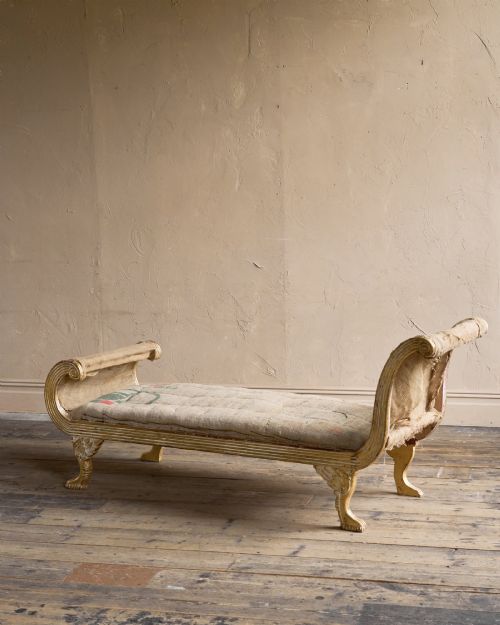
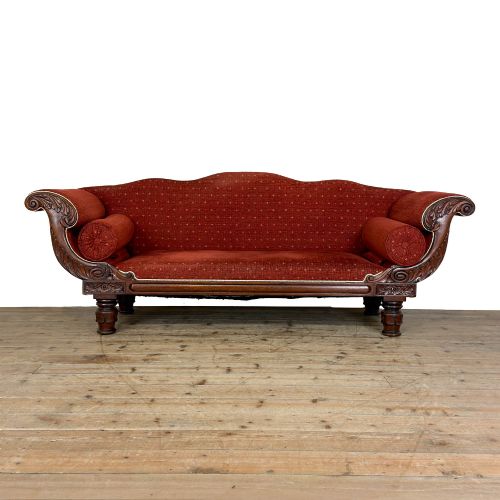
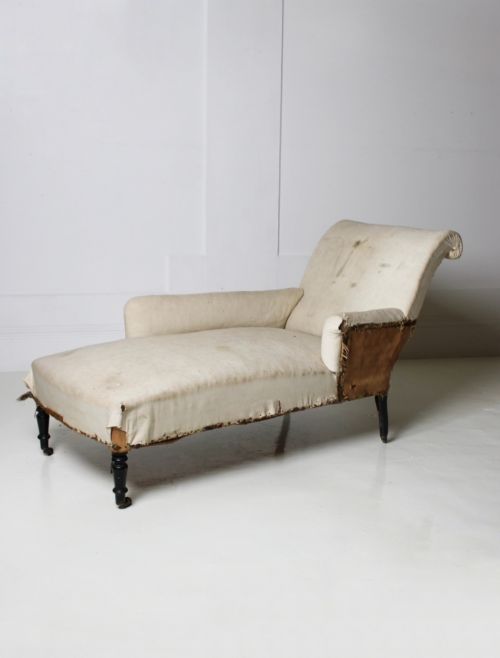
A vintage scroll daybed combines the reclining function of a sofa with the elongated form of a bed, featuring characteristic curved ends that define the silhouette. The pieces gathered under this heading span from the Regency and William IV eras through the Victorian period and into the twentieth century.
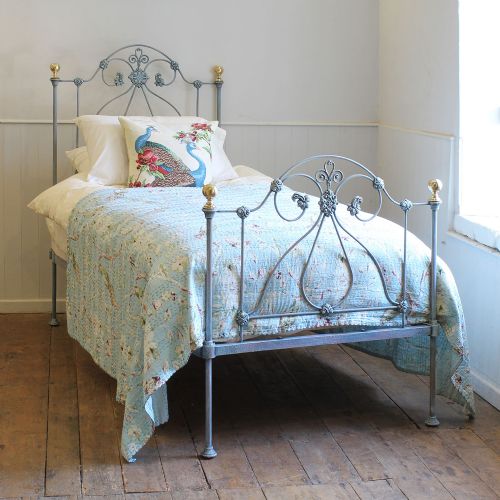
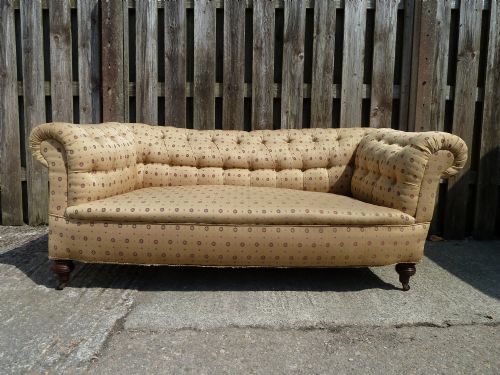
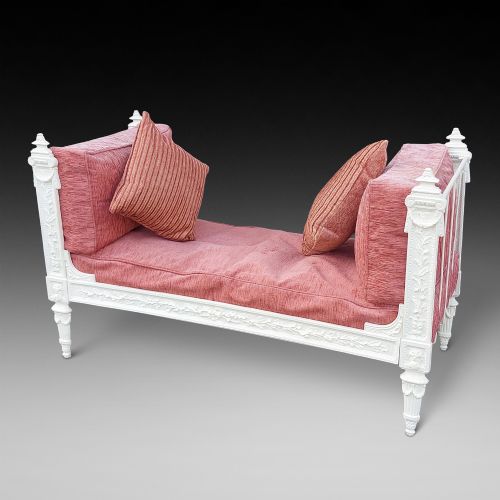
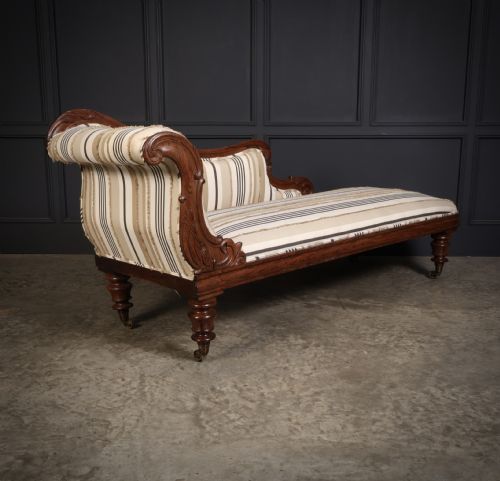
Buyers will encounter various interpretations, ranging from carved mahogany frames with double-ended scroll arms to cast iron frames and occasional French Louis XV style sleigh beds. Many examples function equally as day beds, chaise longues, or upholstered sofas with distinct wooden framing.
Origins stretch across country house proportions and refined urban workshops, utilising timbers such as mahogany, rosewood, and walnut alongside painted or verdigris iron. The unifying element remains the sweeping scroll form designed for reclining.
Construction and materials
Makers shaped structural frames primarily from dense hardwoods like mahogany, walnut, and rosewood, often employing skilled carving for the characteristic scroll ends and turned legs. Metal variants utilise cast iron or wrought iron, finished with painted surfaces or patinated verdigris.
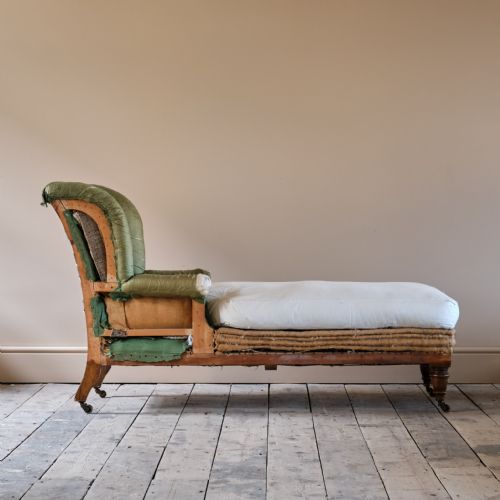
Upholstery techniques combined sprung or webbed bases with textiles, ranging from original fabric coverings to contemporary replacement upholstery. Timber framing frequently featured polished wood finishes that highlighted the grain of the chosen wood.
Vintage Scroll Daybed Retail Price Guide 2026
Typical asking prices for vintage scroll daybed among the pieces listed under this phrase on Sellingantiques today, from the lower quarter to the upper quarter. They describe what is for sale here now, not the wider market.
Listings feature woods spanning mahogany, walnut, and rosewood alongside cast iron and painted metal frames.
Assessing quality and craftsmanship
Quality rests in the crispness of the timber carving, the structural integrity of the scrolling frame joints, and the selection of fine grain timbers like rosewood or figured mahogany. Superior pieces exhibit harmonious proportions and well-executed joinery that withstands the stresses of heavy reclining use.
The Vintage Scroll Daybed Glossary
- Scroll-end
- A furniture arm or terminal that curls outward in a spiral scroll shape. This is the defining architectural feature of these daybeds and sofas.
- William IV
- A British design period spanning the 1830s characterised by robust classical revival forms and heavy mahogany or rosewood construction. Pieces from this era often display bold scrollwork.
- Verdigris
- A green patina or crust that forms on copper, brass, or iron surfaces through atmospheric weathering. It appears on metal daybeds and garden benches of considerable age.
Vintage Scroll Daybed: Frequently Asked Questions
How do I use a vintage scroll daybed?
These pieces function well in studies, large bedrooms, or drawing rooms as a dual-purpose seat and resting place. They suit spaces where you want formal architectural lines combined with comfortable daytime lounging.
Position the daybed against a wall to highlight the scroll ends, or float it in a larger room to display the timber back and frame from all angles.
Can I sleep on a vintage scroll daybed overnight?
Most vintage scroll daybeds were built primarily for sitting and daytime reclining rather than continuous nightly sleeping. The length and width depend on the specific historical frame, which often follows nineteenth-century proportions.
If intended for regular rest, check the internal dimensions and ensure the upholstered base provides adequate support for a mattress.
How do I distinguish a Regency daybed from a Victorian one?
Regency daybeds typically display cleaner architectural lines, classical restraint, and rich mahogany or simulated rosewood finishes dating from the early nineteenth century. Victorian examples often feature heavier proportions, darker walnut timbers, or cast iron construction.
Turned legs, upholstery styles, and the specific curvature of the scroll ends also offer clues to the manufacturing decade.
How do I care for the wood and upholstery?
Maintain wooden frames with appropriate beeswax or gentle polishes to preserve the finish of mahogany, walnut, or rosewood surfaces. Avoid placing the furniture in direct sunlight to protect textiles and timber from fading.
Vacuum upholstered surfaces regularly and consult a specialist for professional cleaning of antique fabric or replacement webbing.