



Vintage Screw Backs
Vintage screw backs are non-pierced earrings held by a threaded mechanism, offering secure wear without lobes needing holes.
Vintage Screw Backs
Vintage screw backs are earrings designed for unpierced ears, utilising a threaded post and screw mechanism to adjust the fitting securely onto the lobe. When you search for vintage screw backs, you encounter pairs spanning the Victorian, Edwardian, Art Deco, and Mid-Century periods.
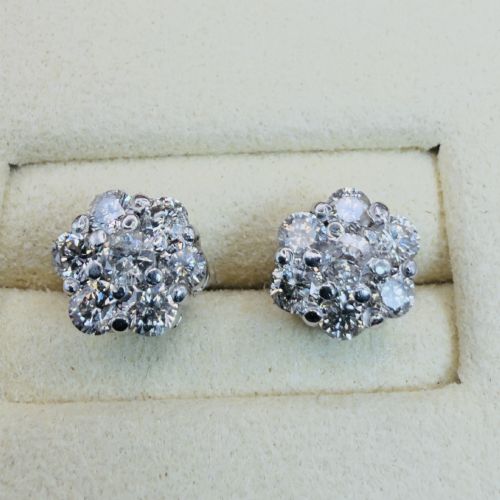
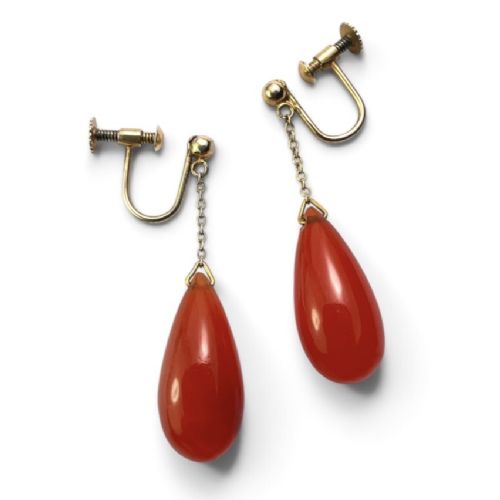
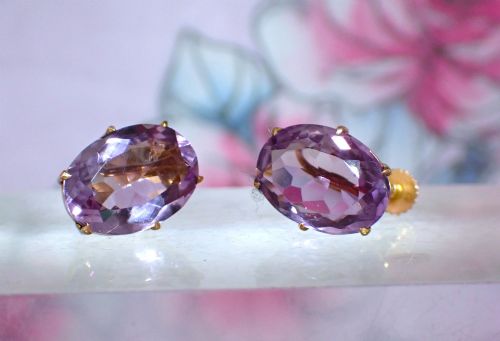
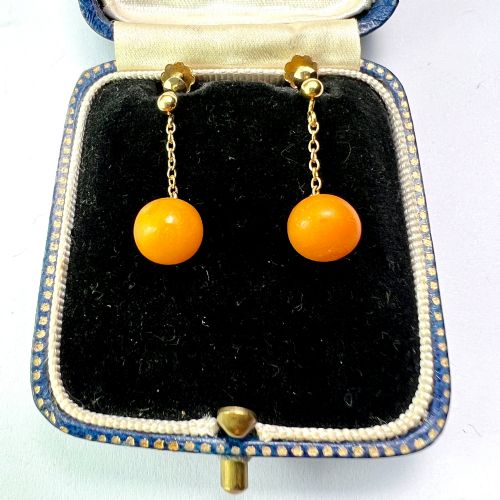
The earrings range from simple studs to elaborate chain drops, tassels, clusters, and hoops. Materials span nine-carat and eighteen-carat gold, silver, platinum, diamonds, pearls, amethysts, garnets, coral, jade, amber, and paste.
Edwardian and Victorian iterations often showcase delicate goldwork and coloured gemstones, whilst Art Deco and Mid-Century designs introduce platinum, white gold, geometric shapes, and marcasite.
How they were made
Jewellers constructed these earrings using precious metals such as nine-carat gold, silver, and platinum, alongside nine-carat and eighteen-carat white gold. Gemstones including diamonds, rubies, amethysts, tourmalines, and garnets were set alongside organic materials like pearls, amber, coral, jade, and mother of pearl.
The screw-back mechanism itself was soldered or integrated into the reverse of the earring setting, relying on a small threaded screw turned by fingers to tighten the fitting against the back of the lobe. Drop and chain sections were linked by hand, and intricate cluster and sunburst designs incorporated fine wirework and claw settings.
Some Edwardian pairs dangle amber or garnet beads so closely that they click softly with every turn of the head.
What varies in quality
Quality in these earrings rests upon the precision of the metalwork and the grade of the set materials. Superior examples display robust, smoothly operating screw threads that hold their position securely, alongside well-matched natural gemstones or pearls rather than simple glass paste.
Artistry in the setting, such as fine millegrain edges, substantial gold weight, and intricate configurations like oak leaf motifs or cluster sunbursts, distinguishes finer pieces from simpler production.
The Vintage Screw Backs Glossary
- Screw back
- An earring mechanism using a threaded post and a small screw nut to fasten the piece onto an unpierced earlobe. This allows the wearer to adjust the pressure applied to the lobe.
- Paste
- Hand-cut glass used as an affordable substitute for gemstones in antique and vintage jewellery. It is often foiled at the back to enhance its brilliance.
- Millegrain
- A decorative jewellery technique involving a line of tiny raised metal beads along the edge of a setting. It was particularly popular during the Edwardian and Art Deco periods.
- Marcasite
- Small, faceted pieces of iron pyrite polished and set into silver to resemble diamonds. The stones provide a dark, metallic sparkle popular in Art Deco designs.
- Cluster
- A jewellery arrangement where smaller stones surround a larger central gem or focal point. This layout maximises the visual impact of the materials used.
Vintage Screw Backs: Frequently Asked Questions
How do vintage screw back earrings work?
These earrings operate via a threaded post that passes behind the earlobe and a small rotating disc or screw that tightens against the back. By turning the screw, the wearer adjusts the pressure to hold the earring firmly in place without requiring pierced ears.
This mechanical design offers a reliable alternative to modern clip-on mechanisms, distributing the grip evenly across the lobe.
How do I date a pair of screw back earrings?
Dating relies on the prevailing style, materials, and manufacturing techniques characteristic of specific eras. Victorian pieces often feature rich coloured stones like amethyst and coral with floral or leaf motifs, whilst Edwardian examples favour delicate gold chain drops and garnets.
Art Deco and Mid-Century pairs introduce geometric platinum or white gold settings, diamonds, jade, and modern screw-back mechanisms.
Can screw back earrings be converted to posts?
Converting vintage screw backs to pierced posts is technically possible by removing the screw mechanism and soldering a standard post in its place. However, doing so alters the original antique or vintage integrity of the piece and removes part of its historical mechanism.
Most collectors prefer to preserve the original screw-back fittings intact.
Are screw backs comfortable to wear all day?
Comfort depends entirely on how tightly the screw is adjusted against the lobe. Because the wearer controls the exact pressure through the threaded screw, they can be set loose enough to prevent pinching whilst remaining secure.
Finding the right balance ensures they can be worn comfortably for extended periods.