









Vintage Scientific Tool
A vintage scientific tool bridges precision engineering and decorative art, offering tangible history from centuries of navigation, surveying, and measurement.
Vintage Scientific Tool
A vintage scientific tool encompasses historical instruments used for navigation, drafting, surveying, and measurement across the eighteenth, nineteenth, and early twentieth centuries. These objects reflect the rigorous mathematical and observational needs of maritime captains, architects, engineers, and scientists working during periods like the Georgian, Victorian, and Edwardian eras.
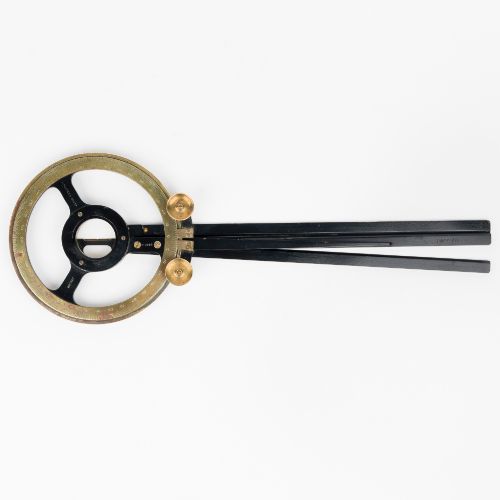
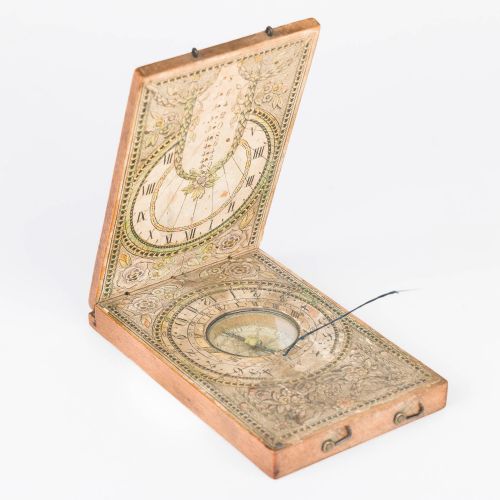
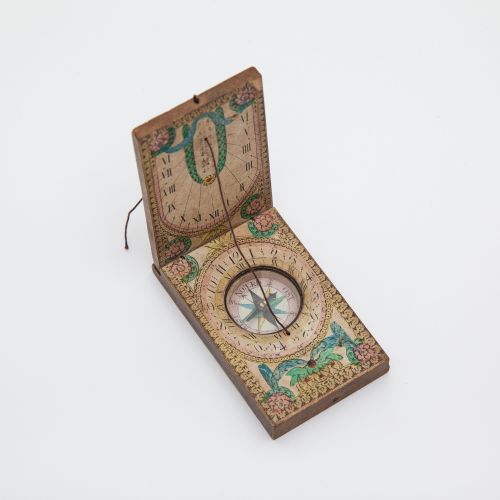
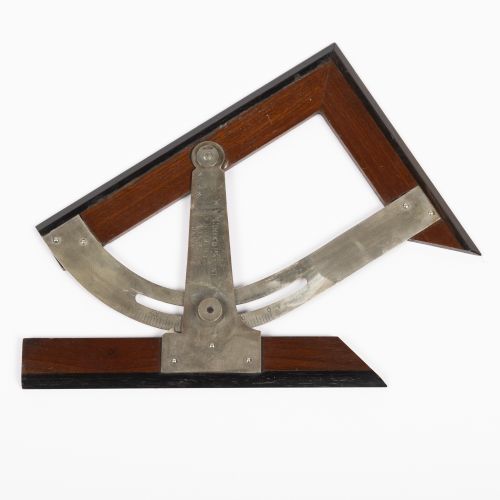
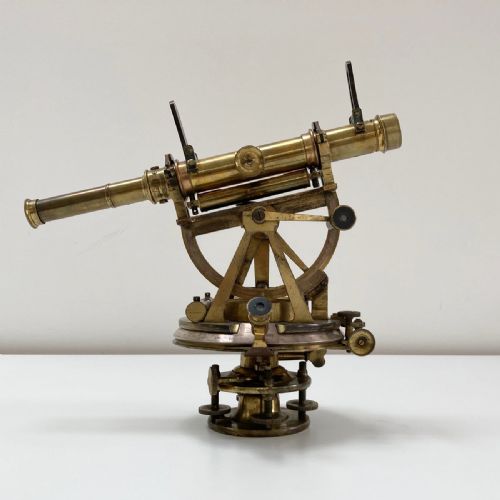
The most common forms on this page include portable sundials, drafting pantographs, marine instruments, and complex surveying levels housed in fitted cases. Examples range from pocket-sized diptych dials to substantial brass theodolites and specialised thermometers.
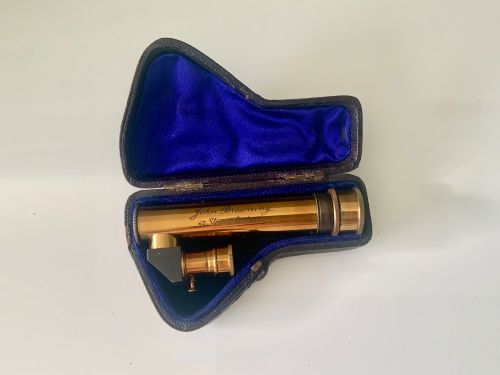
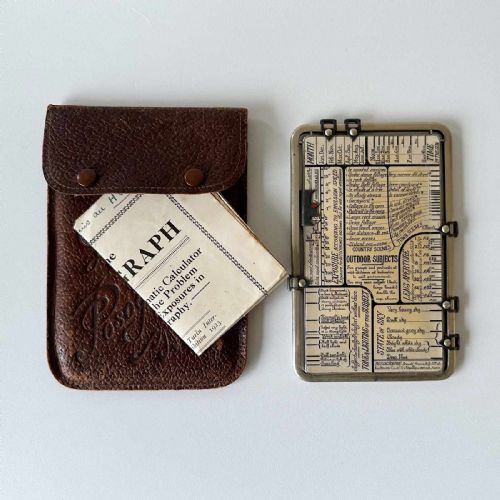
Materials span polished brass, mahogany, glass, paper, and lacquered metal, often combining to create functional objects of striking visual appeal. Many retain their original fitted boxes lined with velvet or leather, preserving their complete operational sets.
How they were made
Construction relies heavily on turned and cast brass components, valued for their durability and resistance to corrosion in field conditions. Metal parts often receive a protective lacquered finish to maintain their lustre.
Enclosures and fitted cases utilise dense hardwoods such as mahogany and general timber, frequently lined with velvet or leather to secure delicate lenses, needles, and glass dials during transport.
Vintage Scientific Tool Retail Price Guide 2026
Typical asking prices for vintage scientific tool among the pieces listed under this phrase on Sellingantiques today, from the lower quarter to the upper quarter. They describe what is for sale here now, not the wider market.
Listings feature instruments constructed from mahogany, brass, glass, and velvet originating across the nineteenth and early twentieth centuries.
What varies in quality
Quality rests upon the precision of the mechanical movement, the legibility of engraved scales, and the integrity of the original optical glass or magnetic needles. Instruments signed by notable makers generally demonstrate superior finishing and more refined mathematical calibration.
The survival of associated components, such as original mahogany cases, complete hydrometer sets, and matching leveling accessories, determines the overall integrity of the piece.
John Browning·L Casella and Co·Patrick Adie·Thomas Dunn·W H Harling·John Lilley and Son·WF Stanley
The Vintage Scientific Tool Glossary
- Pantograph
- A mechanical linkage connected in a parallelogram-like system used for copying maps and drawings at different scales. It allowed draughtsmen and architects to enlarge or reduce plans accurately.
- Theodolite
- A precision instrument for measuring horizontal and vertical angles in surveying and triangulation. It typically mounts on a tripod and incorporates telescopic sights.
- Hydrometer
- A device used for measuring the specific gravity of liquids based on the concept of buoyancy. Sikes hydrometers were standard for determining alcohol proof in trade and customs.
- Diptych-dial
- A portable pocket sundial formed of two small leaves hinged together, incorporating a folding gnomon string and a magnetic compass. Users oriented the instrument to tell local time while travelling.
- Spectroscope
- An optical instrument used to measure properties of light over a specific portion of the electromagnetic spectrum. It separated light into constituent wavelengths for chemical and physical analysis.
Vintage Scientific Tool: Frequently Asked Questions
How do I identify the period of a scientific instrument?
Dating relies on maker signatures, stylistic cues in the cabinetry, and the evolution of materials such as lacquered brass versus blackened finishes. Many pieces bear engraved dates or maker details directly on the metal plates.
Documentation inside fitted cases or patent stamps also helps place an instrument within the Georgian, Victorian, or Edwardian eras.
Are these instruments still functional?
Many mechanical components, compasses, and folding sundials remain operational, though precision alignment may have shifted over time. They are primarily collected and displayed as historical artefacts of scientific endeavour.
Optics and glass elements require careful handling, and wooden cases should be protected from extreme humidity fluctuations.
Why do many instruments come in wooden cases?
Fitted mahogany boxes lined with velvet or leather protected delicate brass components, glass lenses, and magnetic needles from damage during field transport. These protective housings were essential for maintaining the calibration of precision tools.
Survival of the original fitted case often includes extra lenses, plumb bobs, or secondary dials specific to that instrument.