



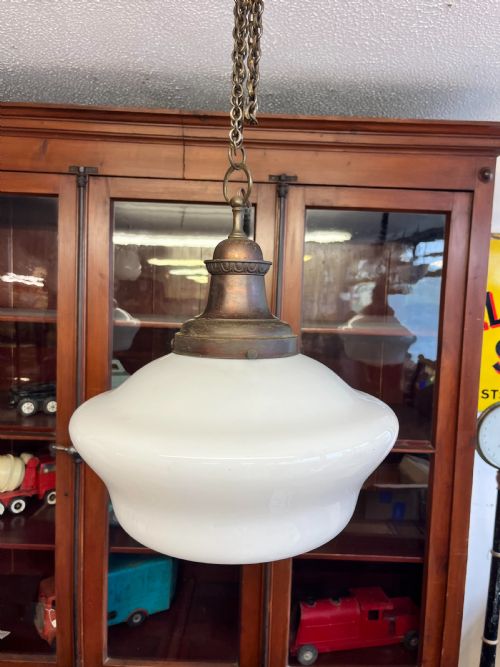


Vintage Schoolhouse Lighting
Vintage schoolhouse lighting brings utilitarian function and generous glass to hallways and kitchens, offering robust construction and diffuse illumination.
Vintage Schoolhouse Lighting
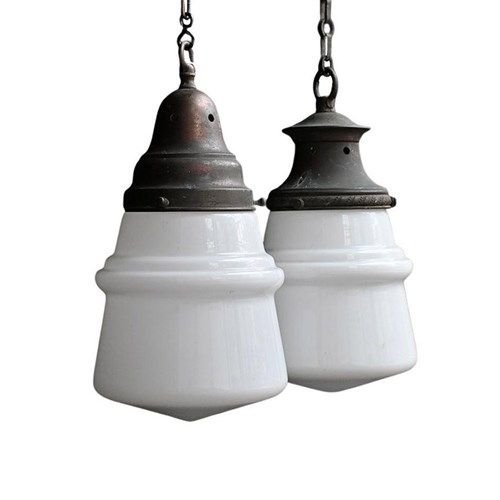
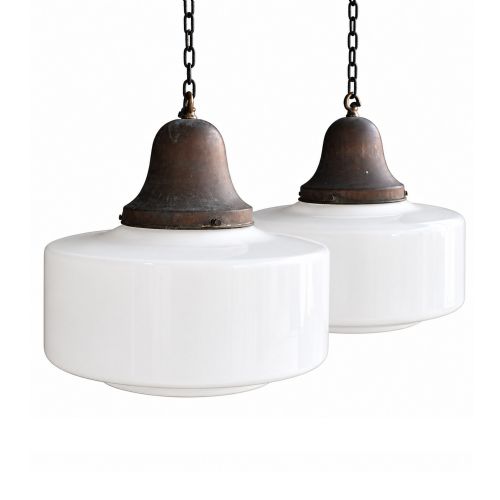
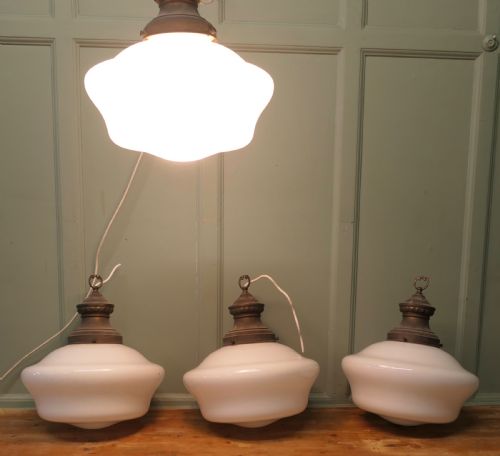
Vintage schoolhouse lighting encompasses sturdy pendants and ceiling lights designed for public institutions and large rooms during the early twentieth century. These fixtures typically feature prominent glass shades suspended from simple metal fitters, providing even light distribution for everyday spaces.
Buyers searching for vintage schoolhouse lighting most frequently encounter pendant configurations dating from the nineteen-twenties and nineteen-thirties. Examples range from simple commercial shades to architectural chapel and church fixtures constructed in brass, copper, iron, and opaline glass.
The category also occasionally includes related architectural pieces such as industrial ceiling lights and wall clocks sharing the same utilitarian aesthetic. These items reflect the functional design priorities of Edwardian, Art Deco, and industrial periods.
How they were made
Makers utilised durable metals such as brass, copper, and iron to form the structural fitters, galleries, and suspension hardware of vintage schoolhouse lighting. These metals were spun, cast, or stamped to create resilient housings capable of supporting heavy glass shades in busy institutional settings.
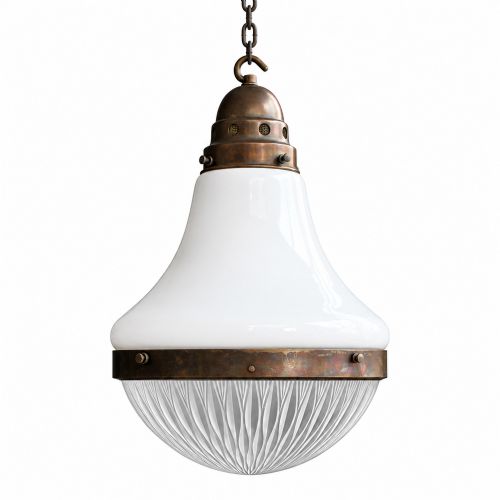
The signature shades were manufactured from opaline glass, opal glass, or clear prismatic glass to soften glare while maximising brightness. Mould-blown and pressed techniques created smooth diffusing bowls or complex prismatic patterns designed to spread light evenly across a room.
Vintage Schoolhouse Lighting Retail Price Guide 2026
Typical asking prices for vintage schoolhouse lighting among the pieces listed under this phrase on Sellingantiques today, from the lower quarter to the upper quarter. They describe what is for sale here now, not the wider market.
Some chapel pendants are so unusually large they require their own zip code.
What varies in quality
The distinction between standard commercial output and superior examples lies in the weight and finish of the metal components and the depth of the glass. Heavier brass or copper fitters with refined patination indicate higher initial manufacturing standards than basic iron or painted alternatives.
Glass quality determines optical performance, with thick opaline or double prismatic surfaces diffusing light more evenly without hot spots. Matched pairs and larger proportions also elevate an assembly, reflecting the original architectural hierarchy of the building it served.
The Vintage Schoolhouse Lighting Glossary
- Opaline glass
- A milky, translucent glass variant that softens light output while hiding the internal bulb. It was widely used in institutional pendants to reduce harsh glare.
- Holophane
- A brand of prismatic glass engineered with specific ribbed patterns to direct and diffuse light efficiently. This technique reduces shadows in large functional spaces.
- Drop-dial wall clock
- A timepiece featuring an extended lower case enclosing a pendulum, often made in oak. These clocks frequently accompanied institutional lighting schemes.
- Fusee
- A conical pulley mechanism inside a clock movement that equalises the driving force of the mainspring. It ensures more consistent timekeeping as the spring winds down.
Vintage Schoolhouse Lighting: Frequently Asked Questions
What is vintage schoolhouse lighting?
Vintage schoolhouse lighting refers to utilitarian pendant and ceiling fixtures originally installed in classrooms, municipal buildings, and churches during the early twentieth century. These lights combine robust metal hardware with milky glass shades designed for functional illumination.
Today, buyers use these pieces to introduce industrial character and diffuse warmth into domestic hallways, kitchens, and living spaces.
How do I hang a heavy pendant?
Hanging these fixtures requires secure anchorage to ceiling joists using appropriate hooks or mounting brackets suited to the total weight of the metal and glass. Professional installation ensures the electrical wiring and suspension chain or rod support the load safely.
Adjusting the drop height depends on the ceiling clearance of your room and whether the light serves as a central room source or hangs over a table.
How do I clean opaline glass?
Cleaning opaline glass involves removing the shade from the metal fitter and washing it gently in warm water with mild detergent. Avoid abrasive scouring pads that can scratch the delicate surface or ruin the interior finish.
Dry the glass thoroughly with a lint-free cloth before reattaching it to the brass or copper gallery.