

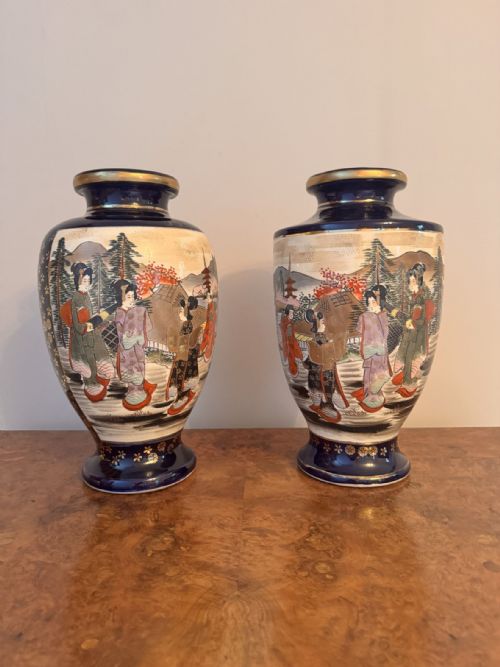





Vintage Satsuma Pair
These vintage satsuma pair pieces bring hand-painted earthenware into your room, offering intricate ceramic detail and gold leaf highlights.
Vintage Satsuma Pair
When you search for vintage satsuma pair pieces, you are looking at matched sets of Japanese ceramics created across several decades from the nineteenth century into the twentieth century. These objects include both tall decorative vases and converted table lamps designed to display traditional motifs.
The versions you are most likely to meet on this page date from the Meiji period through to the Showa period, encompassing Edwardian examples as well. They arrive as earthenware or porcelain vessels, often showing intricate enamel work and gilded accents.
Makers working in centres such as Kyoto produced these matched pairs for export and domestic use alike. Collectors find them in forms ranging from small cabinet pieces to large floor-standing or table-top vessels.
How vintage satsuma pair pieces were made
Potters shaped these vessels from earthenware and porcelain bodies before firing them in kilns to create a stable ceramic base. Artisans then applied detailed enamel colours and gold leaf highlights by hand to achieve the distinctive crackle glaze finish.
Many of the table lamps seen here incorporate fitted wooden, brass or fabric elements alongside the ceramic body to serve modern lighting needs. The combination of delicate hand painting and robust mounting shows the adaptation of traditional techniques for later markets.
Vintage Satsuma Pair Retail Price Guide 2026
Typical asking prices for vintage satsuma pair among the pieces listed under this phrase on Sellingantiques today, from the lower quarter to the upper quarter. They describe what is for sale here now, not the wider market.
Wisteria gardens painted in gold leaf on these vases ensure your room blooms permanently, even in midwinter.
What varies in quality
The fineness of the hand-painted enamel work and the precision of the gold leaf application determine the distinction between standard vessels and superior examples. Artisans who spent greater time on figurative scenes or botanical studies produced pieces with sharper visual depth.
The consistency of the ceramic body and the preservation of the delicate surface crackle also separate ordinary items from exceptional ones. Matched pairs that retain their original balance and proportion demonstrate greater care during production.
Hakusan·Kinkozan
The Vintage Satsuma Pair Glossary
- Satsuma
- A type of Japanese earthenware featuring a pale, ivory-coloured crackle glaze that accepts detailed enamel and gold leaf decoration. It originated in Satsuma Province before production spread to major urban centres.
- Meiji Period
- The era in Japanese history lasting from 1868 to 1912, noted for the opening of trade with the West and the export of ornate decorative arts. Pieces from this time often display complex pictorial scenes.
- Enamel
- Opaque glass paste applied to the ceramic surface and fired to produce vibrant colours. It forms the primary medium for the detailed motifs found on these vessels.
- Gold Leaf
- Extremely thin sheets of beaten gold applied to the ceramic design for decorative highlights. This material catches the light and emphasises specific areas of the painted composition.
- Earthenware
- Porous pottery fired at lower temperatures than porcelain. It forms the traditional absorbent body required for the characteristic Satsuma glaze.
Vintage Satsuma Pair: Frequently Asked Questions
What is a satsuma pair?
A satsuma pair consists of two matching ceramic vessels, such as vases or table lamps, decorated in the traditional Japanese style with enamels and gold leaf.
These pieces were made together to sit symmetrically on a mantelpiece, table, or sideboard in domestic interiors.
How do I date these pieces?
Dating relies on stylistic clues, kiln marks, and the historical periods associated with Japanese export ceramics from the nineteenth and twentieth centuries.
Changes in enamel palettes and mounting types also help narrow down whether an item belongs to the Meiji, Edwardian, or Showa eras.
Are these lamps original?
Some pieces started life as vases and were later converted into table lamps during the twentieth century to suit modern domestic lighting.
Other examples were wired or fitted with wooden and brass bases closer to their original date of manufacture.
How should I clean them?
Dust these ceramic surfaces gently with a soft, dry cloth to protect the delicate hand-painted enamels and gold leaf highlights.
Avoid using water, chemical solvents, or abrasive cleaners that could damage the antique glaze or the wooden and brass fittings.