

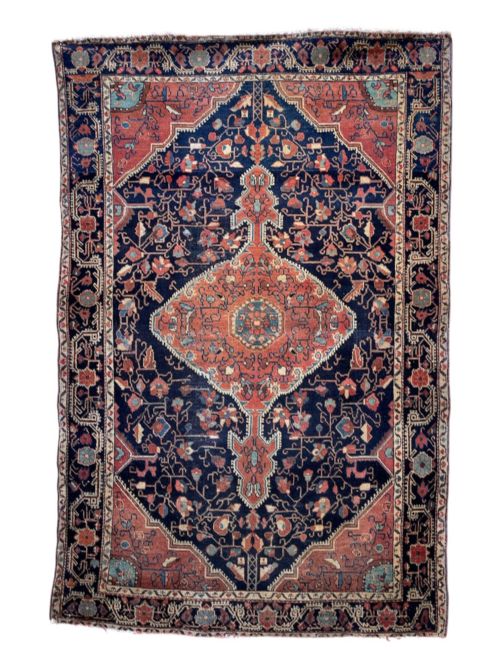
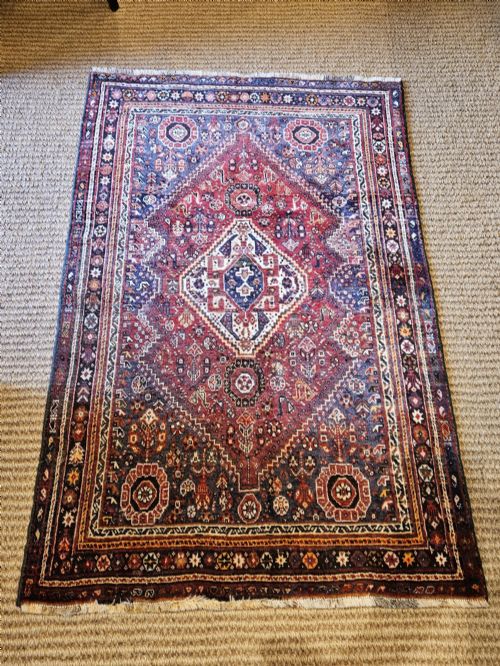
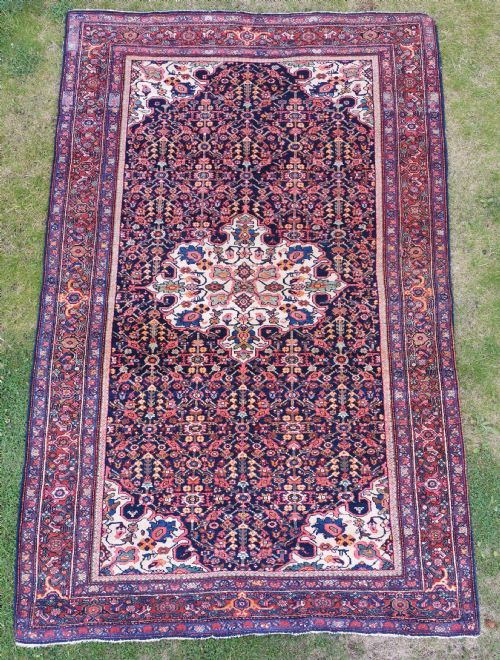
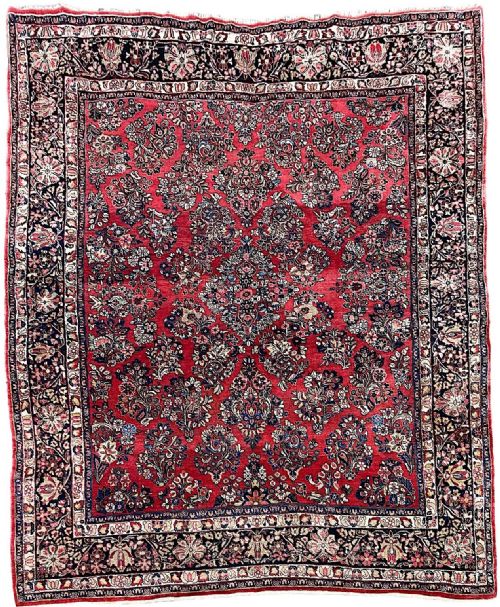


Vintage Sarouk Area Rug
A vintage sarouk area rug brings the rich floor coverings of West Persia into a room through dense wool piles and traditional Persian motifs.
Vintage Sarouk Area Rug
A vintage sarouk area rug covers pieces originating from West Persia, spanning the late nineteenth century through the early twentieth century. Buyers encounter formats ranging from smaller village rugs to room-sized carpets.
The selection frequently includes related regional weaving traditions such as Jozan, Ferahan, and Fereghan Sarouk. These woven textiles display distinct traditional Persian designs including boteh patterns, pomegranates, and birds.
Makers produced these floor coverings in various dimensions, from compact formats measuring under two metres to expansive carpets exceeding five metres in length.
How They Were Made
Weavers constructed these rugs using wool for the pile, combined with cotton foundations that provided structural stability for the knotted structures. This material combination allowed artisans to produce dense weaves designed for domestic use.
Craftspeople utilised traditional hand-knotting techniques characteristic of West Persian workshops and villages. Artisans incorporated vegetable and natural dyes to achieve the soft colours found across the pieces.
Listings feature pieces spanning from 1870 to 1930, constructed from wool and cotton in Persian styles.
What Varies in Quality
Knot density and structural fineness separate standard village examples from exceptional workshop productions. A very fine weave demonstrates greater technical skill by the artisan.
The integrity of the wool pile and the balance of the soft colour palette determine the visual success of each carpet. Preserved surface conditions enhance the longevity of the traditional design elements.
The Vintage Sarouk Area Rug Glossary
- Sarouk
- A type of Persian rug originating from the village of Sarouk and the surrounding region in West Persia. These pieces are known for durable wool construction and traditional floral or medallion designs.
- Boteh
- A stylised almond or paisley motif representing a floral spray or cypress tree. Artisans frequently incorporated this ancient Persian symbol into the field design of area rugs.
- Ferahan
- A regional style of Persian carpet associated with fine weaves and intricate classical motifs. Pieces bearing this attribution often date from the nineteenth or early twentieth century.
- Jozan
- A village rug originating from the Jozan district near Sarouk in West Persia. These textiles typically feature robust wool piles and distinctive local design variations.
- Pile
- The upright yarn loops that form the usable surface of a rug. Artisans sheared this wool layer to a uniform height to display the woven pattern clearly.
Vintage Sarouk Area Rug: Frequently Asked Questions
Where were these rugs made?
These rugs were made in West Persia, specifically in villages and workshops around the Sarouk, Jozan, and Ferahan districts. Artisans in these regions produced knotted floor coverings for local use and export.
Production spanned from the nineteenth century into the twentieth century, incorporating traditional methods passed down through generations of weavers.
What materials make up a Sarouk?
A Sarouk is constructed using a wool pile knotted onto a cotton foundation. This combination provided both the soft surface texture and the structural strength required for heavy floor use.
Weavers sourced local sheep's wool and spun it by hand before applying natural dyes derived from plants and minerals.
How do I identify a Jozan piece?
A Jozan piece is identified by its specific West Persian village origin and distinct structural characteristics. These rugs often share technical traits with Sarouk weaving while maintaining local design variations.
Examining the weave density and regional motifs helps differentiate Jozan examples from other West Persian rugs.
How do I care for an old rug?
Care for an old rug by avoiding direct sunlight and using a quality underlay to prevent sliding and friction. Vacuum gently with suction only, avoiding beater bars that can damage the wool pile.
Professional cleaning by specialists in antique textiles ensures the cotton foundations and wool knots remain protected over time.