


Vintage Samovar Tap
These vintage samovar tap fittings and the tea and coffee urns they serve are sought after for their striking metalwork and period character.
Vintage Samovar Tap
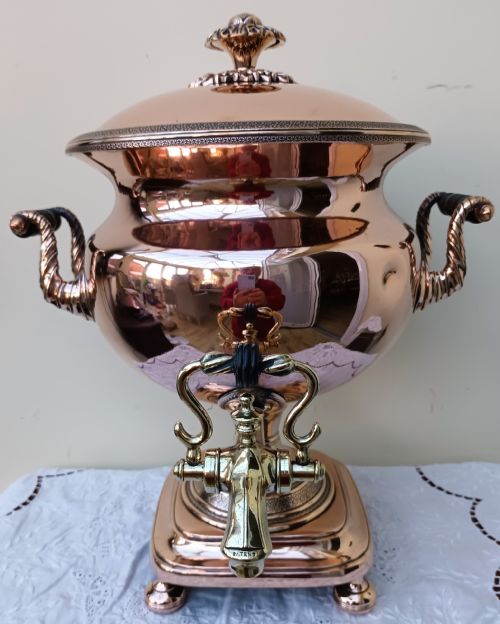
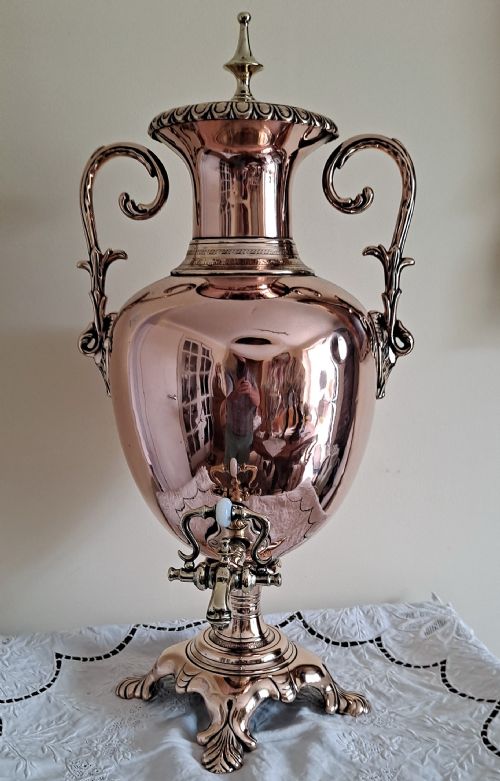
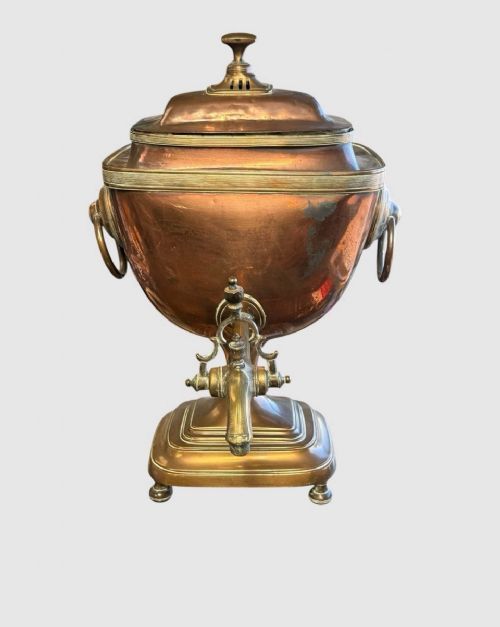
When you search for vintage samovar tap, you encounter pieces originating from the Georgian, Regency, and Victorian periods, spanning the nineteenth century. These items include tea urns, coffee urns, and samovars equipped with functional spouts.
The selections on this page predominantly feature English and Dutch examples fashioned from copper, brass, and silver plate, often accompanied by wooden or ebonised handles.
Many items date from specific eras such as 1800, 1850, and 1880, reflecting Georgian Neoclassical, Regency, and Victorian stylistic traditions.
How they were made
The construction relies heavily on hammered or spun copper and cast brass, materials chosen for their durability and thermal properties in heating water.
Silversmiths applied silver plating over base metals on select tea urns, while turners shaped ebonised wood for insulating handles and spigot keys.
Current listings span the nineteenth century, including Georgian, Regency, and Victorian styles made from copper, brass, and silver plate.
What varies in quality
Quality separates simple utilitarian vessels from refined pieces through the crispness of the brass casting on the tap and the integrity of the joinery.
The presence of integrated bronze elements or sophisticated Georgian Neoclassical proportioning elevates the execution of the metalwork.
Walker & Hall Sheffield
The Vintage Samovar Tap Glossary
- Samovar
- A heated metal container traditionally used to boil and heat water for tea, typically featuring a central internal pipe and a tap at the base.
- Tea urn
- A large metallic vessel designed for dispensing hot tea at formal gatherings, often sharing the form and tap mechanism of a samovar.
- Toleware
- Painted or lacquered metalware, commonly tin or iron, represented here by early nineteenth century Dutch coffee urns.
- Ebonised wood
- Timber treated to resemble ebony, frequently utilised for the insulating handles and tap turners on nineteenth century metal vessels.
Vintage Samovar Tap: Frequently Asked Questions
What is a vintage samovar tap used for?
These taps served to dispense hot water from large metal urns during tea and coffee service in large nineteenth century households.
Today, they survive as decorative items or functional components on antique tea urns.
How do I identify a Regency period samovar?
Regency pieces often display classical architectural influences, such as urn-shaped bodies and distinct pedestal bases dating between 1795 and 1837.
They frequently combine bronzed copper and brass elements characteristic of the era.
What metals were used to make these urns?
Makers primarily utilised copper and brass, alongside silver plate and nickel silver for higher-end serving vessels.
Some examples also incorporate bronze and ebonised wood details.
Are these tea urns English or continental?
The listings include both English Georgian and Victorian pieces as well as early nineteenth century Dutch toleware coffee urns.
English examples dominate the selection with copper and brass construction.