







Vintage Salesman Sample
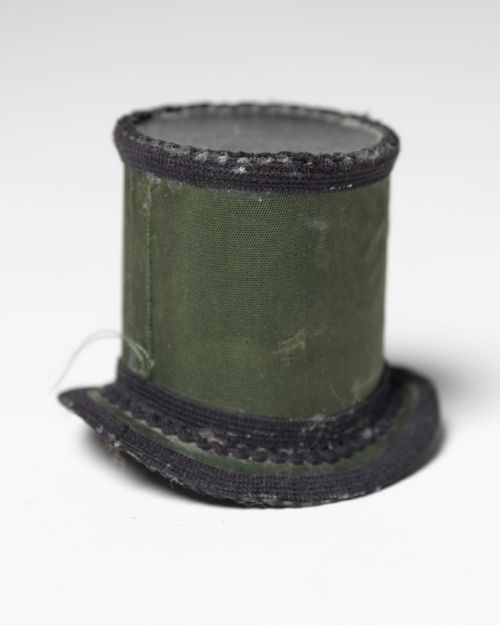
These vintage salesman sample pieces are small-scale models and miniatures made to demonstrate full-size items to prospective buyers.
Vintage Salesman Sample
When you search for vintage salesman sample items, you encounter miniature furniture, scale models, and salesman hardware boards spanning from the seventeenth century through to the Edwardian era. These pieces served practical commercial and demonstration purposes rather than acting purely as children's toys.
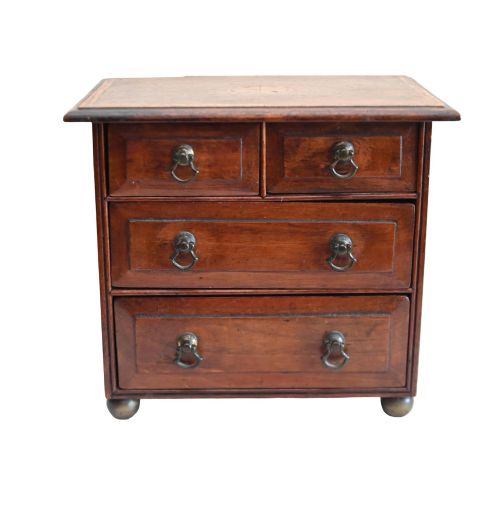
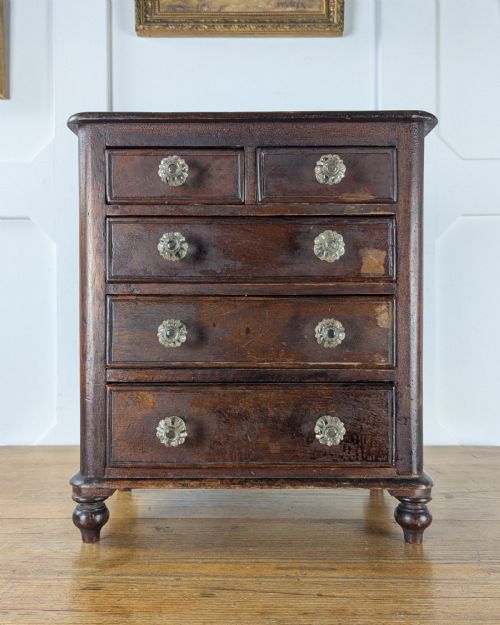
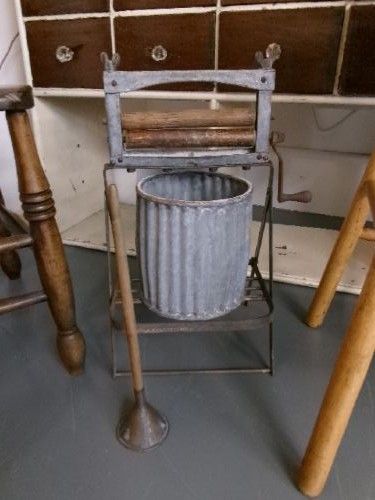
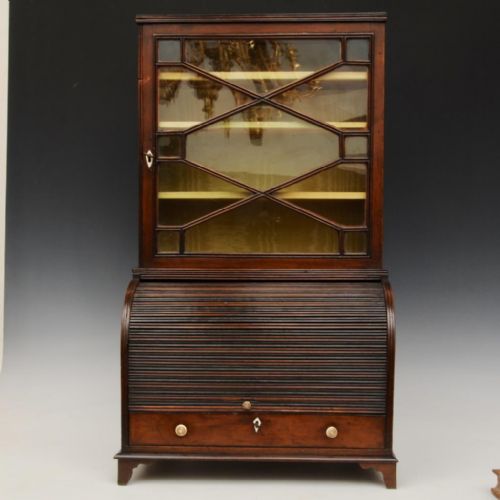
The selection on this page relies heavily on nineteenth-century and Victorian items, including miniature chests of drawers, laundry equipment, and architectural displays. Mahogany and oak dominate the wooden forms, often reflecting larger domestic styles such as Georgian Revival and Victorian Industrial.
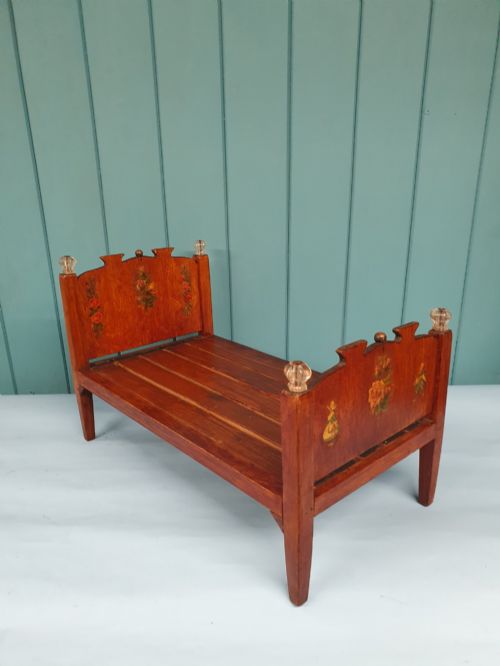
Beyond standard miniature furniture, the category encompasses diverse objects like pottery plaques, leather shoes, toy beds, and agricultural models such as single farrow ploughs. These varied formats demonstrate the wide scope of goods once marketed through portable miniature examples.
Materials and construction
Cabinetmakers utilised hardwoods like mahogany, walnut, and oak to construct miniature chests of drawers, secretaire cabinets, and dressers with the same joinery techniques applied to full-sized furniture. Turned feet, panelled doors, and carved details mirror standard period construction methods on a reduced scale.
Metal components incorporate brass, cast iron, and standard iron, frequently seen supporting laundry equipment like travellers sample mangles or forming precise machinery models. Leather, pottery, and glass also appear in specific hardware boards, shoes, and decorative plaques.
Vintage Salesman Sample Retail Price Guide 2026
Typical asking prices for vintage salesman sample among the pieces listed under this phrase on Sellingantiques today, from the lower quarter to the upper quarter. They describe what is for sale here now, not the wider market.
Listings feature items spanning the 17th century through to the Edwardian period, executed in wood, brass, cast iron, and pottery.
Assessing quality and proportion
Quality rests upon the fidelity of the scale and the precision of the miniature joinery, distinguishing professional workshop output from simpler folk art or toy production. Superior examples maintain exact architectural proportions and functional working elements rather than relying on rough approximations.
The integrity of the original materials and surface finish dictates value, with untouched patination on wood and genuine wear on metal stands offering greater authenticity. Pieces retaining original hardware or maker inscriptions, such as hardware boards bearing company details, carry distinct historical value.
Gerwin Co Birmingham
The Vintage Salesman Sample Glossary
- Apprentice piece
- A project created by a woodworker in training to demonstrate mastery of specific joinery techniques before gaining guild admission.
- Travellers sample
- A portable miniature version of a larger product, carried by commercial representatives to demonstrate wares to shopkeepers without hauling bulky stock.
- Agricultural vernacular
- Local, traditional styles applied to farming implements and rural machinery models, often constructed by regional craftsmen without formal academic design oversight.
- Hardware board
- A mounted display panel featuring miniature samples of fixings, locks, or tools produced by industrial firms for trade cataloguing and customer selection.
Vintage Salesman Sample: Frequently Asked Questions
What is a vintage salesman sample?
These items are small-scale models and miniatures utilised by commercial travellers and makers to demonstrate full-sized furniture, machinery, and goods to prospective buyers.
They allowed merchants to display product range and quality without transporting heavy or bulky inventory across regions.
How do you date a miniature cabinet?
Dating relies on identifying period wood types like mahogany or walnut alongside specific revival styles such as Georgian Revival or William and Mary.
Construction methods, dovetailing techniques, and secondary timbers further help distinguish seventeenth-century work from nineteenth-century interpretations.
Were these items meant for children?
Most items served commercial demonstration purposes or acted as apprentice training pieces rather than standard children's playthings.
Certain items like dolls house beds or small toy pieces overlap with children's toys, but traditional samples focused strictly on adult trade presentation.
Where should I display small models?
Miniature furniture and hardware boards suit tabletops, specialised display shelves, or dedicated cabinets where their fine joinery remains protected.
Their compact scale allows them to integrate easily into existing room schemes without dominating the surrounding floor space.