






Vintage Sailor Art
Vintage sailor art encompasses handmade maritime folk objects created by seamen and coastal craftspeople across the nineteenth and early twentieth centuries.
Vintage Sailor Art
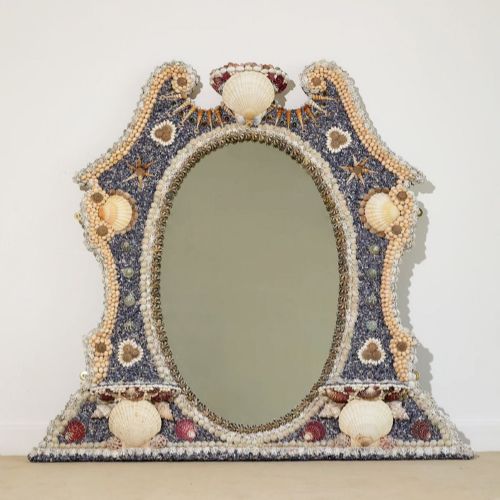
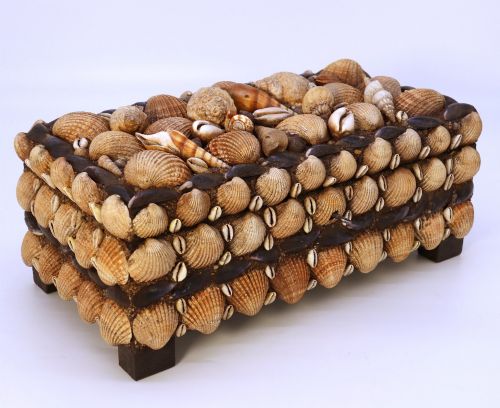
Vintage sailor art spans diverse decorative objects and maritime collectables created during the Georgian, Victorian, and early twentieth-century periods. Buyers searching this phrase typically encounter folk art dioramas, intricate shellwork, and detailed maritime paintings.
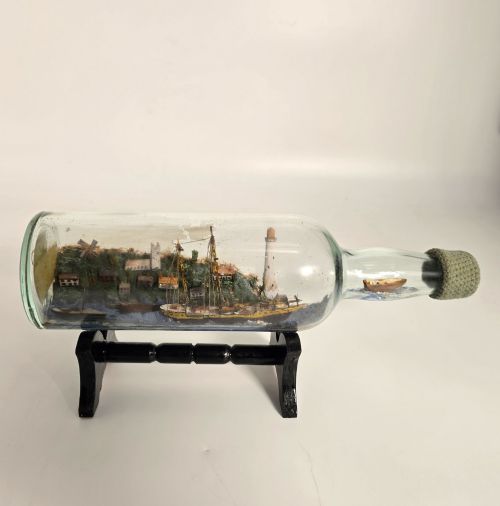
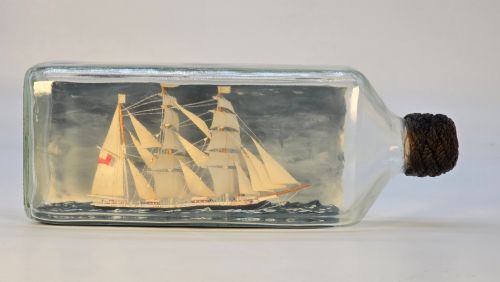
The selections on this page feature scratch-built ship models, bottled dioramas, and sailors woolie embroideries originating from English, French, and Welsh makers. These pieces reflect deep ties to the sea through domestic and utilitarian craft.
Framed watercolours, gouache paintings, and photographs capture naval vessels and portraiture alongside practical items like carved wooden fids and whalebone walking sticks. Such variety shows how maritime communities expressed their craft both at sea and ashore.
Materials and construction methods
Maker construction relies heavily on natural materials gathered from coastal environments or worked aboard vessels, including wood, bone, horn, and seashells. Artisans shaped these mediums using basic hand tools to produce intricate decorative models and functional vessels.
Textile and pigment works utilise thread, watercolour, paint, and paper mounted within wooden or glass enclosures to preserve delicate maritime scenes. Nailsea glass and carved plaster further expand the range of durable textures found across these historical objects.
Vintage Sailor Art Retail Price Guide 2026
Typical asking prices for vintage sailor art among the pieces listed under this phrase on Sellingantiques today, from the lower quarter to the upper quarter. They describe what is for sale here now, not the wider market.
Some nineteenth-century sailors whiled away long voyages by carving walking sticks from shark vertebrae and whalebone.
Assessing quality in maritime pieces
Quality rests upon the intricacy of assembly and the preservation of delicate components like bottled rigging or applied shellwork. Superior examples maintain structural integrity across complex miniatures without compromising the natural patina of age.
Artistic execution differentiates standard commemorative items from finer works, particularly in the fine brushwork of gouache paintings and the tight stitchwork of woolie embroideries. Materials such as rosewood and whalebone also elevate the distinction of functional implements.
Emily Eyres·Matisse
The Vintage Sailor Art Glossary
- Woolie
- A traditional embroidery created by sailors using coloured wool threads to depict naval vessels at sea. These textile pieces often incorporate varied stitch techniques to render the water and rigging.
- Diorama
- A three-dimensional scene enclosed within a glass bottle, frame, or case. Maritime examples frequently house miniature sailing ships constructed from scrap wood and thread.
- Fid
- A conical wooden or bone tool used by sailors for splicing rope and separating strands during rigging work. Decorative versions display careful hand carving.
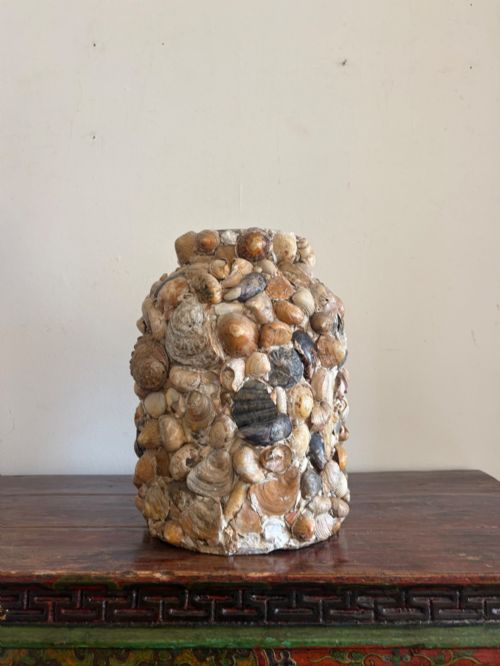
- Shellwork
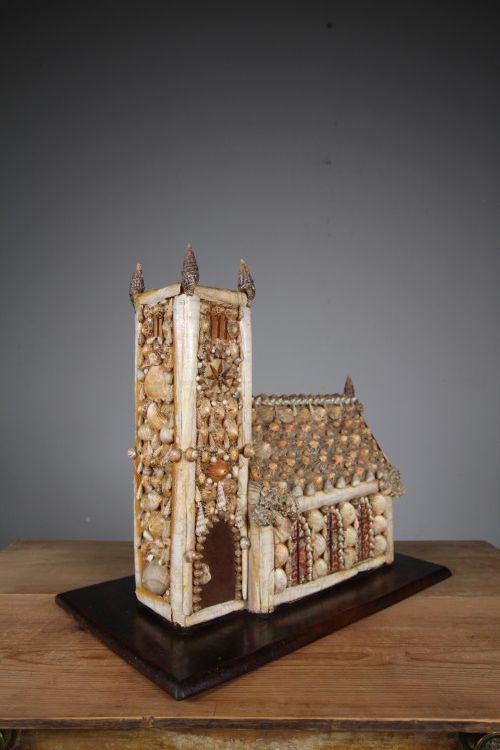
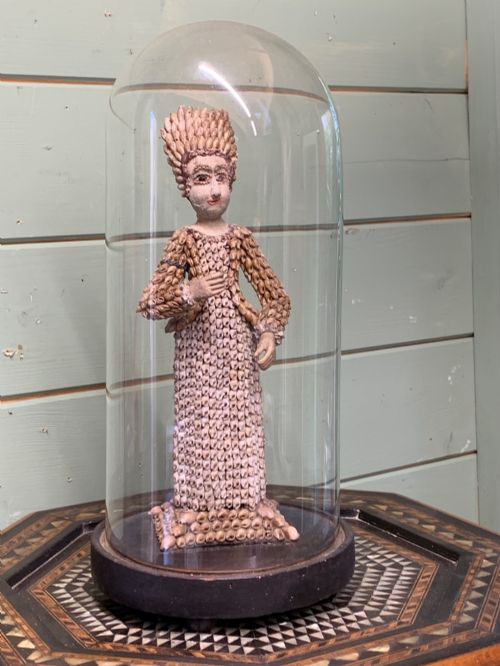
- Decorative art formed by adhering seashells to wooden boxes, frames, or sculptural structures like churches and grottos. This technique gained popularity during the Victorian era.
- Nailsea glass
- Glassware characterised by looped or speckled coloured enamel designs produced in English glassworks. Rolling pins made in this style were often given as sentimental tokens.
Vintage Sailor Art: Frequently Asked Questions
How did sailors make ships in bottles?
Makers constructed the miniature sailing ships with hinged masts and rigging that folded flat along the hull.
They slid the assembly through the neck of the bottle and used attached strings to pull the masts upright once inside.
What materials are used in shellwork?
Shellwork objects utilise numerous small seashells applied meticulously to wooden frames, boxes, and sculptural forms using adhesive mixtures.
Victorian and Edwardian artisans arranged these shells into geometric patterns or architectural models like grottos and churches.
What is a sailors fid used for?
A fid is a heavy pointed tool carved from wood, bone, or whalebone used in traditional ropework and rigging.
Sailors utilised them to untwist heavy cables and splice lines while maintaining the upkeep of the ship.