




Vintage Rural Village Picture
A vintage rural village picture brings the quiet rhythm of country life onto your wall, capturing stone cottages, winding lanes and rural tavern scenes.
Vintage Rural Village Picture
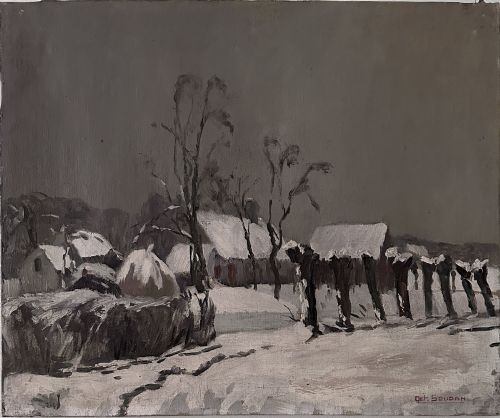
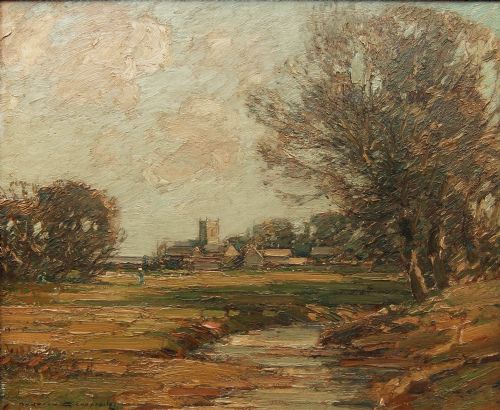
A vintage rural village picture captures community life across the British countryside, often showing local taverns, winter landscapes and bustling streets. These works range from modest watercolours on paper to substantial oil paintings on canvas.
The pieces available span from the Victorian pastoral era through to the mid-twentieth century, with notable representation from the 1920s and 1930s. Buyers frequently encounter framed oil paintings alongside delicate early twentieth-century watercolours.
Subjects stretch from specific English and Hampshire locations to remote Derbyshire river landscapes and primitive folk art street scenes. Each vintage rural village picture reflects the distinct artistic sensibilities of its respective decade.
Materials and construction methods
Artists relied primarily on oil paint applied to canvas or wood panels, alongside watercolour on paper for lighter topographical sketches. These traditional mediums were framed, frequently in gilt mouldings that complemented the domestic scale of the work.
Paintings from the nineteenth century onward utilised durable linen canvas stretched over wooden frames, layered with oil pigments to achieve depth in village tavern and winter scenes. Watercolours employed transparent washes on heavy paper stock, capturing natural light at dusk or during daytime village views.
Materials documented across the collection include oil paint, canvas, watercolour, paper, wood and gilt.
Distinguishing quality in rural village art
Quality rests upon the artist's handling of light, atmospheric perspective and compositional balance within the street or landscape. Masterful brushwork breathes life into architectural details and figures, whereas weaker examples rely on rigid, formulaic rendering.
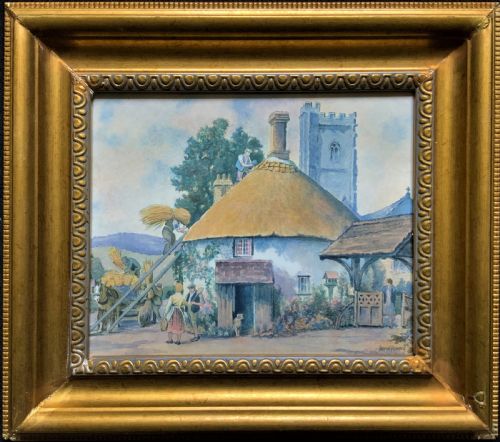
The integration of the frame with the painting significantly influences the overall character of the piece. Superior works retain period-appropriate gilt surrounds that enhance the depth of the canvas without overpowering the rural scene.
M. C. Hider·Kershaw Schofield·David Heward·John Holland Snr
The Vintage Rural Village Picture Glossary
- Oil on canvas
- Pigments bound in a drying oil applied to a woven fabric support stretched across a wooden frame. This method allows for rich texture and deep colour layering.
- Watercolour
- A paint consisting of colour suspended in a water-soluble vehicle, typically painted on paper. It yields translucent washes well suited to atmospheric village views.
- Folk art
- Art produced by an untrained or self-taught artist working outside academic traditions. These pieces often feature charming perspective and direct narrative storytelling.
- Gilt frame
- A wooden picture surround covered with gold leaf or metallic gilt finish. It was standard for framing significant nineteenth and early twentieth-century paintings.
Vintage Rural Village Picture: Frequently Asked Questions
What periods do these village paintings cover?
The works span from the mid-nineteenth century through the Edwardian era and into the mid-twentieth century. Victorian pastoral and 1930s British impressionist styles are particularly well represented.
Buyers will also find primitive folk art pieces from the early nineteen-hundreds alongside works dated specifically to the 1920s.
How should I care for an antique canvas?
Keep oil paintings away from direct sunlight and dramatic fluctuations in room temperature to prevent the canvas from sagging or cracking. Dust the surface gently with a soft, dry brush.
Avoid using water or chemical cleaners on either the painted surface or the antique gilt frame.
Are these paintings usually signed by the artist?
Many of the works bear the original signature of the artist, sometimes inscribed directly into the lower corner of the oil paint or watercolour wash. Signed examples often provide a clearer link to known regional painters.
Unsigned pieces still appear frequently, particularly within folk art and mid-century rural street scenes.
What subjects are most common in these scenes?
Common subjects include English country lanes, village taverns with windmills, winter village landscapes and busy rural street scenes. Watercolours often capture atmospheric moments such as dusk over a settlement.
Artists frequently documented specific regional views across Hampshire, Derbyshire and wider British localities.