




Vintage Rural Scene Picture
A vintage rural scene picture brings home the quiet rhythm of the countryside through watercolours, oils, and early twentieth-century brushwork.
Vintage Rural Scene Picture
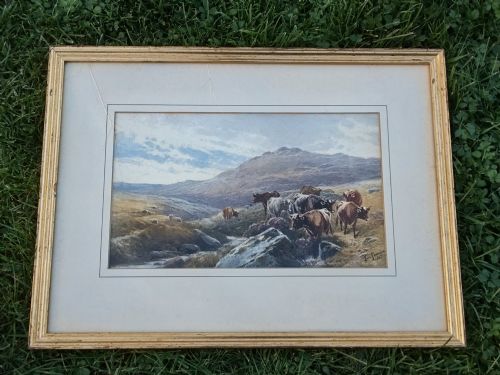
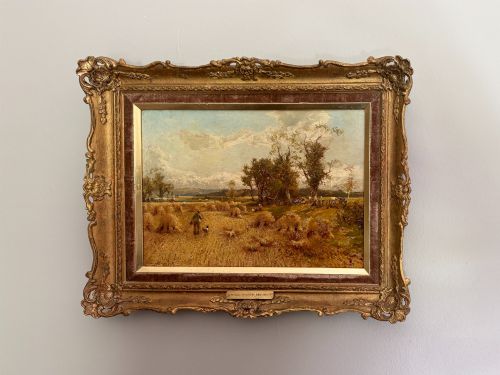
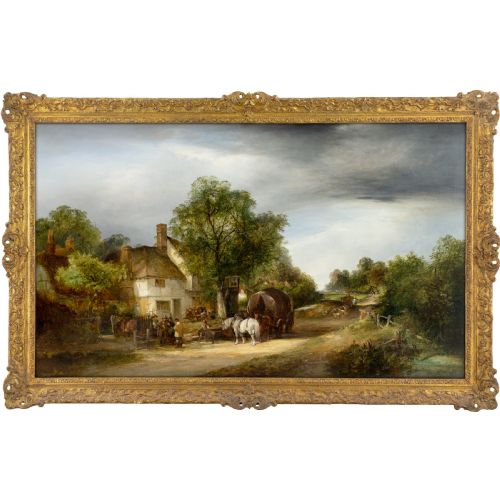
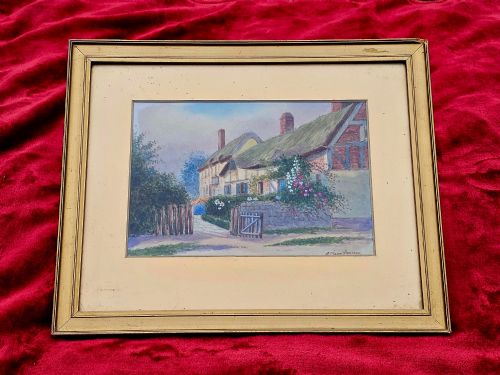
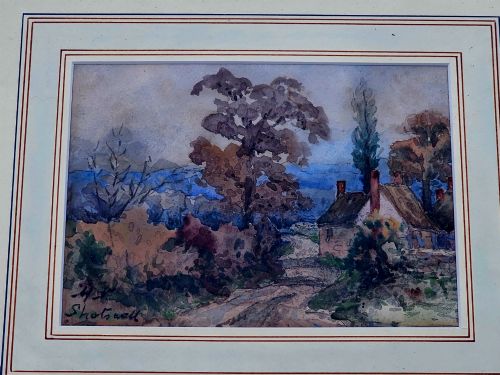
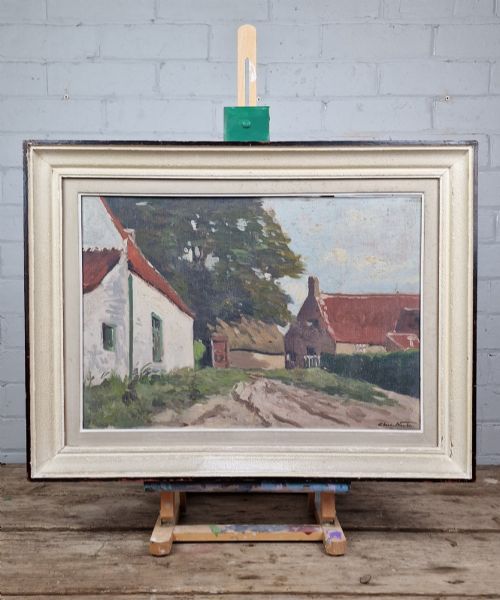
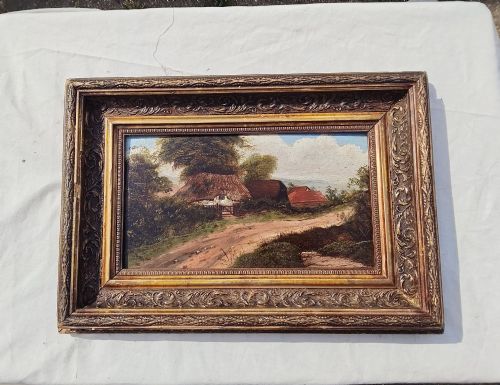
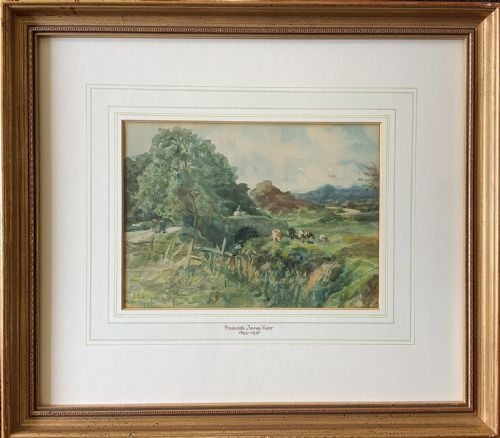
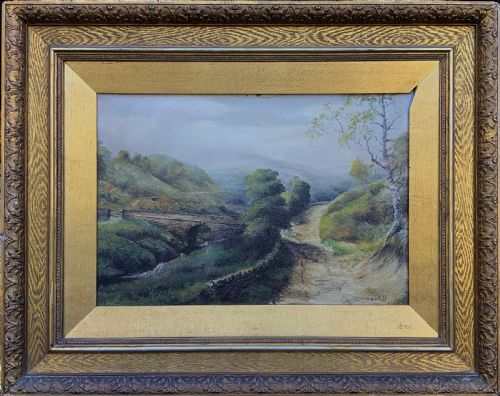
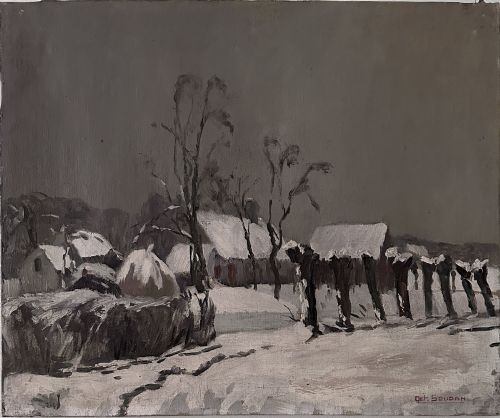
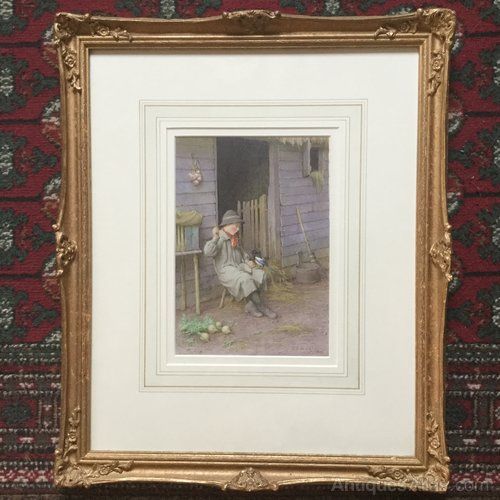
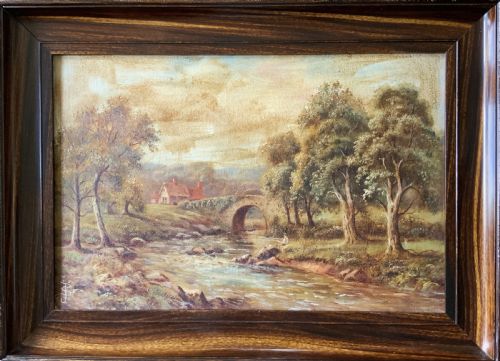
When you search for a vintage rural scene picture, you encounter works capturing farmyards, thatched cottages, and agricultural labour across the nineteenth and twentieth centuries. These pieces span Victorian Pastoral, Edwardian, and British Impressionist traditions, focusing on fields, streams, and livestock.
You are most likely to meet watercolours and oil paintings on canvas, board, or paper produced during the Victorian and Edwardian eras. Common subjects recorded by the British School include harvesting, ploughing horses, and quiet village views.
The selection ranges from small sketches to large landscape paintings, often framed in period gilt wood and gesso. Many bear signatures from traditional country painters working in a realist or impressionist idiom.
How They Were Made
Painters used oil on canvas, board, or card, applying pigment to build textured surfaces that capture the light of fields and farmyards. Watercolour on paper was equally common, prized for capturing transient atmospheric effects in village scenes.
Canvases and paper supports were housed in wooden frames finished with gesso and gilt, providing structural support and period presentation for the artwork.
Lithographic reproduction also appears, translating original painted compositions into printed plates while retaining the traditional rural subject matter.
Framing materials recorded across the selection include traditional gilt wood and gesso.
What Varies in Quality
The strength of a composition lies in the artist's handling of light, atmosphere, and natural proportion within the landscape. Stronger examples demonstrate confident brushwork and tonal balance, particularly in depictions of harvesting and livestock.
The preservation of the medium dictates much of the visual impact, from the stability of oil on canvas to the paper integrity and pigment vibrancy in watercolours. Original period framing in gilt wood and gesso also contributes to the integrity of the piece.
A. Marie Parsons·Charles Houben·Frederick Walker·Frederick James Kerr·Herman S Melville·Charles Edward Wilson·Sydney Yates Johnson·Henry John Yeend King·Henry John Boddington·M. C. Hider·James Hardy Junior·Willem Anton Alexander Knip·John Atkinson·J.C. Grey·James William Booth·George Soper·George Kilburne·Gudrun Sibbons·B. Kaufmann·Rowland Henry Hill·Ernest Cox·John Percy Cooke·Herbert Royle·J.V.R. Parsons·Arthur Claude Strachan
The Vintage Rural Scene Picture Glossary
- Watercolour
- A painting method where fine pigment is suspended in a water-based solution and applied to paper. This medium was widely used by nineteenth-century artists to capture translucent light in village and pastoral scenes.
- Gesso
- A plaster-like mixture applied to wood frames to create a smooth surface for gilding. It provides ornate relief detail around traditional landscape paintings.
- Impressionism
- An art movement focusing on transient effects of light and ordinary subject matter. British practitioners applied these principles to rural landscapes and farming communities.
- Gilt Wood
- Timber treated with a thin layer of gold leaf or metallic powder. It commonly frames nineteenth-century and Edwardian oil paintings.
- Oil on Canvas
- A painting technique using pigments bound in a drying oil applied to stretched fabric. This durable combination supported large-scale pastoral landscapes and genre scenes.
Vintage Rural Scene Picture: Frequently Asked Questions
What periods do these rural pictures date from?
The works span the nineteenth and twentieth centuries, encompassing Victorian, Edwardian, and later modernist schools.
Dates range from early nineteenth-century watercolours through to mid-twentieth-century oil paintings and landscape art.
How do I identify a Victorian pastoral painting?
Victorian pastoral works typically depict agricultural life, such as harvesting, ploughing horses, and thatched cottages.
They rely on traditional oil or watercolour techniques characteristic of the British School of the period.
Are these works painted on canvas or paper?
The supports vary according to the medium, with oils appearing on canvas, board, or card, and watercolours set on paper.
Many retain their original period framing made from wood with gilt and gesso finishes.
How should I hang and light an oil painting?
Hang paintings away from direct sunlight and excessive humidity to protect both the canvas and the wooden gesso frame.
Use picture lights designed to project even illumination without generating damaging heat.
What is the difference between British Impressionism and traditional school works?
British Impressionist works focus on loose brushwork and changing light effects within rural landscapes.
Traditional school paintings tend to employ tighter realism and more formal compositional structures.