


Vintage Ruby Target Ring
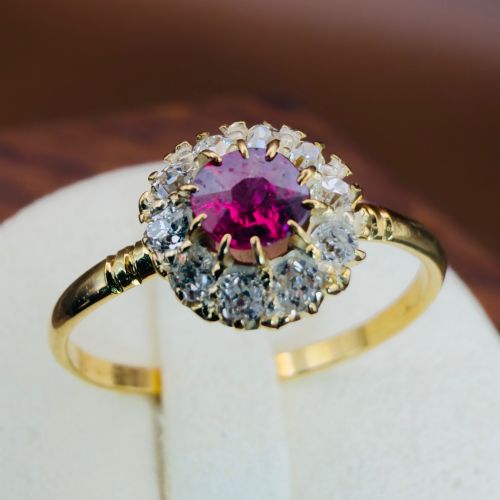
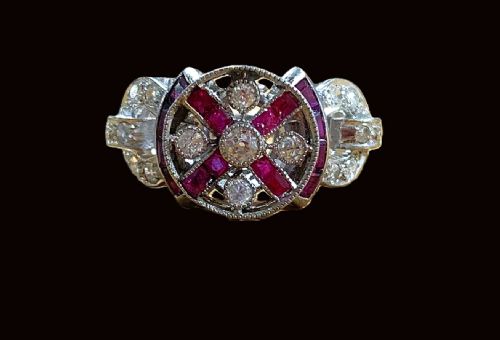
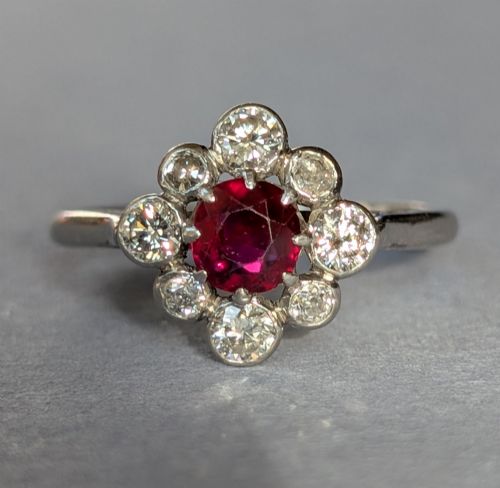
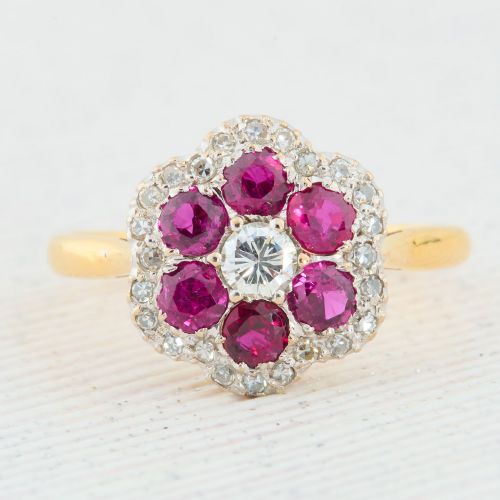
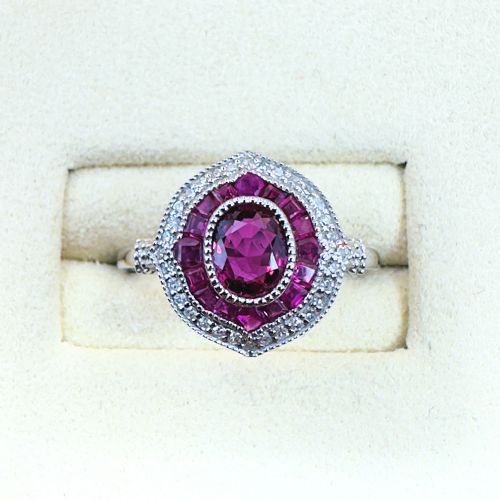
A vintage ruby target ring centres a vivid red stone within concentric geometric tiers of diamonds, offering the architectural symmetry collectors prize.
Vintage Ruby Target Ring
A vintage ruby target ring follows a concentric circular design where a central ruby is surrounded by rows of diamonds, creating a striking bullseye effect on the finger. These pieces appear frequently in Art Deco configurations from the 1920s and 1930s, alongside Victorian, Edwardian, and mid-century examples.
The form functions primarily as a dress ring or fine jewellery piece, utilising platinum and various forms of gold to support the clustered layout. Makers structure the mounting so that the outer diamond border frames the deep red centre stone with distinct optical contrast.
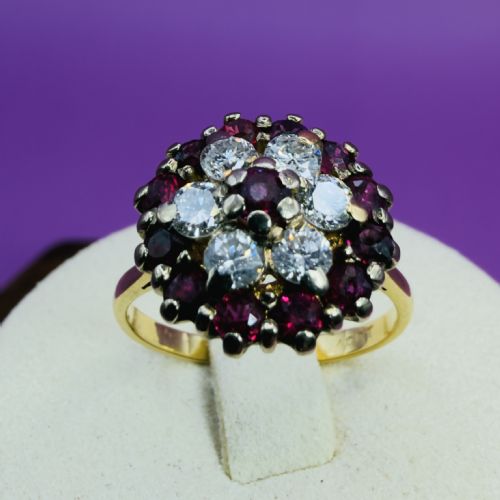
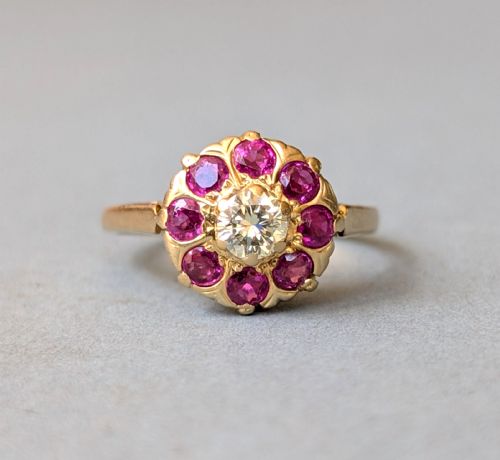
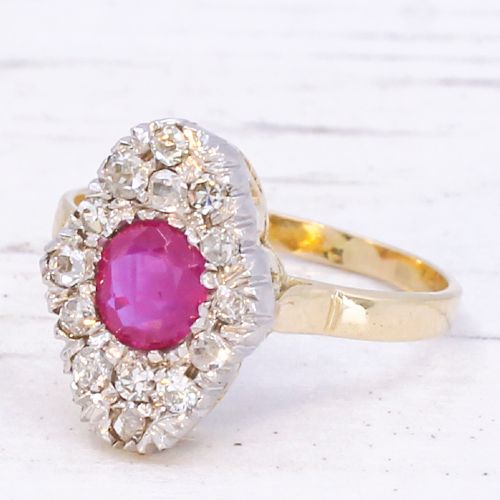
Examples span from the late nineteenth century through the 1960s, incorporating floral clusters, marquis shapes, and geometric target profiles. Buyers encounter both white and yellow metal settings paired with round, oval, old-cut, and rose-cut diamonds.
Materials and construction
Goldsmiths constructed these rings using platinum, 18ct yellow gold, 18ct white gold, and occasional 22ct gold settings to secure the rubies and diamonds. Platinum gained widespread favour during the Art Deco period for its strength in holding intricate millegrain edges and fine geometric tiers.
Stones are set using claw, bezel, and flush techniques suited to the concentric rings of the target layout. Old-cut, rose-cut, and modern cut diamonds are matched with natural rubies, including named origins like Mogok and Burma, fixed securely into solid metal mounts.
Some target rings squeeze pearls and sapphires into the party alongside the rubies.
Evaluating the craftsmanship
Quality rests in the proportional balance of the concentric tiers and the precision of the stone setting. Fine examples display well-matched diamond pavé or cluster work that frames the central ruby without dominating its colour.
The selection of the ruby itself dictates distinction, particularly where natural unheated stones or specific geographic origins like Burma show superior saturation and clarity within the platinum or gold frame.
The Vintage Ruby Target Ring Glossary
- Target ring
- A ring style featuring a central gemstone encircled by one or more concentric rings of contrasting smaller stones, usually diamonds. This layout creates a geometric, bullseye appearance popularised during the Art Deco era.
- Cluster ring
- A ring design where multiple smaller stones surround a larger central gemstone to increase visual presence. The style encompasses floral, target, and multi-stone configurations.
- Old cut
- A diamond facet style hand-polished before modern brilliant cutting standards were established in the early twentieth century. These stones exhibit smaller tables and high crowns.
- Millegrain
- A decorative jewellery technique featuring a line of tiny metal beads along the edge of a setting. This method softens sharp metal lines with a textured border.
- Toi et moi
- A ring style featuring two main gemstones seated side by side or closely entwined, symbolising two souls meeting. Some examples incorporate rubies, sapphires, and diamonds together.
Vintage Ruby Target Ring: Frequently Asked Questions
What is a target ring?
A target ring is a specific cluster configuration where a central stone sits inside concentric geometric bands of contrasting smaller gems.
This layout creates a distinctive bullseye visual effect that defines many Art Deco pieces.
How do I wear a vintage ruby ring daily?
Daily wear requires mindful handling, particularly with antique claw settings and softer gold or platinum bands.
Removing the ring during manual tasks protects the central ruby and surrounding diamond tiers from impact.
How are different periods identified?
Periods are identified through metal choices, diamond cutting styles, and geometric mounting characteristics.
Art Deco pieces use platinum and sharp concentric tiers, while Victorian examples often feature yellow gold and organic cluster outlines.
What makes Burmese rubies special?
Burmese rubies originate from the Mogok region and are prized for their natural colour saturation and fluorescence.
These stones frequently appear in high-tier mid-century and Art Deco cluster designs.