


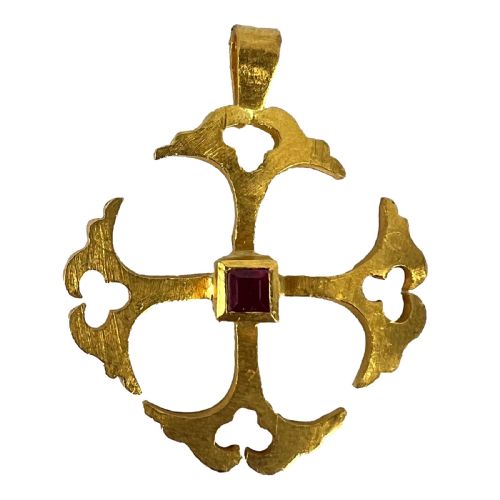

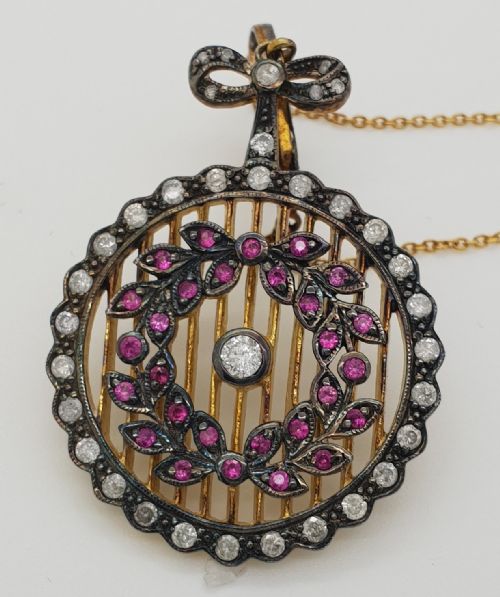


Vintage Ruby Necklace
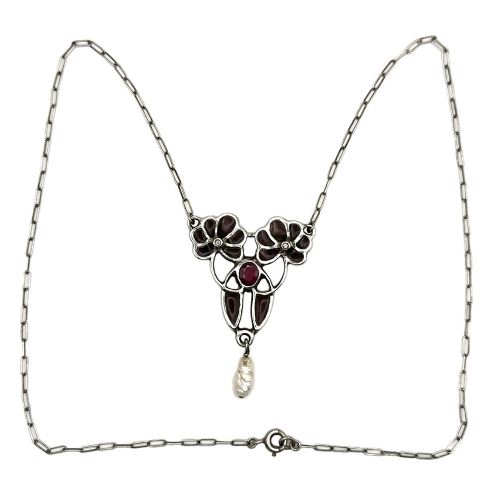
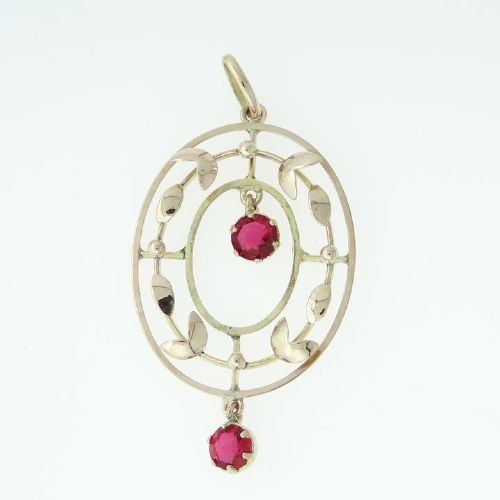
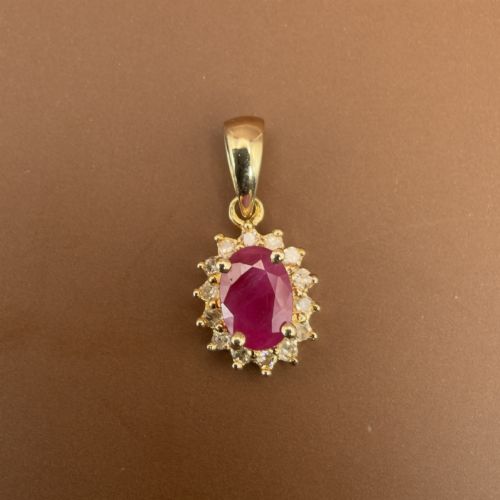
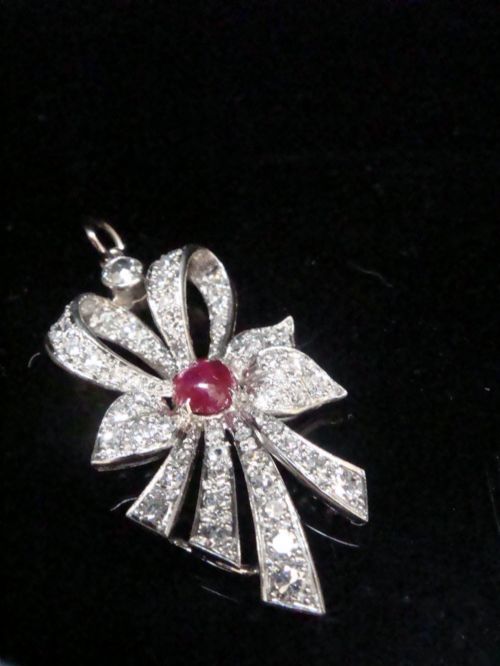
A vintage ruby necklace brings deep crimson fire to the neckline, spanning delicate Edwardian bow designs and bold mid-century clusters.
Vintage Ruby Necklace
A vintage ruby necklace encompasses a range of neckwear forms, most frequently appearing as pendants or pearl strands featuring ruby-set clasps. These pieces emerge from periods such as the Edwardian era, Victorian times, and the mid-twentieth century.
Edwardian examples often utilise platinum and yellow gold to frame intricate bow or floral motifs, frequently pairing the red stones with diamonds. Mid-century items lean towards bolder cluster arrangements and multi-strand pearl configurations secured by gem-set clasps.
The selection also includes convertible pendant brooches and complex multi-stone designs incorporating sapphire, citrine, or opal alongside the central ruby.
Materials and construction
The metals deployed in these pieces vary widely, ranging from standard nine-carat and eighteen-carat yellow or rose gold to platinum and silver gilt. High-purity twenty-two-carat and twenty-four-carat gold options also appear in the record.
Goldsmiths combined rubies with supporting gems like diamonds, pearls, and white sapphires, mounting them in clusters, bows, and snake formations. Techniques included fine prong settings, closed-back foils in earlier periods, and intricate wirework for pearl-stringing.
Periods represented include Victorian, Edwardian, nineteenth century, nineteen-fifty, and nineteen-sixty.
Judging quality and craftsmanship
Quality rests upon the harmony of the design and the integration of the stones, where Edwardian platinum work demonstrates exceptional delicacy in piercing and metal manipulation. The weight and purity of the gold or platinum chassis directly influence the substantial feel of the piece.
The choice of accompanying gems, such as well-matched diamonds or uniform cultured pearls, elevates the overall standard of the necklace. Superior examples display secure stone settings and balanced proportions, whether in a simple pendant or a multi-strand pearl necklet.
The Vintage Ruby Necklace Glossary
- Cluster pendant
- A central gemstone surrounded by a ring of smaller stones, typically diamonds or pearls. This arrangement maximises visual impact at the neckline.
- Riviere necklace
- A line of gemstones of identical or graduated size set closely together. These pieces sit smoothly against the skin.
- Paste
- Hand-cut glass used as a gemstone substitute in historic jewellery. It offers brilliant colour without natural mineral origins.
- Cultured pearl
- An organic gem formed with human intervention by inserting a nucleus into an oyster. They frequently form the multi-strand foundations of mid-century clasped necklaces.
- Platinum
- A dense, ductile precious metal prized for its strength and white lustre. It gained popularity in Edwardian jewellery to hold delicate stone settings securely.
Vintage Ruby Necklace: Frequently Asked Questions
How do I date a ruby necklace?
Dating relies on stylistic clues like Edwardian platinum bow motifs, Victorian yellow gold work, or mid-century cluster arrangements.
Assay marks and metal purity standards also help pinpoint the era of manufacture.
Are the rubies natural?
The listings feature both natural rubies and simulated alternatives, such as red paste.
Examining the specific listing description clarifies whether the stones are natural gems or man-made substitutes.
How should I care for my necklace?
Store the piece flat or hung securely away from harder items to prevent scratching the gold and gemstones.
Clean gently with a soft cloth, avoiding harsh chemical dips that might harm softer pearls or porous stones.
Can these pendants double as brooches?
Certain Victorian and Edwardian examples are specifically designed as pendant brooches, featuring hidden bails and pin mechanisms.
This dual functionality allowed wearers to pin the jewel to a garment or suspend it from a chain.