



Vintage Ruby Lapel Brooch
These vintage ruby lapel brooch pieces combine precious stones and metals across centuries of design, offering a wearable piece of history.
Vintage Ruby Lapel Brooch
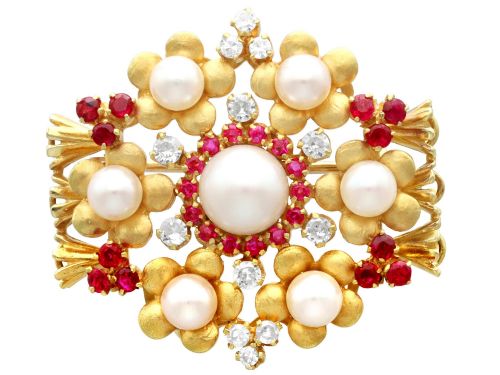
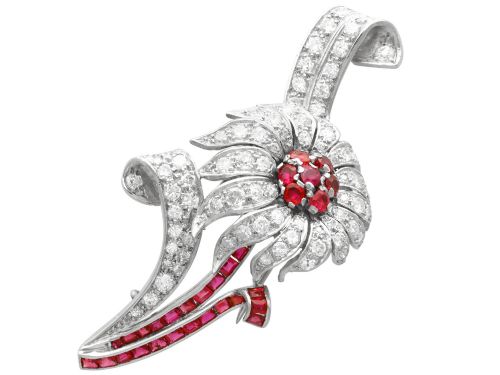
A vintage ruby lapel brooch brings together rich red corundum and precious metals in varied historical forms. These jewels span from Georgian and Victorian eras through Edwardian, Art Deco, and mid-century modern periods.
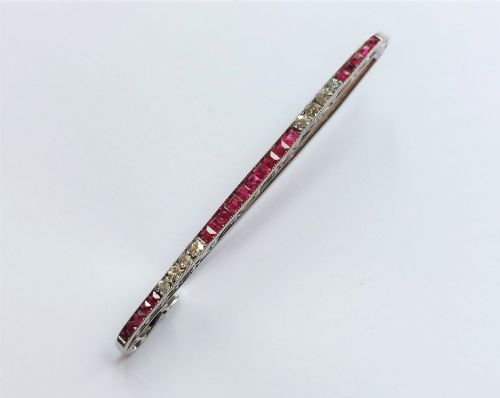
Buyers will encounter distinct motifs ranging from floral sprays and geometric bar brooches to whimsical animal subjects like rabbits, chicks, birds, and bicycles.
The assortment draws on gold, silver, and platinum settings, often incorporating diamonds, pearls, sapphires, and amethysts alongside the central rubies.
How they were made
Maker techniques rely heavily on combinations of gold in yellow, rose, and white hues, frequently paired with silver or platinum mountings to hold the stones securely. Metalwork incorporates casting, wirework, and detailed chasing suited to each distinct historical era.
Gemstones are integrated using varied cutting styles, from flat-cut stones in earlier pieces to brilliant and rose-cut diamonds framing the rubies. Pearls and secondary gems are added to enhance the dimensional composition of the pins.
Vintage Ruby Lapel Brooch Retail Price Guide 2026
Typical asking prices for vintage ruby lapel brooch among the pieces listed under this phrase on Sellingantiques today, from the lower quarter to the upper quarter. They describe what is for sale here now, not the wider market.
Design motifs cover floral sprays, geometric bar brooches, crescent shapes, and figural subjects including rabbits, chicks, birds, and bicycles.
What varies in quality
Quality separates pieces through the depth of colour and clarity in the rubies, alongside the matching brilliance of accompanying diamonds. Finer examples display meticulous stone grading and balanced proportions across intricate motifs.
The standard of craftsmanship shows in the integration of mixed metals like gold and platinum, as well as the preservation of delicate structural elements such as bar pins and clasps over decades of wear.
Kutchinsky·Ben Rosenfeld
The Vintage Ruby Lapel Brooch Glossary
- Bar brooch
- A horizontal pin configuration often featuring a central gemstone cluster or linear design. This form gained popularity across the Edwardian and Art Deco periods.
- Flat-cut
- A traditional stone-cutting method featuring an unfaceted or minimally faceted flat top, commonly found in Georgian pieces.
- Platinum
- A dense, durable white metal used for secure stone settings and fine jewellery fabrication, particularly prevalent in mid-century and Edwardian pieces.
- Rose-cut
- A vintage diamond cut characterised by a domed top with triangular facets arranged in a symmetrical pattern, typical of earlier antique jewellery.
- Yellow gold
- A traditional gold alloy mixed with copper and silver, utilised across Victorian, Edwardian, and mid-century designs.
Vintage Ruby Lapel Brooch: Frequently Asked Questions
How do I wear a lapel brooch?
Pin the piece securely through the lapel fabric, ensuring the weight of the gold and gemstones rests flat against the garment. Heavier designs require sturdier fabrics like wool or tweed to support the structure without sagging.
Position the brooch slightly above the lapel buttonhole for a balanced placement that highlights the central ruby stones.
What periods do these brooches represent?
The selection encompasses Georgian, Victorian, Edwardian, Art Deco, and mid-century styles spanning from the eighteenth century through the 1960s. Each era introduces distinct artistic movements and mounting techniques.
Earlier examples often feature flat-cut stones and silver-topped gold, while later mid-century pieces showcase playful animal motifs and structured white gold or platinum settings.
How do I care for antique ruby jewellery?
Clean these pieces gently using a soft brush and warm soapy water, avoiding harsh chemical dips that can damage pearls, softer gems, or older metal alloys. Store each brooch separately in a lined box to prevent scratching between stones.
Regularly check the security of the pin stem and catch, particularly on antique pieces with delicate mechanisms.
Are these pieces made with natural rubies?
The materials reflect traditional gemstone usage across the centuries, pairing rubies with diamonds, sapphires, and pearls in precious metal settings. Historical pieces utilise stones characteristic of their respective periods of origin.
Examination under magnification reveals natural inclusions typical of genuine rubies used in antique and vintage workshop production.