




Vintage Ruby Halo Ring
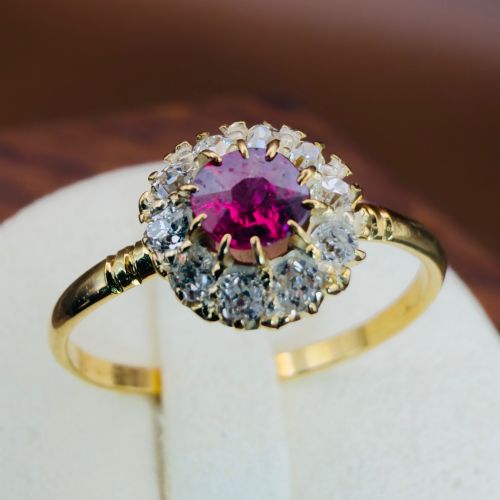
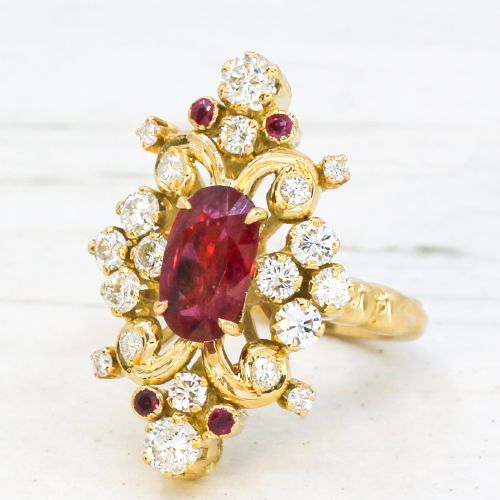
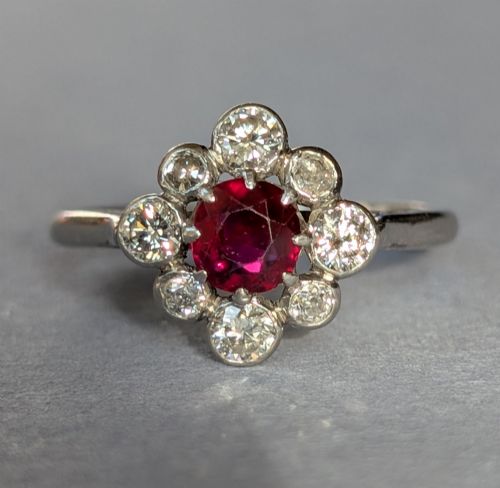
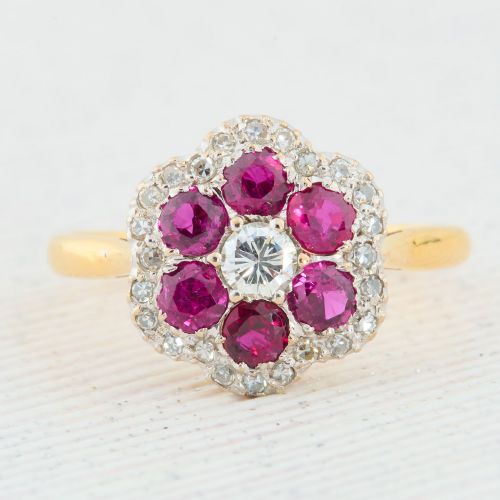
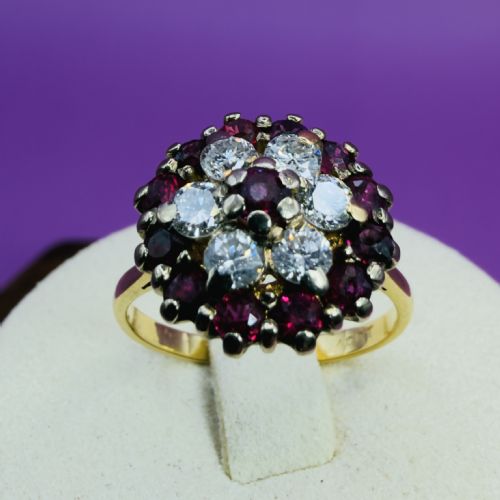
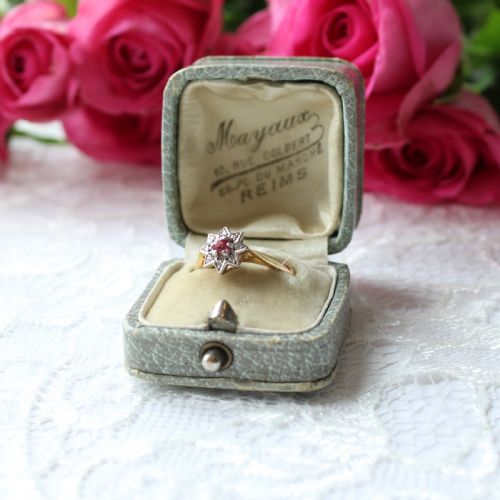
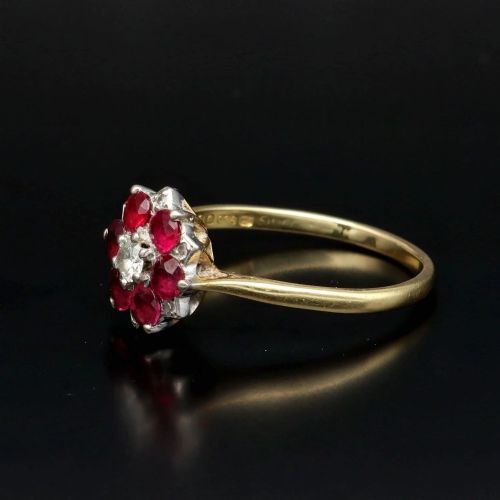
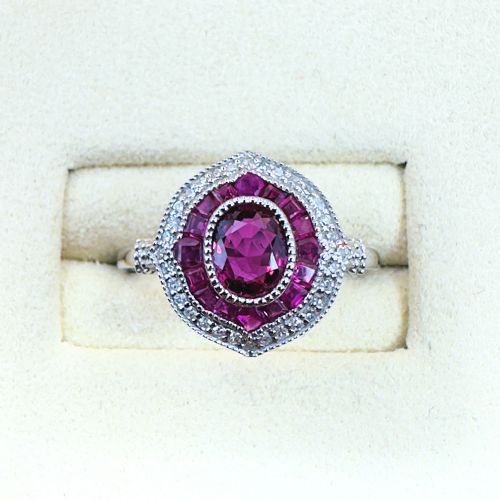
A vintage ruby halo ring brings together a bright central red stone and a border of diamonds, combining nineteenth-century tradition with mid-century elegance.
Vintage Ruby Halo Ring
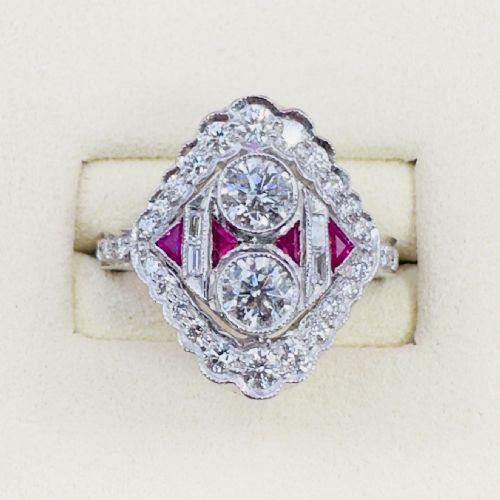
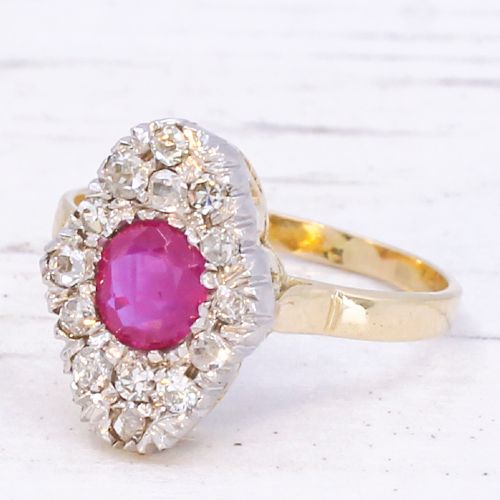
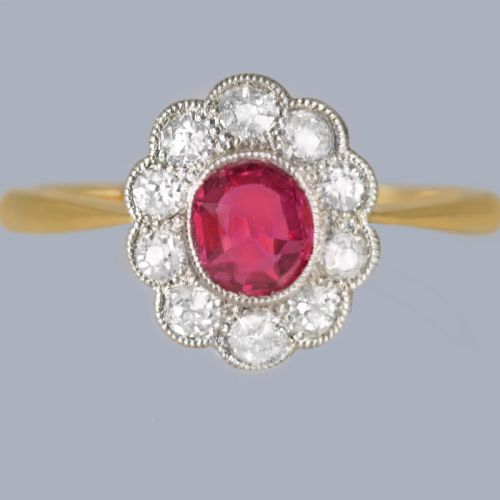
The most common examples encountered on this page date from the mid-twentieth century, particularly the nineteen-fifties and sixties, alongside earlier Art Deco and Victorian pieces. They employ traditional cluster configurations where the central ruby commands attention against a closely set border of diamonds.
How they were made
Goldsmiths constructed these mountings primarily in eighteen-carat yellow gold, eighteen-carat white gold, and platinum, frequently pairing gold shanks with platinum settings to secure the stones. Lower nine-carat gold variations also appear in the archive records alongside traditional yellow gold constructions.
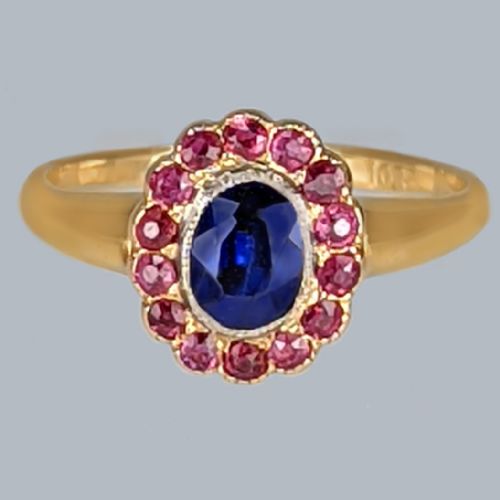
Stones are set using claw, bezel, or flush techniques adapted to the cut of the ruby, whether oval, cushion, pear, navette, or marquis. Surrounding diamonds are meticulously grain-set or bezel-set to form the characteristic halo border.
Listings feature periods spanning from Victorian and Edwardian eras through Art Deco to the nineteen-sixties.
What varies in quality
Quality rests upon the natural origin and origin certification of the ruby, with Burmese stones from Mogok or Mong Hsu holding particular distinction alongside unheated specimens. The depth of colour saturation and the absence of heavy treatments define the upper tier of these central gems.
The craftsmanship of the surrounding diamond cluster and the integrity of the precious metal mount dictate overall fineness. Symmetrical stone placement, secure claw work, and balanced proportions between the central ruby and the diamond border separate standard examples from exceptional pieces.
The Vintage Ruby Halo Ring Glossary
- Halo cluster
- A setting style where a central gemstone is encircled by a continuous border of smaller accent stones, usually diamonds.
- Navette
- A boat-shaped gemstone cut or mounting style, pointed at both ends, also known as a marquise shape.
- Unheated
- A gemstone that has undergone no thermal enhancement to improve its natural colour or clarity.
- Old cut
- A vintage diamond cutting style characterised by a high crown, small table, and deep pavilion, designed under candlelight.
Vintage Ruby Halo Ring: Frequently Asked Questions
What is a vintage ruby halo ring?
A vintage ruby halo ring is an item of fine jewellery featuring a central ruby framed by a border of smaller diamonds. These rings date from various historical periods including the Victorian, Edwardian, and Art Deco eras up to the mid-twentieth century.
The design creates a distinct contrast between the deep red of the ruby and the brilliance of the surrounding diamonds. They appear in configurations ranging from floral clusters to geometric shapes.
How do I care for my ring?
Living with an antique or vintage ring requires gentle handling to protect both the settings and the stones. Regular checks by a jeweller ensure the claws holding the ruby and diamonds remain secure.
Cleaning should be done with mild soapy water and a soft brush rather than harsh ultrasonic devices. Removing the ring during heavy manual work prevents unnecessary wear to the gold or platinum band.
How can I tell the period of a ring?
Dating a ring involves examining the mounting style, the cut of the diamonds, and the metal composition. Edwardian pieces often feature delicate platinum work, while Art Deco examples display sharp geometric lines.
Victorian and later mid-century pieces exhibit distinct casting methods and shank profiles characteristic of their decades. Hallmarks and gemmological reports provide further documentation of origin and age.
Are all rubies natural?
While many listings feature natural rubies originating from locations such as Burma, some pieces incorporate synthetic stones. Gemmological reports often accompany vintage pieces to verify the origin and whether the ruby is treated or unheated.
Distinguishing between natural and synthetic stones requires professional microscopic examination. Certified pieces provide clear documentation regarding the exact nature of the ruby.