
Vintage Rotating Library
A vintage rotating library provides accessible shelving that turns smoothly on a central pivot to hold volumes within arm's reach.
Vintage Rotating Library
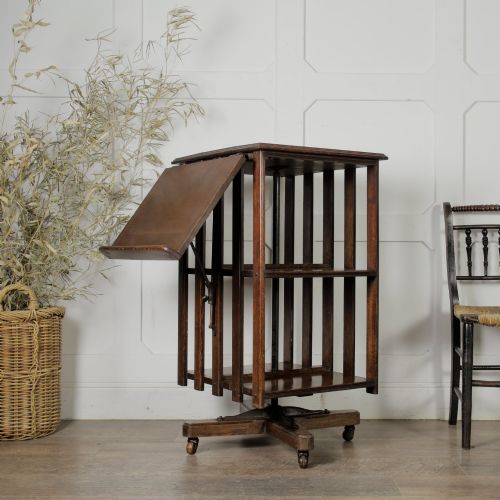
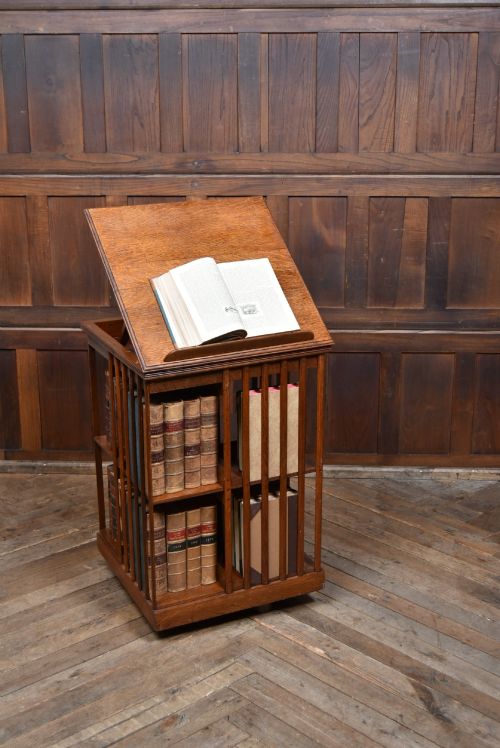
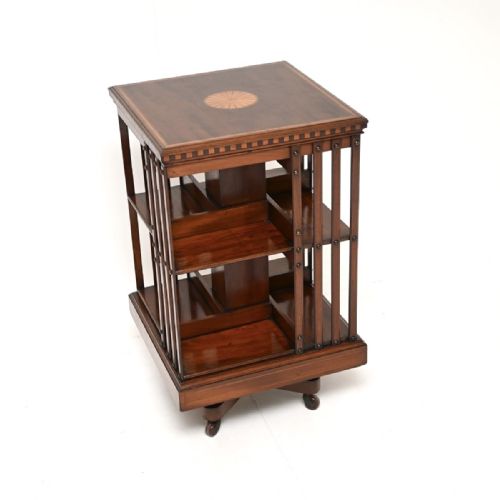
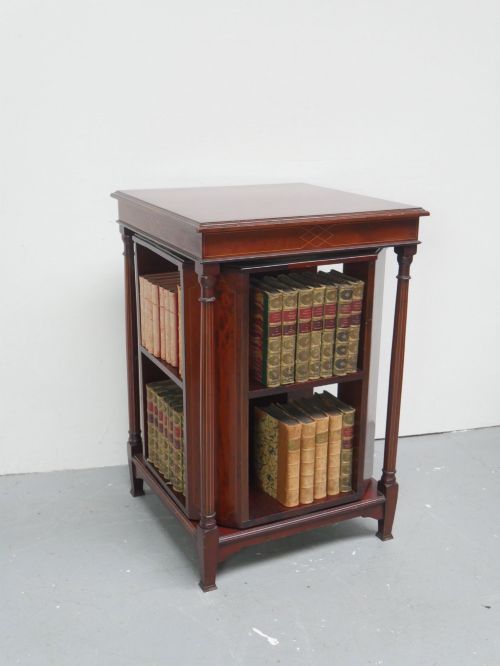
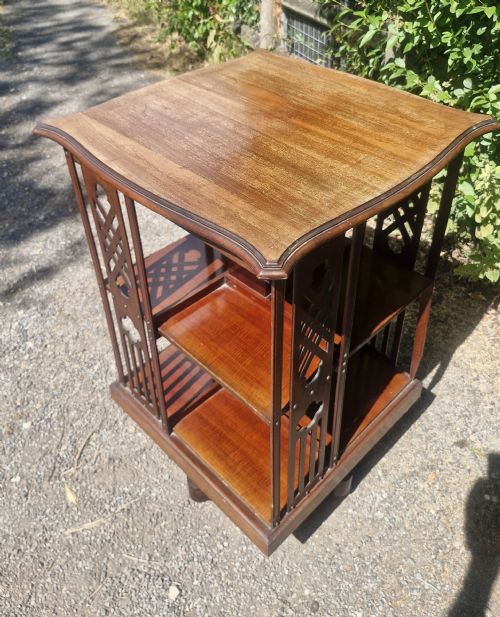
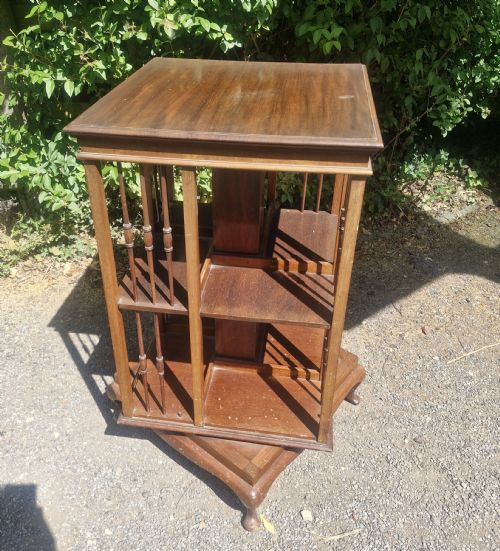
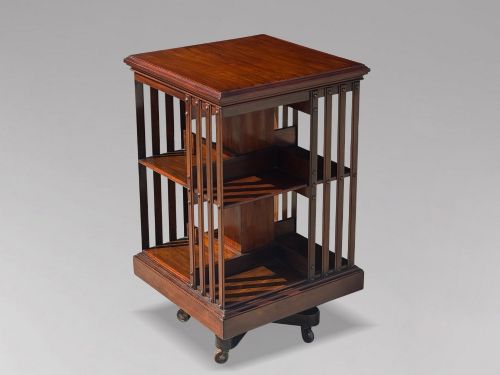
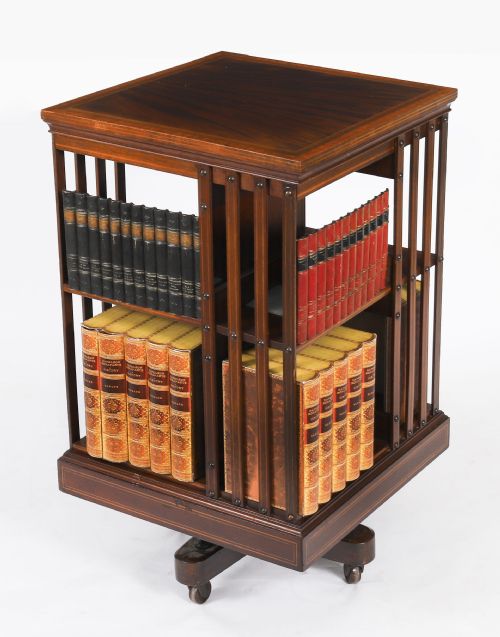
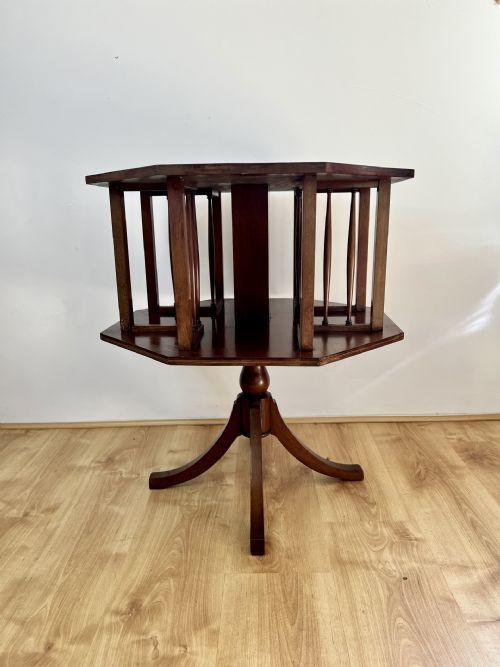
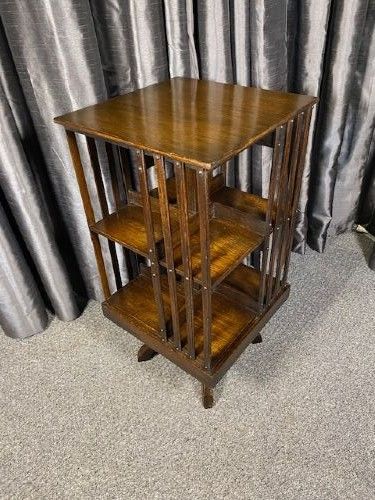
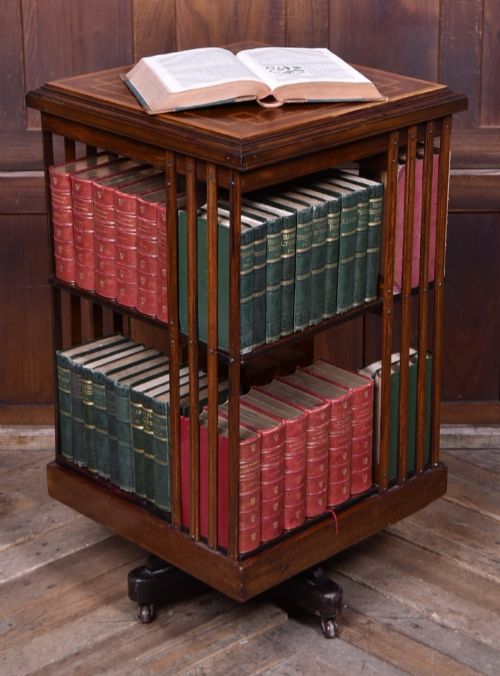
A vintage rotating library is primarily encountered on this page as a revolving bookcase or bookstand originating from the Victorian and Edwardian eras. These pieces sit on floor-standing or table-top bases, designed to turn effortlessly so that readers can browse multiple tiers of books without moving from their chair.
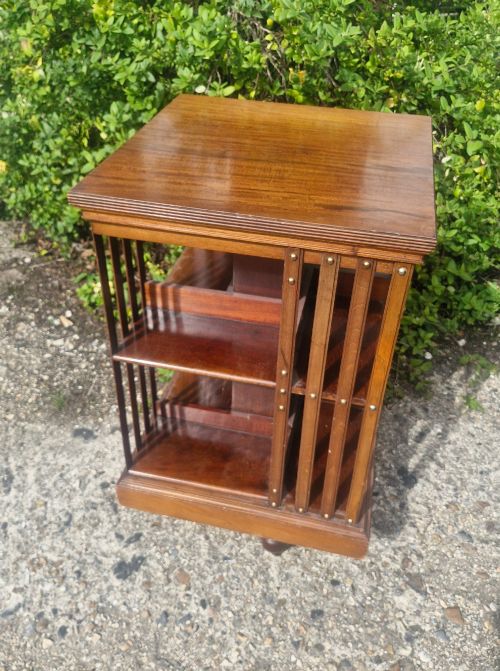
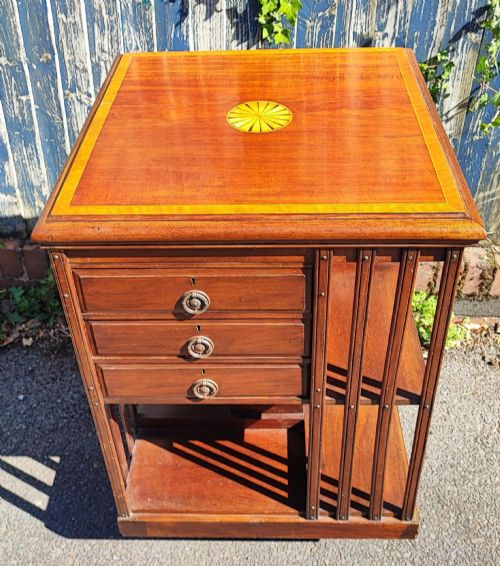
The selections range from compact four-shelf units to large floor-standing models in oak, mahogany, and walnut. Many examples incorporate decorative details such as satinwood inlay, brass fittings, and styles spanning Chippendale revival to Art Nouveau.
Construction and materials
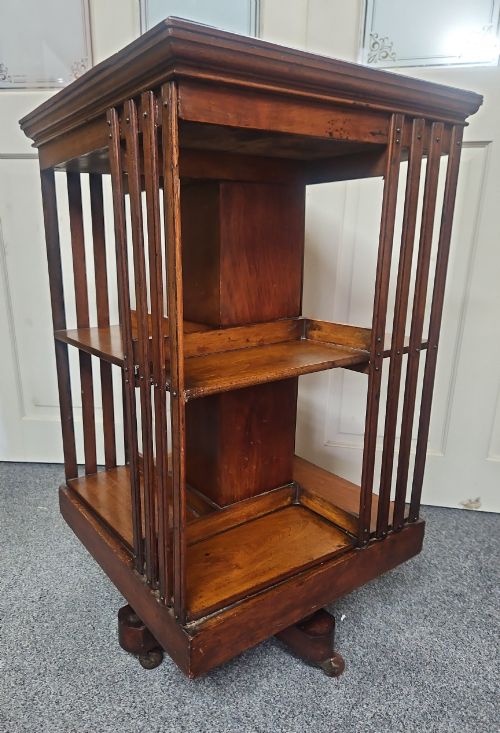
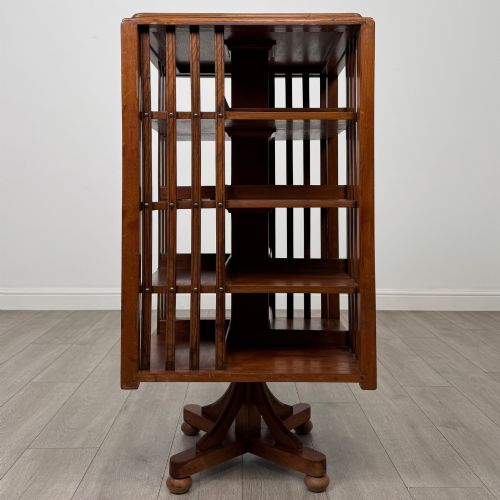
Cabinet makers built these revolving structures predominantly using solid timbers and veneers of mahogany and oak, often reinforced with internal iron or brass mechanisms to support the weight of heavy volumes. The rotational action relies on a concealed spindle and ball-bearing or wheel system housed within the cruciform base.
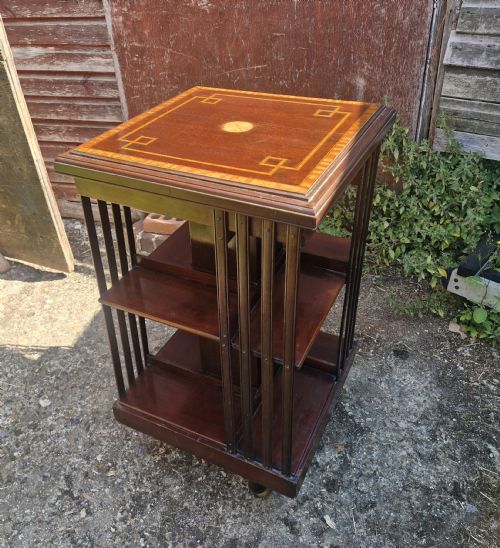
Surface decoration frequently includes fine satinwood inlay, crossbanding, and flame mahogany figuring. Wood elements are joined with traditional cabinet-making techniques to ensure the vertical tiers remain stable under load while turning.
Listings feature oak and mahogany predominantly, spanning the Victorian and Edwardian periods with occasional Art Nouveau and Chippendale styles.
Evaluating craftsmanship
Quality in a revolving bookcase rests upon the smoothness of the turning mechanism and the stability of the timber under load. Superior pieces exhibit tight joinery, carefully selected flame mahogany or quarter-sawn oak, and precise inlay work that remains flush with the surrounding wood.
Lesser examples may employ simpler softwood secondary woods, heavier or stiff turning actions, and plain finishes with minimal decorative attention. The presence of maker stamps or signatures from established cabinet houses also elevates the standing of certain pieces.
Heals·Maple and Co
The Vintage Rotating Library Glossary
- Revolving bookcase
- A freestanding or table-top tier of shelves mounted on a hidden rotating pivot. This mechanism allows full access to books from a stationary position.
- Flame mahogany
- A decorative wood veneer showing a distinctive flame-like grain pattern. Cabinet makers used this figure on prominent exterior surfaces for visual impact.
- Satinwood inlay
- Contrasting light-coloured wood inserted into recesses in a darker primary timber. This technique creates geometric or floral borders on shelves and panels.
- Cruciform base
- A cross-shaped foot design that provides balanced weight distribution for the rotating tiers above. It usually conceals the iron or brass swivel hardware.
Vintage Rotating Library: Frequently Asked Questions
How do I make the bookcase turn smoothly?
Most rotating library units rely on an internal metal pivot or ball-bearing assembly hidden within the cross base. Regular gentle use and occasional light lubrication of the central spindle keep the rotation fluid.
Avoid overloading individual tiers with excessive weight unevenly distributed, as this strains the central axis and causes the shelves to tilt or bind during rotation.
Were these made for homes or offices?
These revolving stands were designed primarily for domestic libraries, studies, and drawing rooms where quick access to reference books, novels, or poetry was desired. Their compact footprint made them practical for placing beside armchairs or desks.
Later variations served specialised roles as book tables or companion stands, fitting neatly into smaller Victorian and Edwardian living spaces.
How do I tell Edwardian from Victorian models?
Victorian examples often feature heavier proportions, darker woods like oak, and robust detailing associated with the nineteenth century. They tend to emphasise sturdy utility.
Edwardian pieces frequently display lighter timbers, refined satinwood inlay, and slimmer profiles reflecting the Sheraton revival and turn-of-the-century aesthetic preferences.
Where should I place a rotating bookcase?
Position the unit where there is sufficient clearance on all four sides for the shelves to complete a full rotation without striking walls or surrounding furniture. A spot near a reading chair or desk allows you to reach titles easily from any angle.
Keep the piece away from direct heat sources and strong sunlight to protect the mahogany or oak veneers from drying out and fading.