


Vintage Rotating Book Stand
A vintage rotating book stand turns a collection of heavy volumes into an accessible, spinning library on a desk or floor.
Vintage Rotating Book Stand
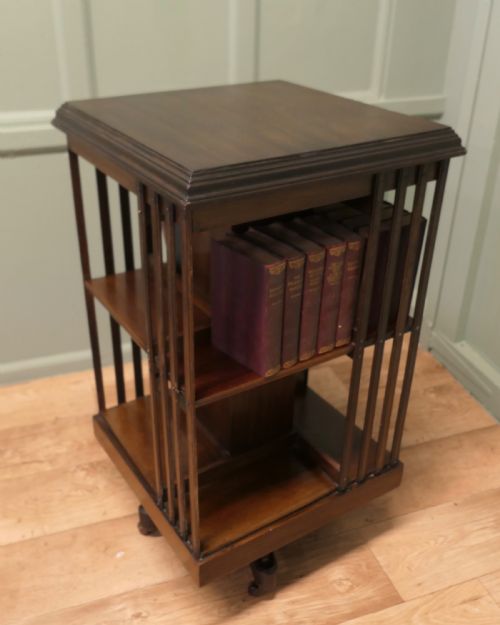
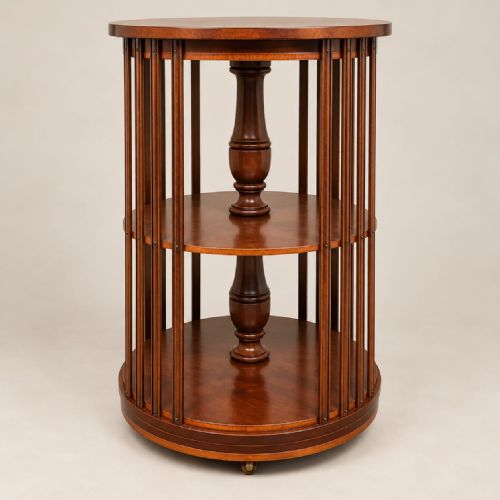
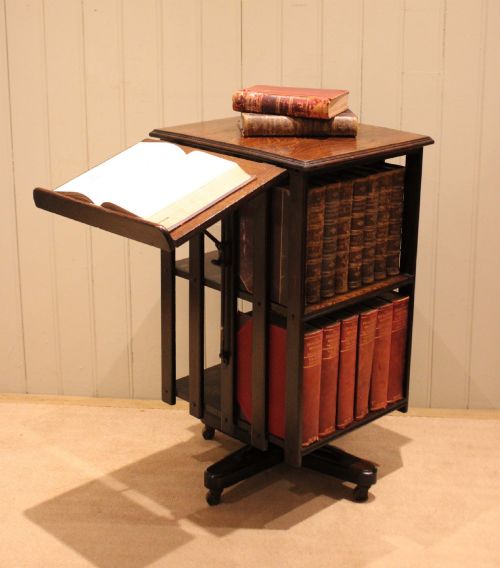
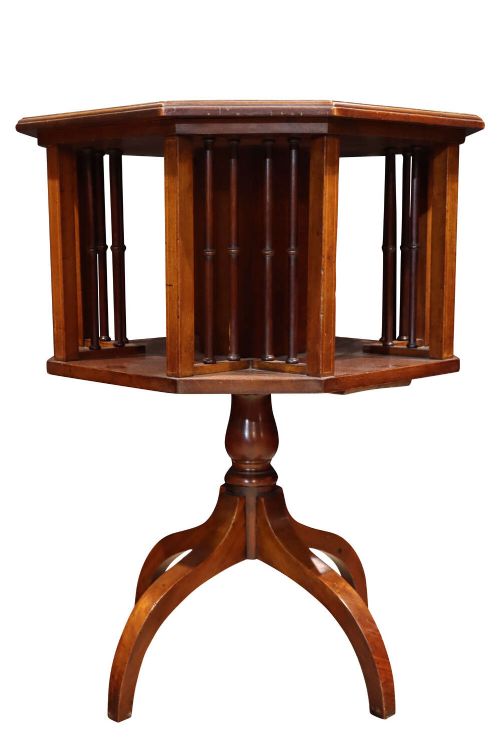
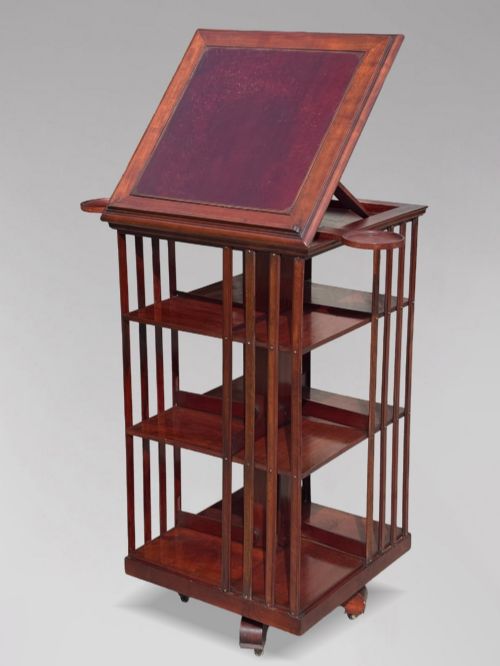
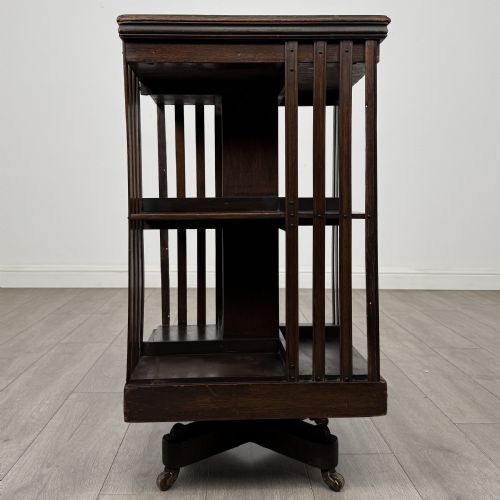
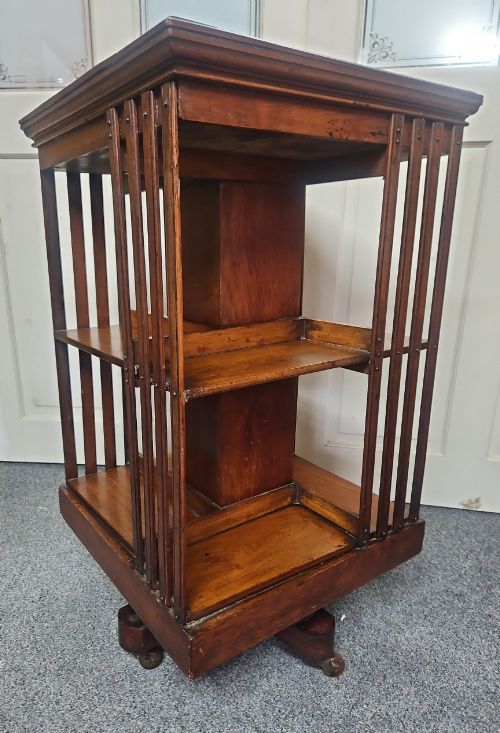
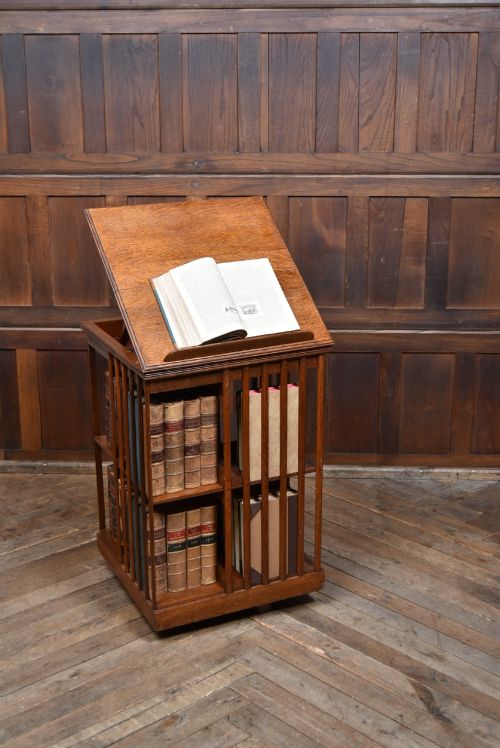
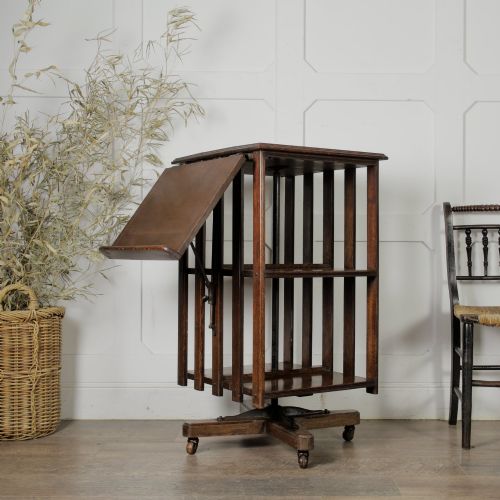
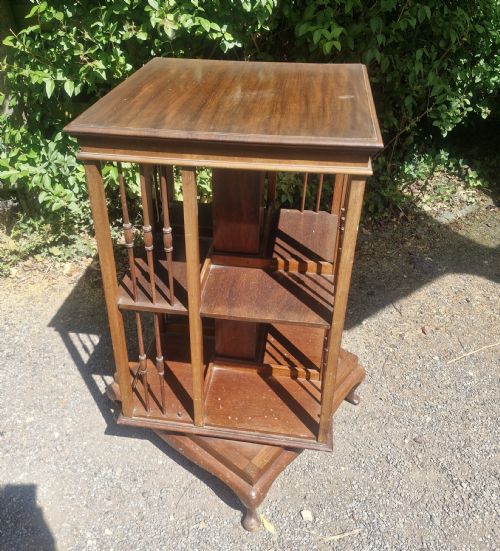
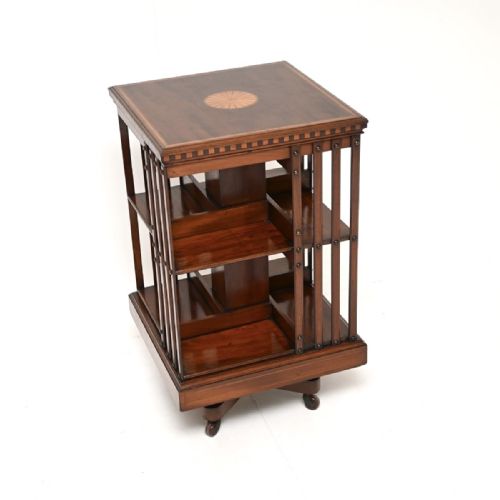
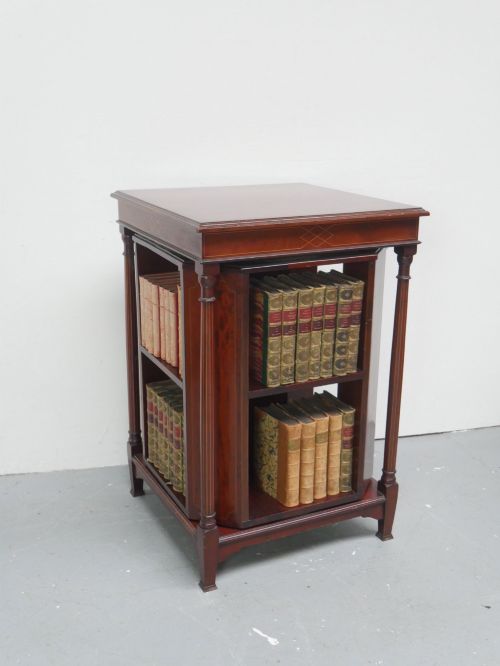
A vintage rotating book stand is a revolving piece of furniture designed to hold books upright while allowing them to spin smoothly on a central pivot. You will most frequently encounter Edwardian and Victorian examples on this page, spanning the late nineteenth century through to the early decades of the twentieth century. These pieces appear in various forms, from petite desktop bookstands to large floor-standing revolving bookcases with multiple tiers.
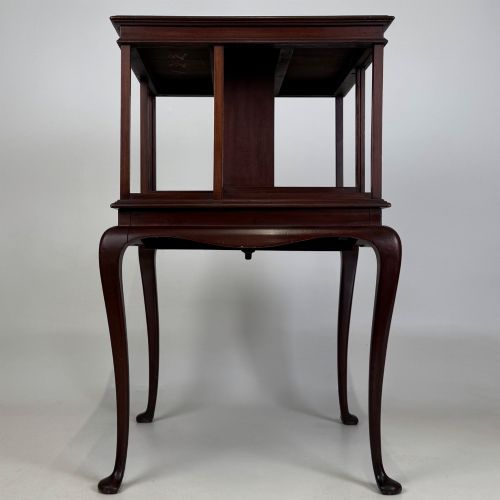
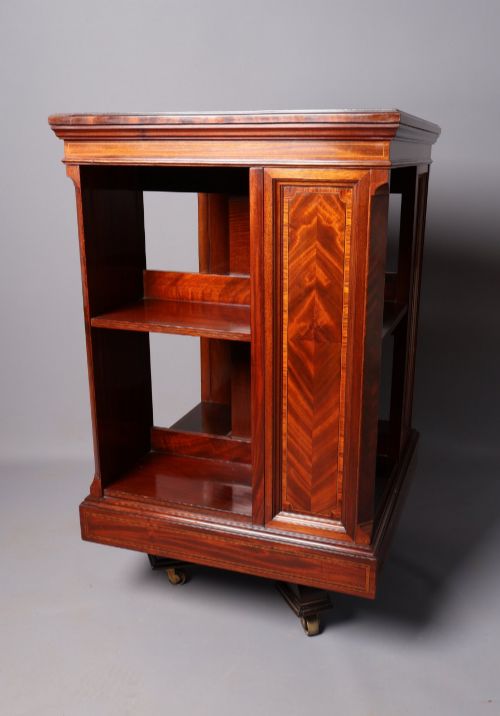
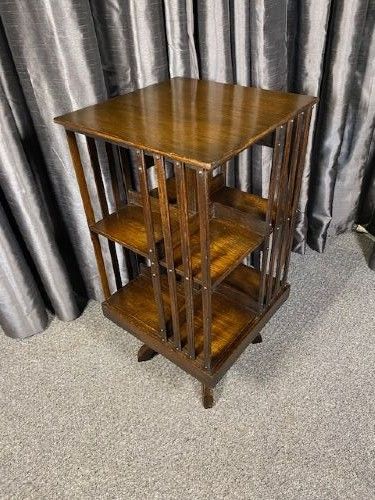
The materials and styles reflect the cabinet-making trends of their respective eras, utilising rich timbers such as mahogany, oak, and walnut. Some pieces take simple functional shapes with slatted sides, whilst others incorporate stylistic flourishes like satinwood inlay, cabriole legs, or Art Nouveau motifs. Whether standing beside a reading chair or sitting atop a study table, they serve to keep active reference volumes close at hand.
Materials and construction
Cabinet makers relied heavily on solid oak and figured mahogany for the primary structure of these revolving stands, ensuring the wood could bear the weight of heavy volumes. Timber selection dictated the visual character, with flame mahogany and quarter-sawn oak frequently employed to display striking grain patterns.
The crucial mechanical element is the internal rotating pivot, often built using brass and cast iron components to guarantee smooth, silent spinning over decades of use. Exterior ornamentation was achieved through techniques like satinwood inlay and carved detailing, particularly on pieces produced during the Edwardian Sheraton Revival and Art Nouveau periods.
Vintage Rotating Book Stand Retail Price Guide 2026
Typical asking prices for vintage rotating book stand among the pieces listed under this phrase on Sellingantiques today, from the lower quarter to the upper quarter. They describe what is for sale here now, not the wider market.
Materials recorded across the current inventory include solid mahogany, oak, walnut, satinwood inlay, brass, and cast iron.
Judging quality and craftsmanship
The distinction between ordinary and exceptional pieces lies primarily in the timber selection and the precision of the joinery. Superior examples utilise dense, well-figured mahogany or quarter-sawn oak with meticulous attention paid to the dovetailing of the shelves and the crispness of any inlay.
The integrity of the internal revolving mechanism determines how well the stand performs in daily use. High-grade models feature robust brass or cast-iron turning assemblies that rotate evenly without wobbling or sticking, whereas lesser pieces may exhibit sluggish movement or wear in the pivot housing.
Heals
The Vintage Rotating Book Stand Glossary
- Revolving bookcase
- A freestanding or desktop bookstand fitted with a concealed pivot mechanism that allows the entire structure to turn. This design enables access to books from multiple sides without moving the unit.
- Satinwood inlay
- A decorative technique where contrasting light satinwood is inserted into recesses within a darker timber ground, such as mahogany. This creates delicate geometric or floral patterns across the panels.
- Quarter-sawn oak
- Timber cut radially from the log, producing a distinct grain pattern often characterised by prominent medullary rays. Cabinet makers valued this cut for its stability and decorative appearance.
- Slatted sides
- Vertical wooden bars forming the exterior walls of the book compartments rather than solid panels. This construction lightens the visual weight of the piece and allows the book spines to remain visible.
- Cabriole leg
- A furniture leg that curves outward and then tapers inward, typically ending in a pad or foot. This stylistic feature appears on select Edwardian iterations of the revolving bookstand.
Vintage Rotating Book Stand: Frequently Asked Questions
How do I care for the wood?
Dust the timber regularly with a soft, dry cloth to prevent the accumulation of grit in the carved details and inlay. Apply a quality natural beeswax periodically to nourish the mahogany or oak and maintain the surface sheen.
Keep the revolving stand away from direct heat sources and strong sunlight to prevent the timber from drying out or the finish from fading unevenly over time.
Are these stands sturdy enough for heavy books?
Most floor-standing revolving bookcases are constructed from solid hardwoods like oak and mahogany, making them structurally robust enough to support dense collections of reference books. The internal wooden framework and central pivot are engineered to bear substantial weight while continuing to rotate freely.
Desktop versions are generally suited for smaller volumes and lighter reading materials rather than massive encyclopaedias. Distributing the weight evenly across the available tiers ensures the smooth operation of the mechanism.
How do I distinguish Edwardian from Victorian pieces?
Victorian revolving stands, dating from the late nineteenth century, tend to be heavier, darker in appearance, and more solidly traditional in their construction. They frequently feature deep-toned oak or rich mahogany with straightforward architectural lines.
Edwardian pieces, made around the turn of the twentieth century, often display a lighter aesthetic with refined mahogany veneers, satinwood inlay, or slender slatted sides. Stylistic influences from the Sheraton Revival and Art Nouveau movements also point towards an Edwardian origin.
Where should I place a revolving book stand?
A floor-standing model works best beside an armchair, a writing desk, or at the end of a sofa where you can reach the books easily from a seated position. Because the stand rotates fully, it does not need to be pulled out from a corner to access the contents.
Desktop bookstands sit comfortably on sturdy tables or large desks, bringing a smaller selection of active reading material directly to eye level. Ensure the placement allows adequate clearance for the stand to spin freely in a complete circle.