




Vintage River Thames Art
Vintage river thames art captures the bustling waterways and historic bridges of London through paintings, watercolours, and etchings.
Vintage River Thames Art
Vintage river thames art spans centuries of creative output, focusing heavily on maritime scenes, cityscapes, and quiet stretches along the waterway. Collectors encounter everything from detailed pencil etchings to grand oil paintings and delicate watercolours.
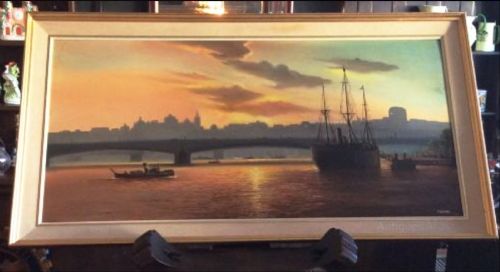
The pieces on offer lean toward nineteenth and early twentieth-century depictions, capturing famous landmarks like St Pauls Cathedral, Waterloo Bridge, and the Pool of London. These works document the changing face of the river, its shipping, and its bridges across distinct periods.
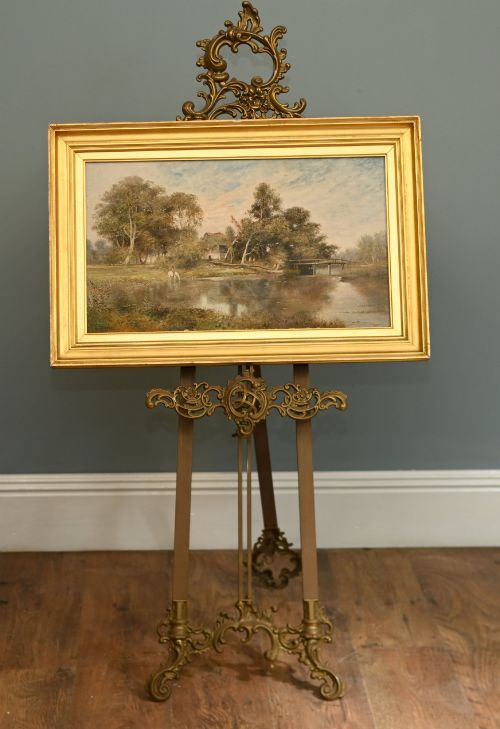
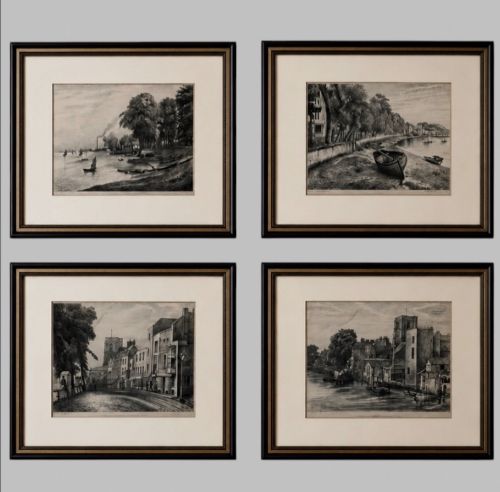
Framed prints and lithographs also appear alongside original paintings on canvas and paper. Each format offers a different perspective on the capital's maritime history, ranging from bustling commercial traffic to serene pastoral views.
Materials and methods
Artists working in this genre relied primarily on oil on canvas or watercolour pigment applied to paper. Oils allowed for rich, layered depictions of shipping and smoke, while watercolours captured the atmospheric light of the London atmosphere.
Printmakers utilised etching, drypoint, and aquatint techniques on paper to produce detailed topographical views and architectural studies. These printed works often carried pencil signatures from the hand of the creator.
Supports ranged from traditional canvas stretched over wooden frames to heavy paper stock used for watercolours and early lithographic prints. Wood framing frequently protected these fragile paper and canvas works.
Vintage River Thames Art Retail Price Guide 2026
Typical asking prices for vintage river thames art among the pieces listed under this phrase on Sellingantiques today, from the lower quarter to the upper quarter. They describe what is for sale here now, not the wider market.
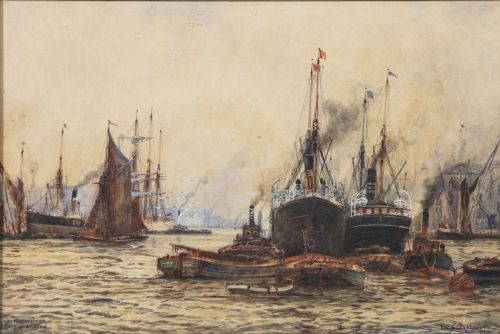
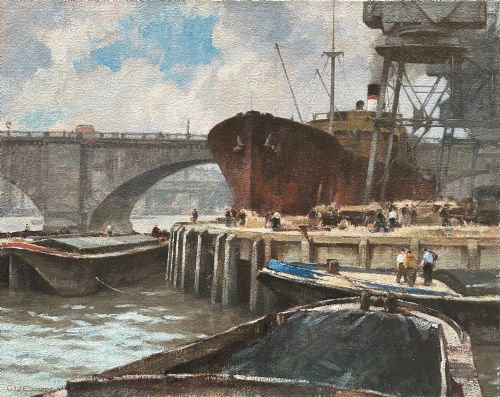
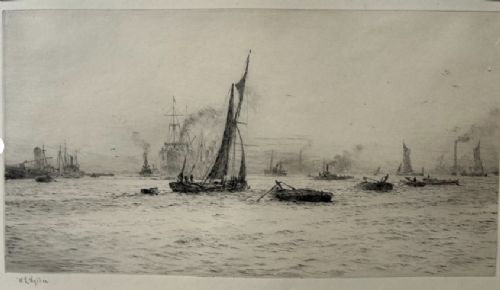
Barges and tug boats share these river views with Admiralty yachts and St Pauls Cathedral.
Evaluating the standard
The handling of light and atmospheric perspective distinguishes finer works from ordinary topographical records. Master painters captured the distinct haze of the capital alongside the reflection of shipping on the water with notable control.
The skill of the draughtsman shows clearly in the accuracy of architectural details, such as bridge masonry and vessel rigging. Stronger compositions balance the sprawling expanse of the waterway with precise focal points like St Pauls or Tower Bridge.
Alfred Young Nutt·William Lionel Wyllie·Frank William Scarbrough·Edward Henry Eugene Fletcher·Edgar J Maybery
The Vintage River Thames Art Glossary
- Aquatint
- An intaglio printmaking technique that produces tonal areas resembling watercolour washes. It was frequently used to create hand-coloured prints of London scenes.
- Drypoint
- A printmaking process where an image is scratched directly onto a metal plate with a sharp needle. This leaves a burr that creates soft, velvety lines when inked.
- Etching
- A method where lines are bitten into a metal plate with acid before ink is applied for printing. It allowed artists to produce highly detailed topographical views.
- Lithograph
- A planographic printing process based on the repulsion of oil and water. It enabled the production of multi-toned topographical images.
- Topographical
- Representing specific physical locations accurately. These works served as historical records of London architecture and river life.
Vintage River Thames Art: Frequently Asked Questions
What periods do these artworks cover?
The available pieces span from seventeenth-century records up to mid-twentieth-century interpretations. Victorian and Edwardian examples appear frequently alongside earlier Georgian and later modernist works.
Each period brings its own distinct artistic style to the depiction of London shipping, bridges, and surrounding architecture.
How were these watercolours and oils framed?
Works on paper usually sit behind glass within wooden frames to protect the delicate medium from moisture and dust. Oil paintings on canvas are stretched and framed in wood, sometimes retaining their period moulding.
Original framing often provides clues to the age and history of the piece.
Where are the specific locations shown?
Depictions concentrate heavily on central London landmarks, stretching from Chelsea and Richmond down to Greenwich. Famous spans like Waterloo, Blackfriars, and London Bridge feature prominently alongside the Pool of London.
Artists also recorded quieter stretches of the river further up the Thames valley towards Eton.
Can I find signed works?
Several pieces feature original artist signatures, either written directly in pencil on etchings or painted firmly into the corner of canvases and watercolours. Signed impressions by established printmakers like William Lionel Wyllie appear among the selection.
Attributions and signatures help connect works directly to known marine and landscape painters.