


Vintage Religious Art
Vintage religious art gathers devotion into carved figures, delicate gold pendants, and oil portraits spanning centuries of craftsmanship.
Vintage Religious Art
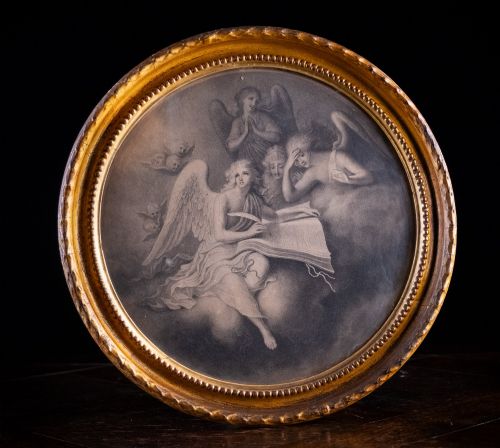
Vintage religious art covers a broad spectrum of devotional objects, including oil paintings on canvas, hand-carved wooden statues, and detailed metal pendants. These pieces reflect varied cultural traditions, spanning European portraiture and folk carvings.
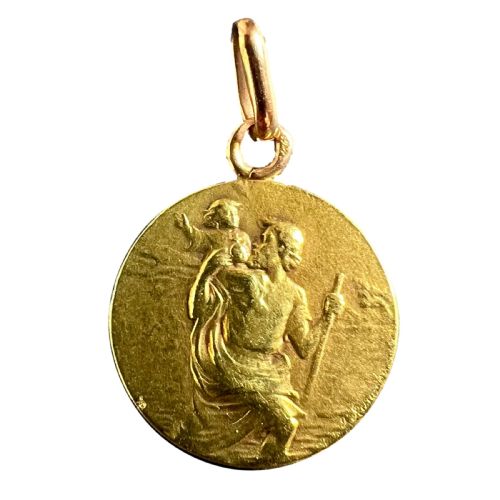
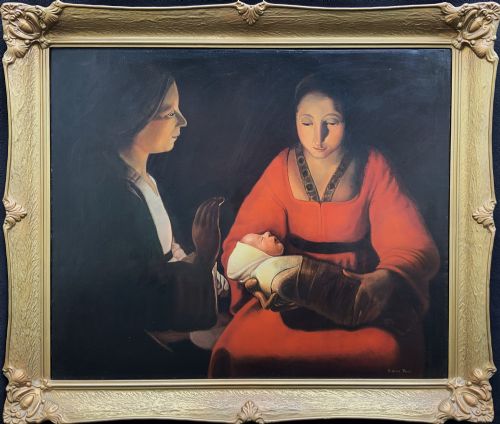
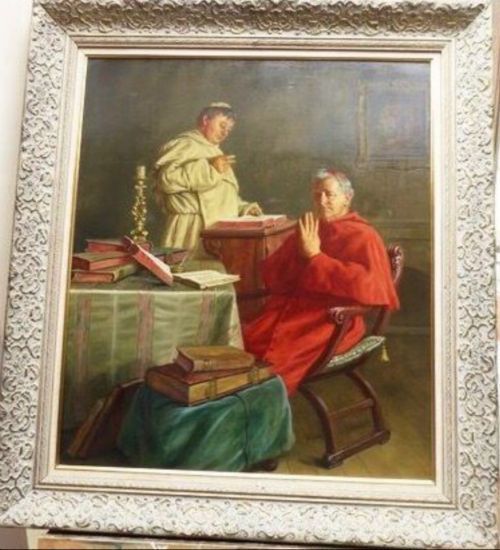
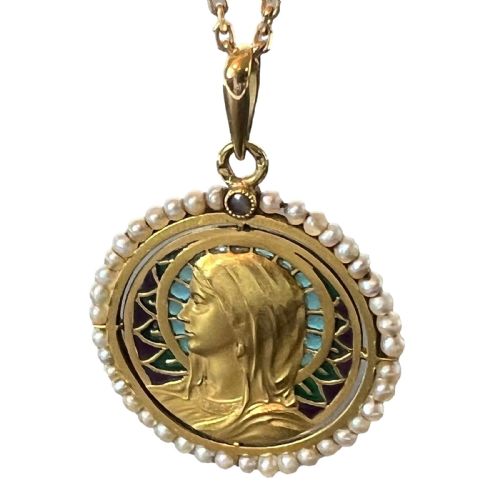
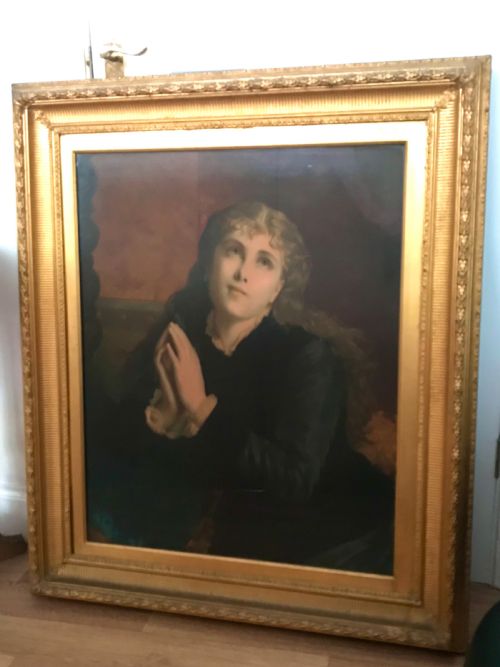
The objects frequently encountered include French 18K yellow gold pendants featuring the Virgin Mary, 19th-century oil portraits of saints, and carved wooden processional figures. Such items were created for personal prayer, household shrines, or ecclesiastical settings.
Works on this page also incorporate diverse global traditions, featuring carved figures of Hindu deities alongside Christian iconography. Each piece serves as a physical manifestation of faith and historical artistry.
Materials and construction methods
Makers utilised traditional media such as oil on canvas, carved wood embellished with gesso and polychrome paint, and precious metals like 18K yellow gold. Pendants often incorporate fine techniques including plique-a-jour enamel and delicate pearl settings.
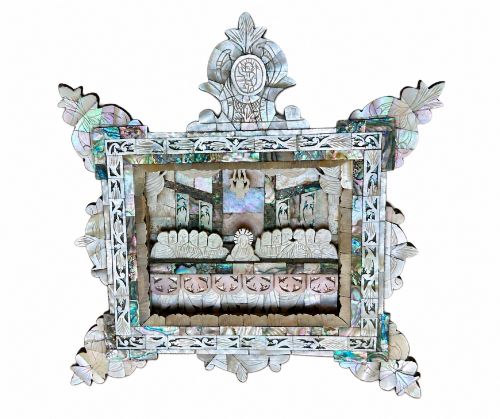
Woodcarvers shaped local timbers into saints, angels, and processional figures, frequently finishing the surfaces with paint and gilding. Painters layered oils on canvas to create portraits and narrative scenes following classical and folk traditions.
One 19th-century charm depicts a deer hunting horn alongside standard religious iconography.
Factors determining quality
Quality in these devotional objects rests upon the fineness of the hand-carving, the precision of enamelling work on gold pendants, and the anatomical accuracy of oil paintings. Pieces executed by named artists or established workshops demonstrate superior line and composition.
The preservation of original surface finishes, such as polychrome paint on wooden statues or delicate plique-a-jour transparency in medals, distinguishes finer examples from heavily restored or worn pieces.
Ernst Stierhof·Georges de La Tour·Paul Brandt·Emile Monier·Emile Dropsy
The Vintage Religious Art Glossary
- Plique-a-jour
- An enamelling technique where the enamel is fired in open cells, resembling miniature stained glass. This method allows light to pass through translucent coloured glass on gold pendants.
- Ex Voto
- A votive offering placed in a sacred place for the fulfilment of a vow. These Italian metal hearts often express gratitude or devotion.
- Polychrome
- Decorated in a variety of colours. This term describes wooden statues and angels painted with multiple pigments.
- Oleograph
- A type of colour lithograph produced to imitate an oil painting on canvas. These prints gained popularity during the 19th century.
- Santos
- A carved figure representing a saint or holy person used in religious processions and home altars. These wooden sculptures often feature articulated limbs.
Vintage Religious Art: Frequently Asked Questions
What is a processional figure?
Processional figures are carved wooden statues carried through streets during religious festivals and holy days. They were built to be lightweight yet durable for outdoor transport.
Artisans often finished these figures with polychrome paint and gesso to withstand handling.
How do I care for wooden religious statues?
Wooden religious statues require stable indoor humidity and protection from direct sunlight to preserve their paint and gesso layers. Dusting should be done gently with a dry, soft cloth.
Avoid using liquid cleaners or oils, which can damage historic polychrome surfaces.
What distinguishes an ex voto?
An ex voto is a devotional offering presented to a saint in fulfilment of a vow or prayer for healing. Italian examples are frequently fashioned as embossed metal hearts.
These items were traditionally left in sacred shrines by the faithful.