



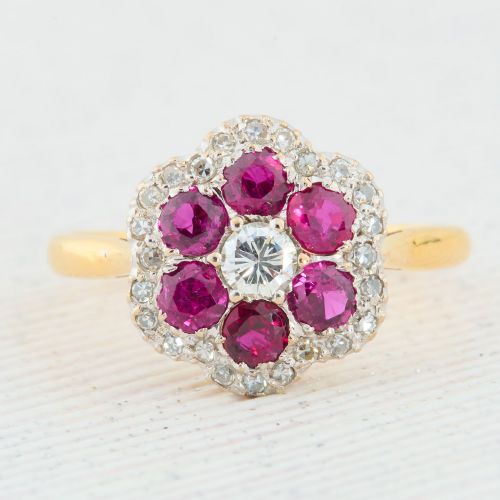
Vintage Red Ruby Ring
A vintage red ruby ring combines deep crimson stones with precious metals across periods ranging from Victorian to mid-century.
Vintage Red Ruby Ring
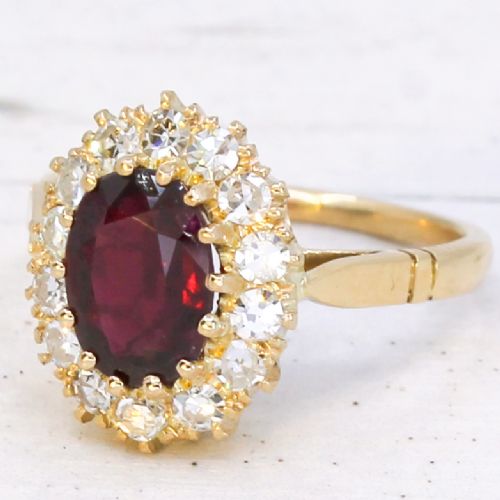
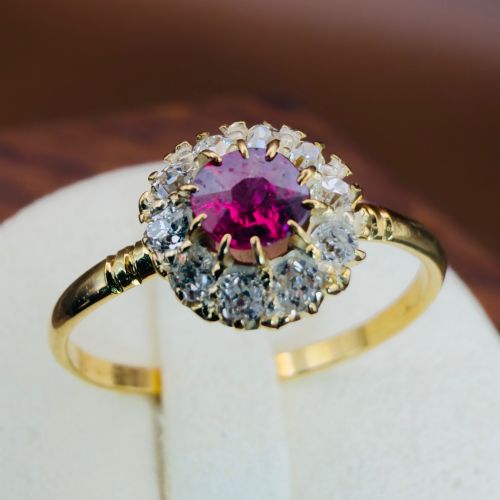
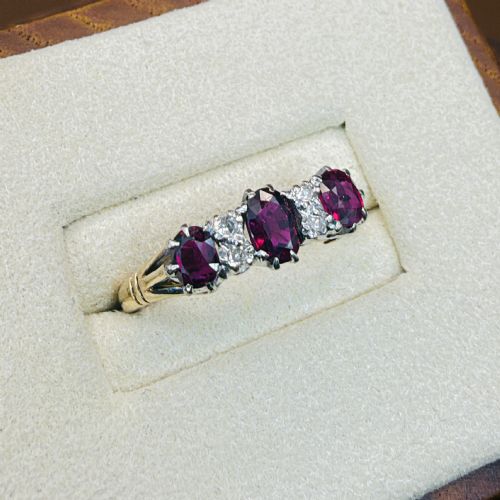
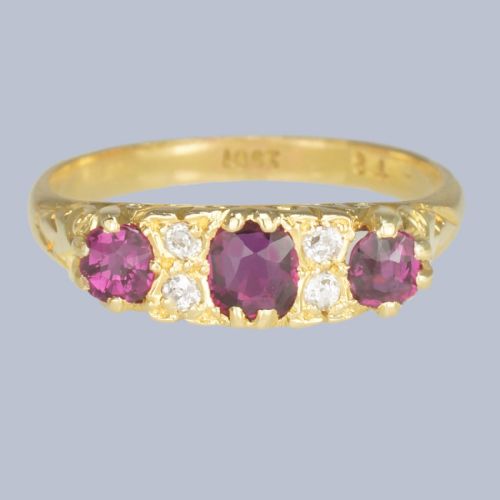
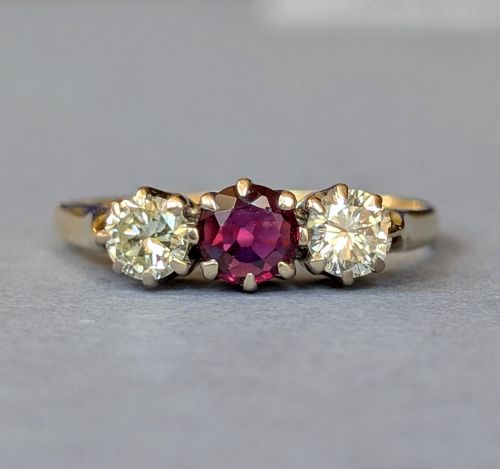
A vintage red ruby ring is a piece of jewellery centring on a red ruby, frequently paired with diamonds in cluster, halo, or three-stone settings. These pieces span multiple decades, including Victorian, Edwardian, Art Deco, and mid-century eras.
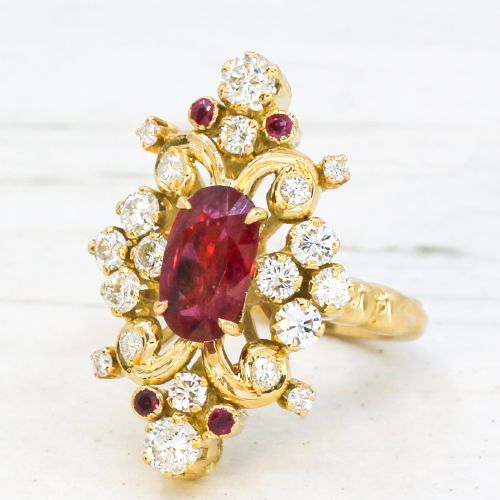
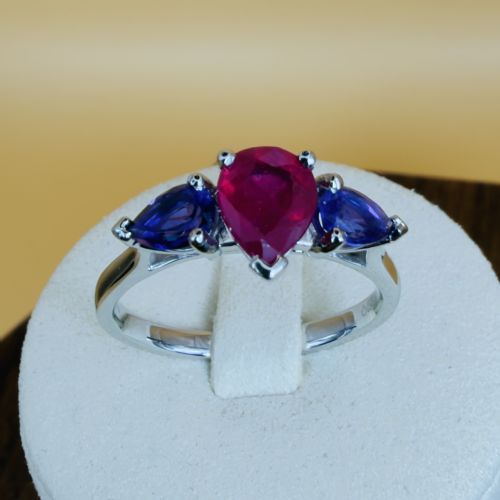
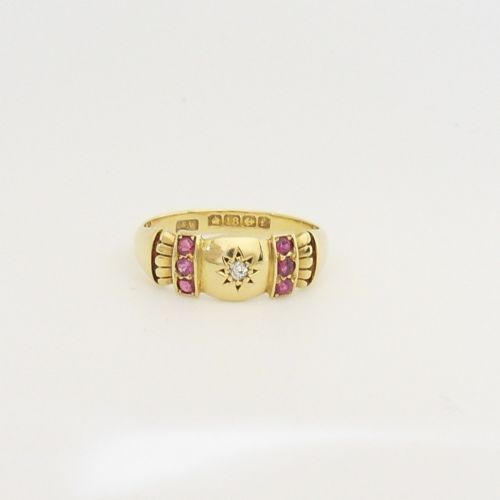
Buyers browsing this selection will most frequently encounter 18ct gold and platinum mountings housing oval, old cut, or round rubies. The designs range from floral and starburst clusters to linear navette and band configurations.
Materials and construction
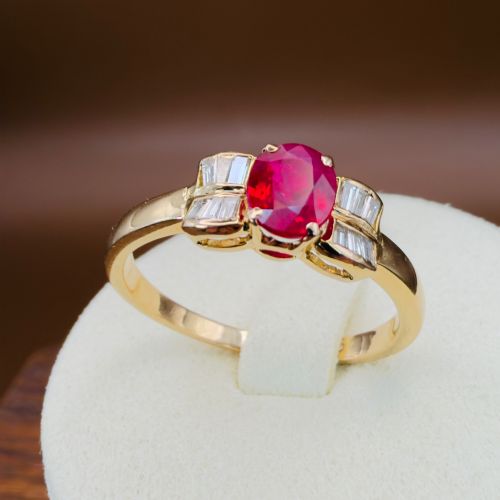
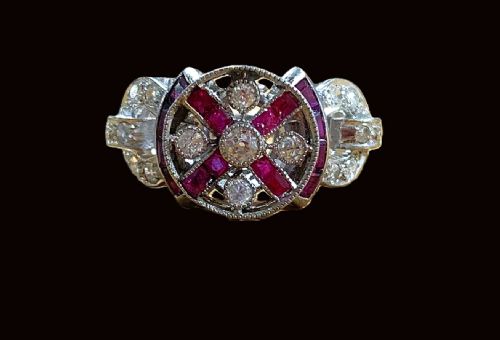
Goldsmiths utilised 18ct yellow gold, 18ct white gold, and platinum to set rubies alongside old cut, baguette, or princess cut diamonds. Metalwork styles reflect the period of origin, from substantial Victorian band settings to geometric Art Deco platinum framing.
Gemstones were secured using traditional claw, bezel, and flush settings designed to maximise light passage through the ruby and diamond facets. Construction methods prioritized durability alongside decorative symmetry, incorporating detailed shoulders and gallery work.
Assessing quality and craftsmanship
The distinction between tiers rests upon the origin, heat treatment, and saturation of the ruby, alongside the cut and clarity of any accompanying diamonds. Natural unheated stones originating from sources such as Burma command distinct recognition compared to standard heated varieties.
Execution of the metalwork, weight of the gold or platinum, and precision of the stone setting dictate overall refinement. Pieces retaining original hallmarks and gemmological reports demonstrate greater documentary clarity regarding their composition.
The Vintage Red Ruby Ring Glossary
- Cluster ring
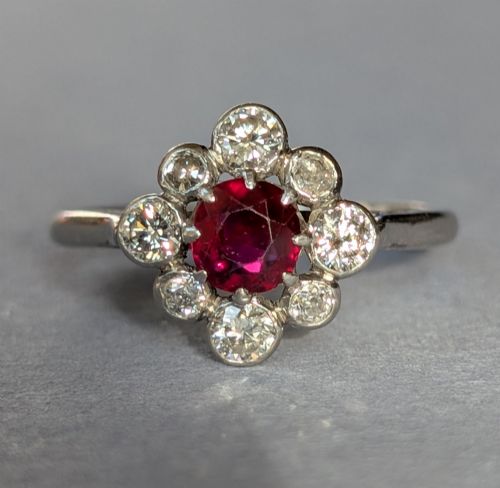
- A setting style featuring a central gemstone surrounded by a ring of smaller accent stones, typically diamonds. This arrangement maximises visual impact and perceived dimension on the finger.
- Old cut diamond
- A precursor to the modern brilliant cut, shaped by hand with a smaller table and larger culet to catch candlelight. These stones possess a distinctive softer scintillation.
- Navette
- A boat-shaped ring design that tapers to points at either end, also known as a marquise cluster. The elongated silhouette sits lengthwise along the finger.
- Trilogy ring
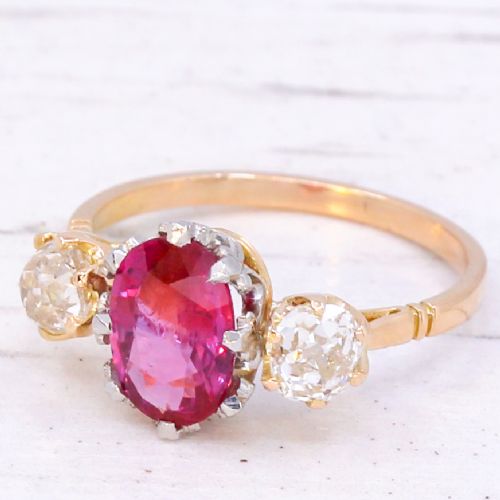
- A three-stone ring configuration representing past, present, and future, frequently combining a central ruby flanked by diamonds. The proportions balance the focal stone with uniform or graduated side stones.
- Starburst
- A radiating geometric design pattern resembling exploding light, popular in Victorian and Edwardian cluster rings. Metal prongs and stepped diamond points project outward from a central ruby.
Vintage Red Ruby Ring: Frequently Asked Questions
What periods do these rings come from?
The pieces span the late 19th century through to the mid-20th century, encompassing Victorian, Edwardian, Art Deco, and 1950s or 1960s eras.
Each period imparts distinct stylistic traits, from the heavy gold starbursts of the Victorian years to the geometric platinum lines of the 1930s.
Are the rubies natural or treated?
Many listings specify natural unheated rubies originating from locations such as Burma, accompanied by independent gemmological reports.
Other pieces feature standard commercial rubies set within gold or platinum mountings alongside old cut or baguette diamonds.
How do I care for an antique ruby ring?
Rubies rank high on the Mohs scale of hardness, making them durable for regular wear, though settings still require periodic inspection by a jeweller.
Clean the metal and stones gently using warm soapy water and a soft brush, avoiding harsh chemical dips that might affect older gold or platinum.
What metal types are commonly used?
Constructors utilised 18ct yellow gold, 18ct white gold, standard yellow gold, and platinum across different decades.
Platinum gained favour during the Art Deco period for its strength in delicate geometric designs, whilst yellow gold predominated in Victorian and Edwardian pieces.