


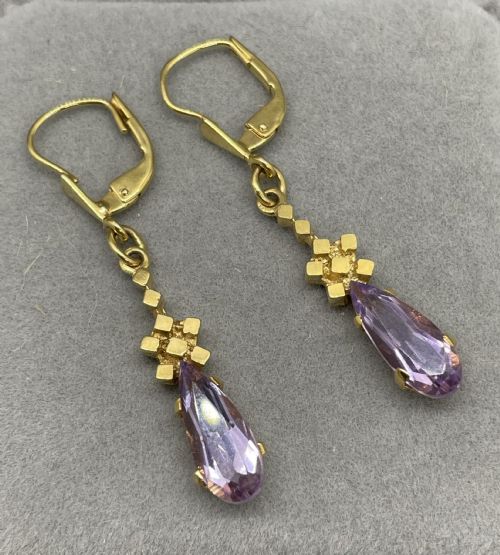


Vintage Purple Dangle Earrings
Vintage purple dangle earrings bring a rich flash of violet to the ear, combining deep amethyst stones with swinging drop designs.
Vintage Purple Dangle Earrings
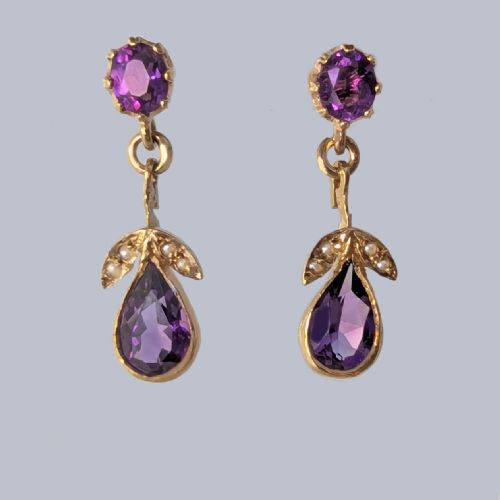
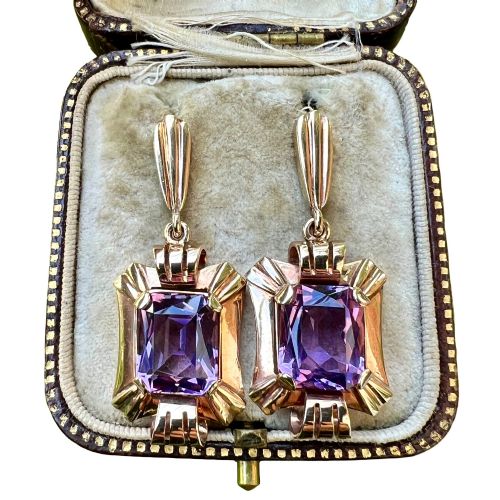
When you search for vintage purple dangle earrings, you are looking at drop earrings featuring purple stones, predominantly amethyst, set in gold or silver. The selections span from the Victorian and Edwardian eras through to the mid-century decades of the 1950s and 1960s.
Materials and construction
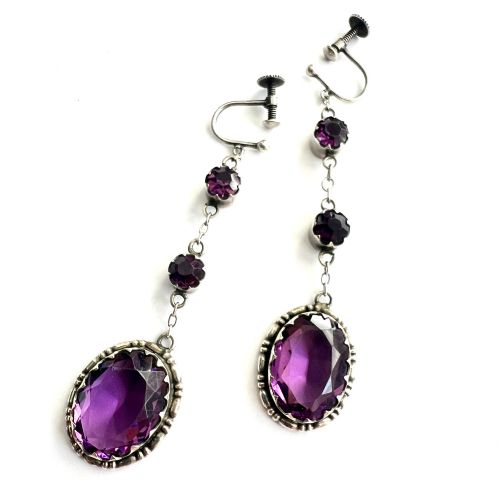
These pieces rely heavily on nine-carat yellow and white gold combined with natural amethysts, occasionally accompanied by seed pearls or pearls. Silver and glass pastes also appear in earlier Art Deco designs, providing alternative settings for the purple stones.
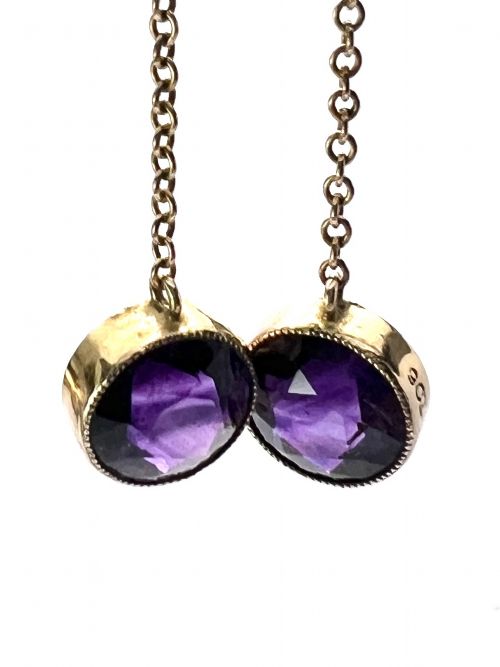
Goldsmiths utilised prong settings, bezels, and screw-back mechanisms to secure the hanging elements. Chain links and rigid bars connect the ear fittings to the swinging drop sections, allowing the purple stones to catch the light with movement.
The listings span from Victorian and Edwardian eras through the 1920s Art Deco period up to the 1960s, featuring amethysts, gold, silver, and pearls.
Factors of quality
The standard of these earrings depends on the depth of colour and clarity of the amethysts, alongside the weight and purity of the precious metal used in the mount. Solid gold settings and well-matched natural stones distinguish finer examples from lighter or paste-set alternatives.
Construction robustness also defines the upper tier, where secure stone mounts, reliable hallmarking, and well-articulated drop joints ensure durability. The finesse of the metalwork, whether Edwardian wirework or Art Deco geometric framing, separates standard production from superior craftsmanship.
The Vintage Purple Dangle Earrings Glossary
- Amethyst
- A purple variety of quartz valued for its violet hue. It serves as the primary gemstone in these vintage purple dangle earrings.
- Seed pearl
- A very small natural or cultured pearl, often used as an accent border around central amethyst stones in Victorian and Edwardian designs.
- Screw-back
- A mechanical earring finding that uses a threaded screw to tighten the fitting against the earlobe. This was common before the widespread adoption of modern post and butterfly backs.
- Paste
- Cut and polished lead glass used to imitate gemstones. In vintage jewellery, coloured pastes appear in period pieces alongside genuine stones.
- Hallmark
- An official stamp or marks struck on precious metal items to certify the purity of the metal. British pieces often display assay office marks and date letters.
Vintage Purple Dangle Earrings: Frequently Asked Questions
How do I care for vintage amethyst earrings?
Amethysts are durable quartz stones, but the delicate gold or silver settings require gentle handling. Clean them with warm soapy water and a soft brush, avoiding harsh ultrasonic cleaners that can dislodge seed pearls.
Store each pair separately in a lined box to prevent the metal and stones from scratching against other items in your collection.
Are screw-back earrings easy to convert?
Screw-back mechanisms were standard for non-pierced ears in earlier decades. Many wearers keep them original to preserve the antique character and historical integrity of the piece.
A jeweller can adapt certain designs to posts or hooks, though alteration often removes part of the original vintage mounting.
How can I tell Edwardian drops from mid-century pairs?
Edwardian drop earrings typically feature delicate filigree, milgrain edges, and chains incorporating seed pearls set in nine-carat gold. The aesthetic leans towards lightness and intricate floral or ribbon motifs.
Mid-century pieces from the 1950s and 1960s often display cleaner lines, heavier gold construction, and bolder oval or faceted stone cuts without the lacy wirework of the earlier period.
What does Victorian Revival mean?
Victorian Revival describes mid-twentieth-century jewellery that deliberately copies the styles, motifs, and material combinations of the nineteenth century. These pieces use older aesthetic templates while bearing mid-century hallmarks or manufacturing traits.
They offer the visual appeal of antique Victorian jewellery with the sturdiness of a later production date.