



Vintage Pug Figurine
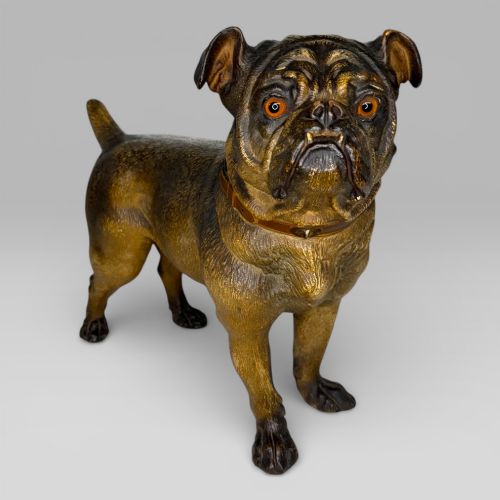
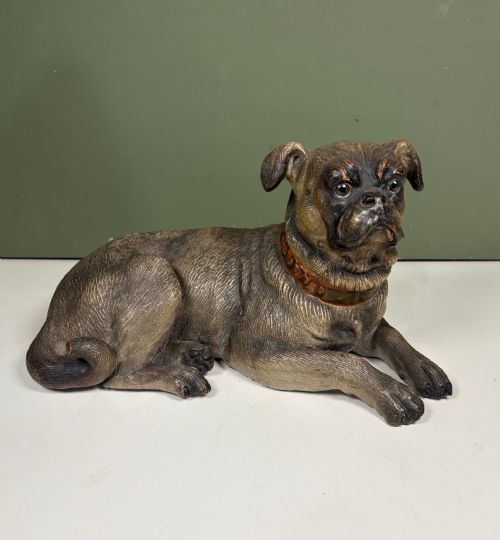
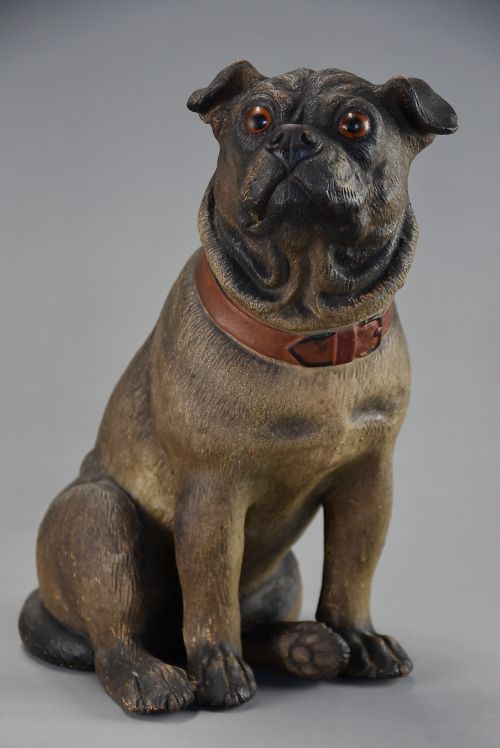
These vintage pug figurine pieces bring character and presence to a room, captured in terracotta, bronze and pottery.
Vintage Pug Figurine
A vintage pug figurine represents the breed across the nineteenth and early twentieth centuries, appearing in forms such as seated models, pepper pots and inkwells. Buyers searching for a vintage pug figurine will encounter pieces originating from Austrian workshops and Staffordshire potteries.
The selection on this page ranges from small novelty items like pewter pepperettes to life-size terracotta sculptures. Victorian and Edwardian examples dominate the offerings, often reflecting the distinctive wrinkles and flat faces characteristic of the breed.
Practical domestic items share space with pure decorative sculptures and statues. These varied objects capture the enduring popularity of the pug in European homes during the Victorian Animalier and Vienna Bronze periods.
How they were made
Terracotta and earthenware provide the foundation for many larger sculptures, shaped in moulds and finished with hand-applied paint or natural glazes. Austrian makers specialised in cold-painted bronze, where intricate metal casting precedes the delicate application of polychrome pigments.
Vintage Pug Figurine Retail Price Guide 2026
Typical asking prices for vintage pug figurine among the pieces listed under this phrase on Sellingantiques today, from the lower quarter to the upper quarter. They describe what is for sale here now, not the wider market.
Even a brassy nineteenth-century pepper pot maintains the unmistakable worried stare of a true pug.
What varies in quality
Quality rests in the fidelity of the model and the sensitivity of the surface decoration. Life-size terracotta and cold-painted bronze pieces by known makers like Bernard Bloch or in the style of Bergman show superior anatomical precision and expressive detail.
Lesser examples rely on simplified moulding and coarser paint application that obscure the distinct expression of the breed. The preservation of original cold-painted surfaces or early glaze finishes dictates the desirability among collectors.
Bernard Bloch·Bergman
The Vintage Pug Figurine Glossary
- Terracotta
- A porous fired clay used widely for sculptural figures. It often receives a painted or glazed finish.
- Cold Painted Bronze
- A method of decorating bronze sculptures with oil-based paint without firing. This technique was favored by Austrian foundries.
- Vienna Bronze
- Small, highly detailed bronze figures produced in Austrian workshops during the late nineteenth and early twentieth centuries. They frequently depict animals in realistic or humorous poses.
- Victorian Animalier
- A nineteenth-century artistic movement focused on the realistic depiction of animals. Sculptors in this style studied anatomy closely.
- Pepperette
- A small container with a perforated top used for dispensing pepper. These often took whimsical animal shapes in pewter or ceramic.
Vintage Pug Figurine: Frequently Asked Questions
What materials were vintage pug figures made from?
Makers utilised terracotta, pottery, earthenware and glass for sculptural forms. Metalworkers also cast figures in bronze and pewter.
Surface decoration typically involved hand-applied paint, cold painting on metal, or traditional ceramic glazing.
How do I identify a Vienna bronze pug?
Vienna bronze pieces feature detailed metal casting with cold-painted polychrome finishes. They date predominantly from the late nineteenth and early twentieth centuries.
These small sculptures often show exceptional realism in the facial folds and posture of the dog.
Were these pug figures used as practical items?
Many smaller pieces served everyday domestic functions alongside pure decoration. Examples include inkwells for writing desks and novelty pepper pots for the dining table.
Larger terracotta and pottery models served purely as decorative sculptures within Victorian and Edwardian interiors.
How do I distinguish nineteenth-century pugs from later ones?
Nineteenth-century examples often bear the characteristics of Victorian Animalier sculpture or early Austrian terracotta production. Look for the weight of the terracotta and the quality of the hand-painted details.
Twentieth-century pieces from the Edwardian era introduce different glaze compositions and slightly altered styling.