


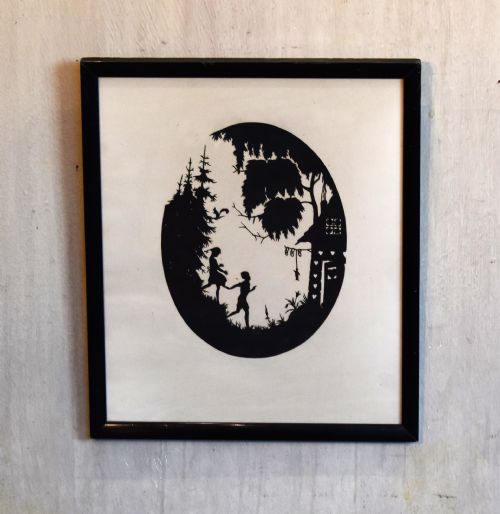


Vintage Profile Cut
These vintage profile cut silhouette portraits capture character through paper and ink with a striking directness that demands space on your wall.
Vintage Profile Cut
When you search for vintage profile cut, you are looking at silhouette portraits spanning the Georgian, Regency, and Victorian periods down to the early twentieth century. These works capture the likeness of gentlemen, young girls, children with horses, and family groups through ink and cut paper.
You are most likely to meet nineteenth-century framed silhouette art on this page, often featuring gentlemen or young subjects in period frames. The forms range from simple individual portrait miniatures to more complex multi-figure scenes involving people and animals.
The origins of these pieces stretch from British School works to specific named artists, with examples reflecting folk art traditions alongside formal portraiture. Each framed artwork preserves a distinct historical persona through the art of the shadow profile.
How they were made
Makers housed these delicate paper works within appropriate surrounds of the era, utilising wood, maple, and gilt wood frames. Many pieces incorporate gold leaf highlights or protective glass to preserve the fine edges of the cut paper against the passage of time.
Vintage Profile Cut Retail Price Guide 2026
Typical asking prices for vintage profile cut among the pieces listed under this phrase on Sellingantiques today, from the lower quarter to the upper quarter. They describe what is for sale here now, not the wider market.
One cheerful nineteenth-century family gathered animals alongside them in paper, proving that even pets sat still for the silhouette cutter.
What varies in quality
The standard of a vintage profile cut rests upon the precision of the paper cutting and the fidelity of the likeness captured by the hand. Crisp, confident snips that define a nose or brow distinguish superior portraiture from heavier, less assured work.
The surrounding frame contributes significantly to the overall merit, with period rosewood or maple housings and original gilt wood enhancing the piece. The addition of subtle watercolour embellishments or the presence of a signature elevates the status of the portrait.
Bateman·Augustin Edouart·Alfred Darbyshire
The Vintage Profile Cut Glossary
- Silhouette portrait
- A likeness depicted as a solid shape, usually in profile, typically cut from black paper or painted in dark ink.
- Cut-paper
- A technique where the image is formed by slicing paper with scissors or a knife rather than drawing or painting.
- Portrait miniature
- A small-scale painting or silhouette designed for intimate viewing rather than large wall display.
- Gilt wood
- Wood that has been treated with a thin layer of gold leaf or gold paint to provide a decorative metallic surface.
- Regency
- An English historical period spanning the early nineteenth century known for specific neoclassical design traits in frames and interiors.
Vintage Profile Cut: Frequently Asked Questions
What is a profile cut silhouette?
A profile cut silhouette is a portrait showing only the side view of a subject, typically formed by cutting black paper with scissors. These works rely entirely on the outer outline and minimal interior lines to convey identity.
Artists working in the eighteenth and nineteenth centuries produced these likenesses rapidly, capturing sitters before the widespread adoption of photography.
How were these portraits displayed?
Makers usually mounted these paper profiles behind glass within wooden frames made of maple, rosewood, or gilt wood. This protective framing kept the delicate paper flat and safe from dust and moisture.
Owners typically hung them in parlours and hallways alongside other family portraits and framed artwork of the period.
How do I date a silhouette?
Dating relies heavily on the style of the clothing, hair, and bonnets worn by the subjects, as well as the materials of the frame. Regency dress differs markedly from Victorian attire, giving clear clues to the decade of creation.
The framing materials and backing papers also help determine whether a piece originates from the Georgian era or the later nineteenth century.
Are all silhouettes signed by artists?
Many profile cuts remain anonymous because practitioners often produced them at fairs or in private studios without adding a signature. Unsigned works were common products of the British School and folk art traditions.
Signed examples or pieces bearing attribution to known practitioners are less common and usually reflect higher-status commissions.