



Vintage Portrait Relief
These vintage portrait relief pieces capture faces in bronze, shell, ceramic and wood across the nineteenth and twentieth centuries.
Vintage Portrait Relief
When you search for vintage portrait relief, you enter a field of sculptural likenesses spanning wall plaques, decorative medallions, framed tiles and wearable cameos. The pieces on this page draw from periods including the Victorian era, the Edwardian years and the mid-twentieth century.
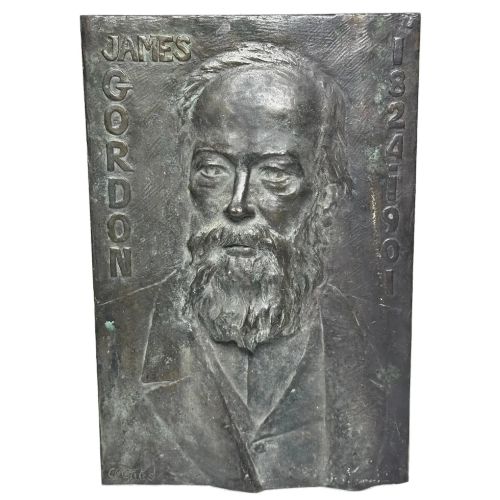
The subjects range from classical figures and historical rulers to named individuals and theatrical actors. Formats vary from small silver pendants and shell earrings to large mahogany plaques and bronze wall hangings.
How they were made
Makerly execution relies on the direct handling of materials such as carved shell, cast bronze, moulded stoneware and carved wood. Relief work requires the sculptor to raise the profile from a flat background to create depth and shadow.
Metal pieces utilise casting and chasing techniques, whilst ceramic iterations employ glazes on stoneware and earthenware bodies. Shell pieces depend on hand-carving through natural layers to expose contrasting tones.
Vintage Portrait Relief Retail Price Guide 2026
Typical asking prices for vintage portrait relief among the pieces listed under this phrase on Sellingantiques today, from the lower quarter to the upper quarter. They describe what is for sale here now, not the wider market.
Queen Victoria appears alongside actress Helen Faucit and a Queen Conch, proving royalty shares shelf space with the theatre.
What varies in quality
Quality rests upon the crispness of the carving and the precision of the cast. A well-modelled portrait captures facial expression and anatomical structure with clear definition, whereas lesser examples lose detail in softer contours.
The choice of frame, mount or setting also dictates standard. Solid precious metals and original period mountings elevate the overall integrity of the piece compared to later replacements.
Sherwin And Cotton·Gustav Grohe·Doulton Lambeth·Wedgwood·R. Pernice
The Vintage Portrait Relief Glossary
- Relief
- Sculpture in which figures project from a background plane. Low relief keeps elements shallow, whilst high relief projects further.
- Cameo
- A method of carving an object such as a shell or stone where a raised image stands out from a contrasting background.
- Medallion
- A circular or oval plaque, often cast in metal or ceramic, created to commemorate a person or event.
- Bronze
- An alloy of copper and tin used for casting sculptural plaques and medals with patinated surfaces.
Vintage Portrait Relief: Frequently Asked Questions
How do I hang a wall plaque?
Most wall plaques arrive with fitted loops, wire or dedicated brackets secured to the reverse. Ensure your wall anchor matches the weight of the bronze, wood or ceramic body before mounting.
Keep pieces away from direct sunlight and damp conditions to protect patinated metals, glazes and organic materials over time.
What is the difference between a cameo and a plaque?
Cameos are typically carved from layered materials like shell or agate for personal adornment as pendants, brooches or earrings. Plaques are generally larger, flat-backed works designed for display on walls or within architectural settings.
Both utilise relief techniques, but their scale and intended placement diverge significantly.
How should I clean shell cameos?
Use a soft, dry brush to remove dust from the carved recesses of shell pieces. Avoid harsh chemical cleaners, soaking in water or ultrasonic baths, which can damage the organic layers.
Store them in dry conditions away from extreme temperature shifts to prevent cracking.
How do I identify the date of a bronze relief?
Look for cast signatures, artist monograms, foundry marks or stamped dates on the reverse or lower edge. Stylistic cues such as Art Nouveau curves or Neoclassical motifs also help narrow the manufacturing period.
Compare the patina and casting technique against known examples from the same era.