




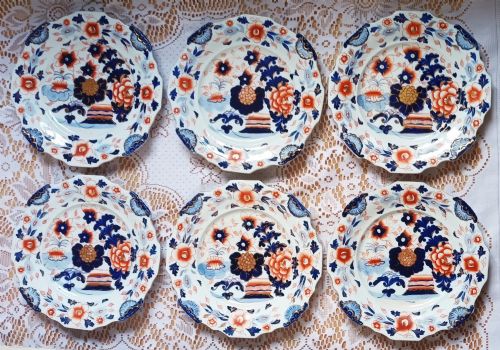
Vintage Porcelain Set
A vintage porcelain set gathers matched or service-related ceramic pieces for the table, tea tray or washstand, prized for surviving domestic utility with decorative charm intact.
Vintage Porcelain Set
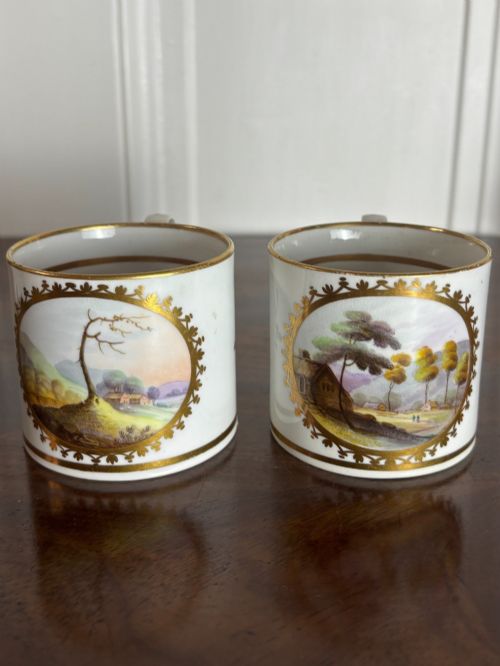
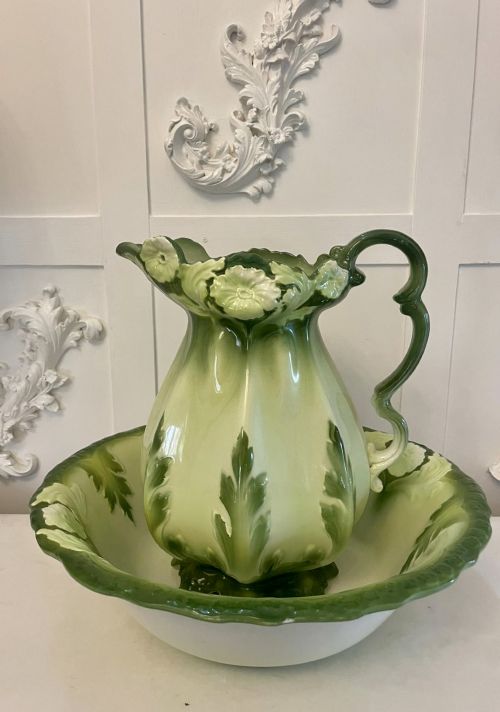
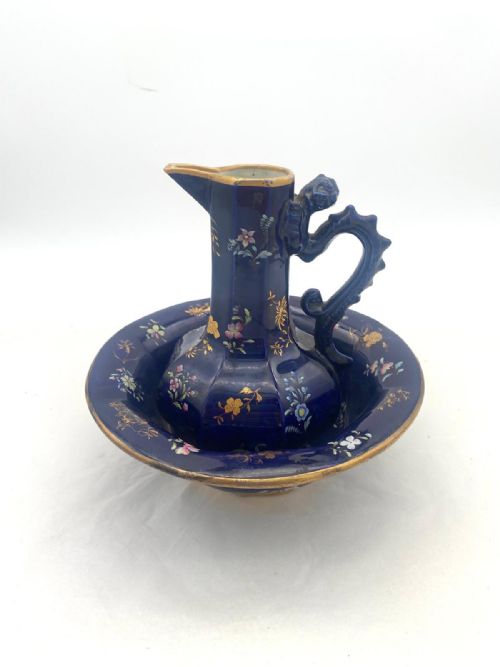
A vintage porcelain set brings together coordinated vessels for dining, tea drinking, or dressing table use. These groupings span dinner services, tea and coffee sets, and washstand or jug and bowl suites from the nineteenth and early twentieth centuries.
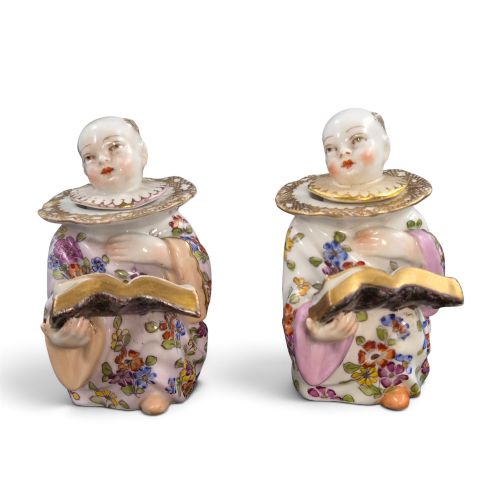
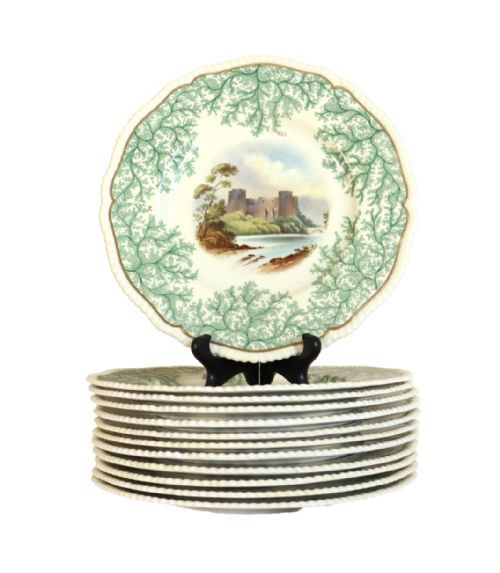
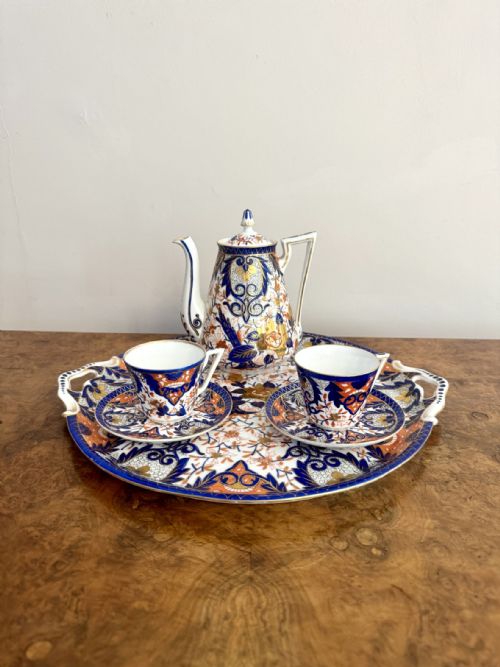
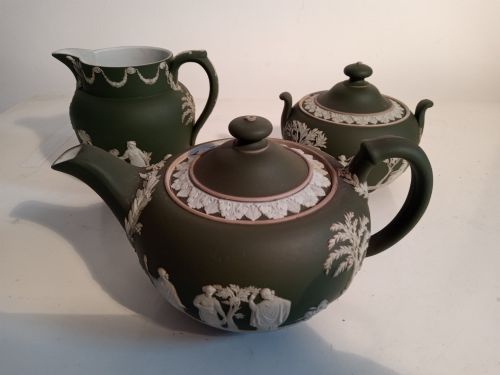
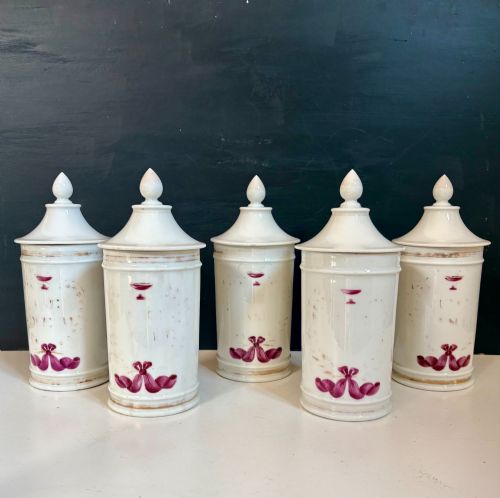
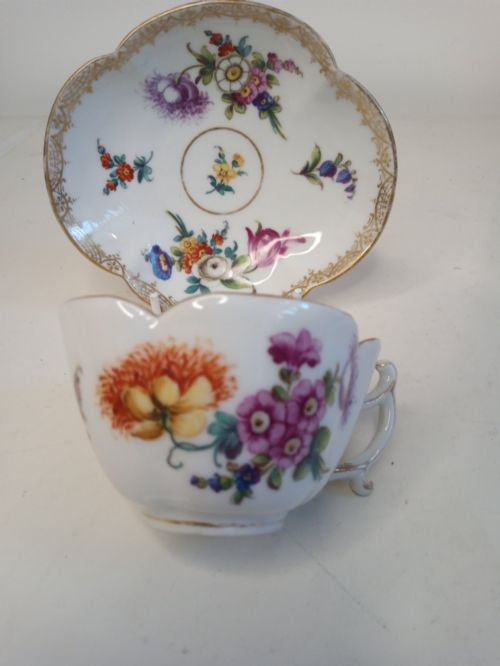
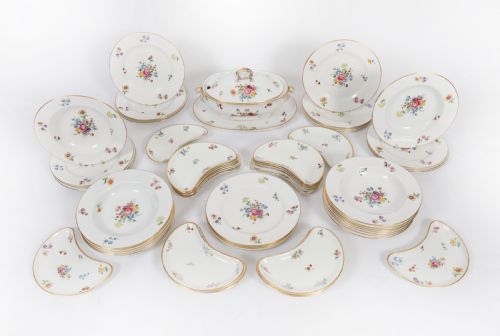
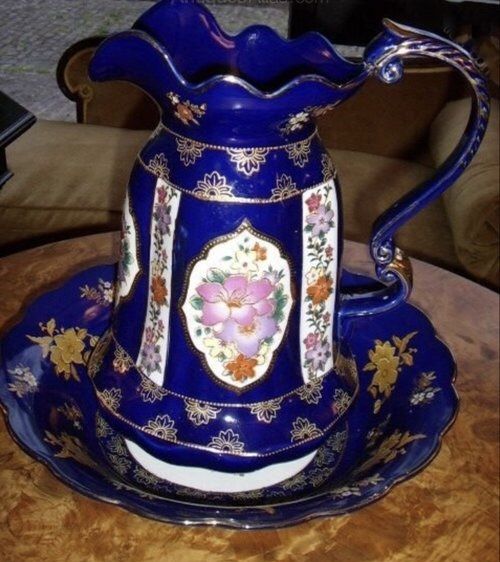
The selections on this page range from compact teacup and saucer pairings to extensive sixty-piece dinner services and multi-piece bathroom sets. Tea sets and dinner plates dominate the selection, accompanied by specialised groupings such as inkwells and apothecary jars.
Originating across English, Continental, and Asian workshops, these sets reflect the domestic habits of the Victorian, Edwardian, and Art Deco eras. Each grouping preserves the coordinated aesthetics of its period, whether through hand-painted floral motifs or transfer-printed scenes.
Materials and production methods
Makers shaped these sets using fine ceramic bodies, including porcelain, bone china, earthenware, and ironstone. Potters combined clay, feldspar, and quartz before firing the pieces in kilns to achieve durable vitrified structures.
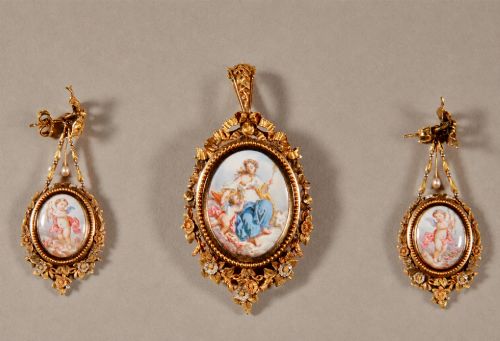
Decoration relied on hand-painted pigments, enamel work, and gold leaf gilding applied over or under the glaze. Cobalt blue glaze and transfer printing also appear frequently across the ceramic surfaces, fixed by secondary kiln firings.
Vintage Porcelain Set Retail Price Guide 2026
Typical asking prices for vintage porcelain set among the pieces listed under this phrase on Sellingantiques today, from the lower quarter to the upper quarter. They describe what is for sale here now, not the wider market.
The listings on this site span the eighteenth, nineteenth, and twentieth centuries, featuring porcelain, ironstone, and earthenware.
Distinctions in quality
Quality rests in the crispness of the moulding, the precision of the hand-painting, and the completeness of the service. Exemplary sets maintain uniform glazing without firing flaws, while lesser examples show warping or inconsistent colour application.
The skill of the painting and the richness of the gilding separate standard production wares from superior artistic commissions. Preservation of all original components within a service elevates the standing of any given set.
H & R Daniel·Edmé Samson·Royal Crown Derby·Masons Ironstone·Wedgwood·Spode·Royal Doulton·Coalport·Sevres·Müller Volkstedt MV Co.·Royal Davenport·Shelley·Royal Worcester·Elkington
The Vintage Porcelain Set Glossary
- Gilding
- The application of gold leaf or gold paint to ceramic edges and handles. This technique adds metallic highlights that frame the painted porcelain designs.
- Imari
- A decorative style originating in Japan and copied by European factories, characterised by underglaze blue, iron red, and gold. The palette creates dense, contrasting patterns across plates and vases.
- Ironstone
- A heavy, durable type of earthenware patented in the nineteenth century. It resists chipping better than standard porcelain while accepting similar transfer-printed designs.
- Service
- A complete group of matching vessels designed for a specific domestic function, such as dining or tea drinking. Services often comprise dozens of individual plates, cups, and serving pieces.
- Glaze
- A glassy coating fused to the ceramic body during firing to seal the porous clay. It provides a smooth, waterproof surface that protects the painted decoration beneath.
Vintage Porcelain Set: Frequently Asked Questions
How do I date a vintage porcelain set?
Dating relies on maker marks stamped or painted on the underside of the ceramic pieces, combined with the stylistic clues of the period. Shape, pattern style, and glazing techniques also help narrow the decade of manufacture.
Factory registers and historical pottery marks provide precise reference points for matching symbols to specific years of production.
Can I use these sets for daily dining?
Most vintage porcelain sets require careful handling due to their age and delicate enamel or gilded decoration. Hand washing preserves the surface patterns better than modern dishwashers.
Using older sets for special occasions prevents excessive wear on fragile handles, gold leaf, and hand-painted motifs.
What is the difference between porcelain and ironstone?
Porcelain is fired at high temperatures until vitrified, resulting in a fine, translucent white body. Ironstone is a dense, opaque earthenware designed to mimic porcelain while offering greater physical strength.
Ironstone pieces feel heavier and thicker in the hand, whereas true porcelain transmits light when held up to a bulb.
How should I display a large dinner service?
Large services are best housed in secure glass-fronted cabinets or dedicated sideboards that protect the pieces from dust and accidental knocks. Stacking plates too high risks scratching the glazed surfaces.
Displaying a few focal pieces alongside stacked plates allows large services to be appreciated visually without overcrowding display shelves.