


Vintage Porcelain Cups
These vintage porcelain cups span from delicate Georgian demitasse to robust Edwardian tea sets, offering both decorative charm and functional history.
Vintage Porcelain Cups
When you search for vintage porcelain cups, you encounter a diverse array of drinking vessels spanning multiple centuries, from eighteenth-century tea bowls to twentieth-century demitasse sets. These pieces range from solitary cabinet mugs designed for display to complete afternoon tea services intended for regular use.
The selections on this page draw from extensive periods including the Georgian era, the nineteenth century, and early twentieth-century decades like the 1920s and 1930s. You will frequently find teacups and saucers alongside coffee services, tankards, and trios originating from English, French, German, and Asian kilns.
Materials and manufacture
Manufacturers utilised fine porcelain and bone china as the primary body materials, shaping them into delicate vessels and robust mugs. These bodies provided a smooth, white canvas capable of supporting intricate hand-painted motifs and printed patterns.
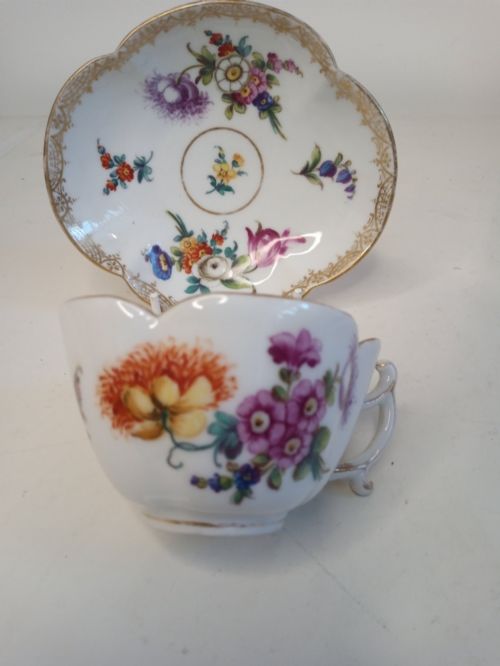
Craftsmen applied decorative elements including enamel, gold leaf, gilding, and raised gold gilt highlights, often finishing the pieces with a protective translucent glaze. Firing techniques evolved across the periods, resulting in varied body densities and surface lustres from matte finishes to rich lustreware.
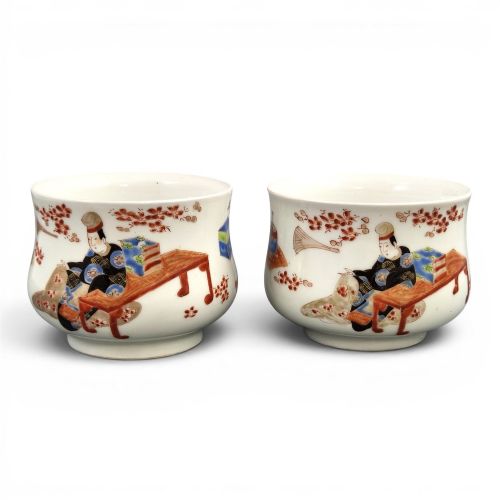
Several cups carry whimsical hand-painted birds and dragon motifs that have quietly stared at tea drinkers for over a century.
Assessing quality and craftsmanship
Quality in these items rests upon the precision of the body throwing and the fineness of the porcelain paste, where thinner walls often indicate superior handling. The refinement of the form, such as the balanced curve of a handle or the crisp seating of a saucer, distinguishes standard production from high-end cabinet pieces.
The execution of the decoration forms another major divider, separating mass-transferred designs from meticulous hand-painted artistry. Superior examples display careful brushwork, controlled gilding application, and well-preserved enamel colours that remain crisp against the white glaze.
Royal Crown Derby·Grainger Worcester·H and R Daniel·Coalport·Royal Worcester·Spode·KPM Berlin·Hutschenreuther
The Vintage Porcelain Cups Glossary
- Demitasse
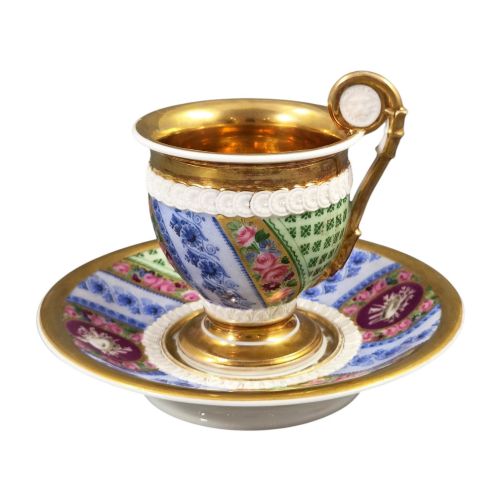
- A small cup used for serving strong black coffee or espresso. These pieces frequently date from the Victorian and Edwardian periods and often accompany matching saucers.
- Bone china
- A type of porcelain containing bone ash, which provides high strength, chip resistance, and a warm ivory translucency. English manufacturers utilised this material extensively throughout the nineteenth and twentieth centuries.
- Imari
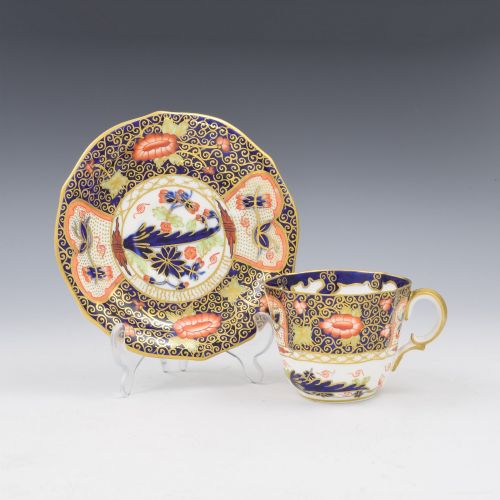
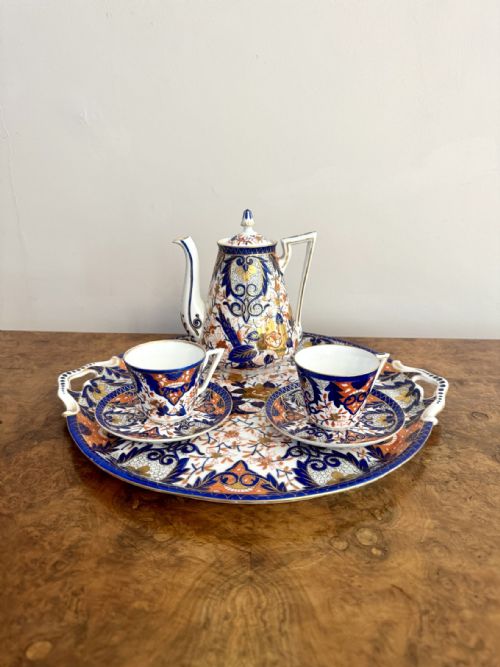
- A decorative style featuring dense Japanese-inspired palettes of iron red, cobalt blue, and gold. This aesthetic was widely adopted by European factories such as Royal Crown Derby.
- Cabinet cup
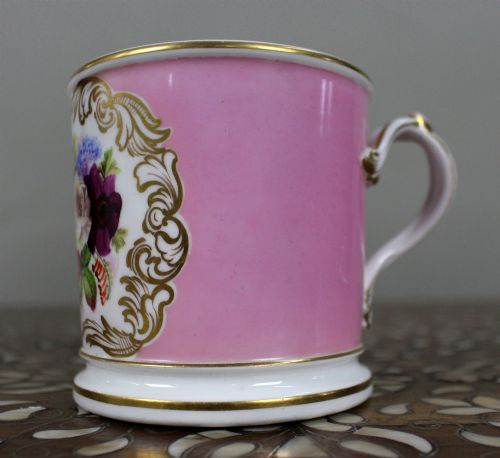
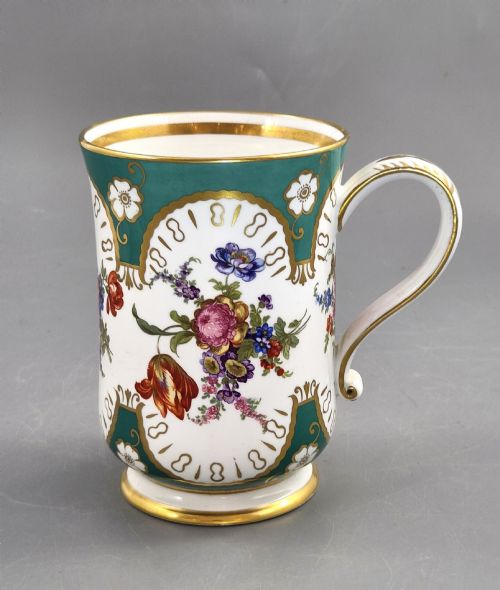
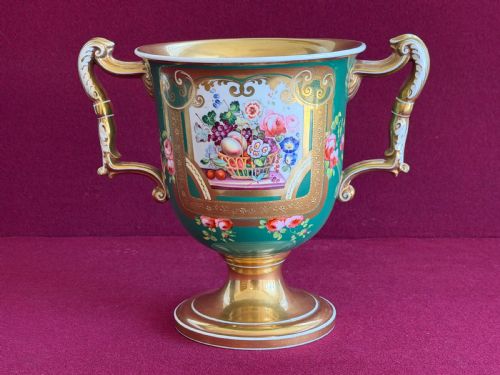
- A decorative vessel made primarily for display in a cabinet rather than functional drinking. These items often feature elaborate hand-painted scenes or rich coloured grounds.
- Lustre
- A metallic ceramic glaze that produces an iridescent sheen on the surface of the vessel. Wedgwood produced notable examples of this technique during the early twentieth century.
Vintage Porcelain Cups: Frequently Asked Questions
How do I date vintage porcelain cups?
Dating relies on examining maker's marks stamped or painted on the underside of the vessel, alongside stylistic clues such as handle shape and floral motifs. Reference books and factory archives help match specific ciphers to exact production years.
Material composition and manufacturing techniques also provide chronological boundaries. For instance, bone china formulations and specific transfer-printing methods align with distinct nineteenth and twentieth-century eras.
Were these cups meant for daily use?
Many of these items, particularly sturdy Edwardian and Victorian tea sets, were manufactured for regular dining and social gatherings. Their robust bone china or porcelain bodies handled frequent washing and hot liquids.
Conversely, delicate cabinet cups and heavily gilded demitasse pieces served primarily decorative roles or special occasions. Assessing the wear on the interior glaze and rim gilding often reveals how heavily a specific set was utilised.
What is a tea trio?
A tea trio consists of three matching components: a teacup, a saucer, and a corresponding side or salad plate. This configuration became a staple of afternoon tea service during the Victorian and Edwardian eras.
Finding complete trios allows collectors to recreate traditional tablescapes from the period. They showcase unified patterns and decorative borders across all three matching ceramic surfaces.