




Vintage Poker and Tongs
Vintage poker and tongs form the working heart of any hearth, bringing practical British metalwork from Georgian, Victorian and Edwardian parlours straight to your grate.
Vintage Poker and Tongs
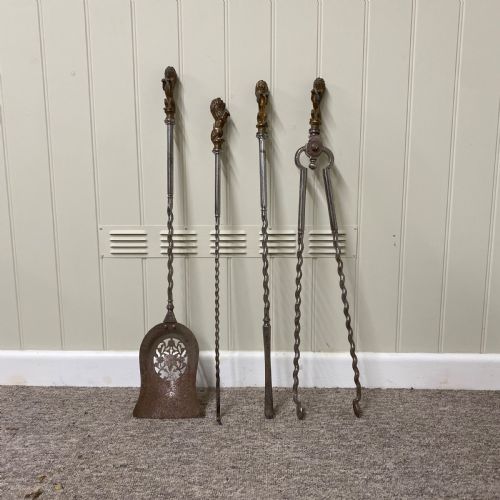
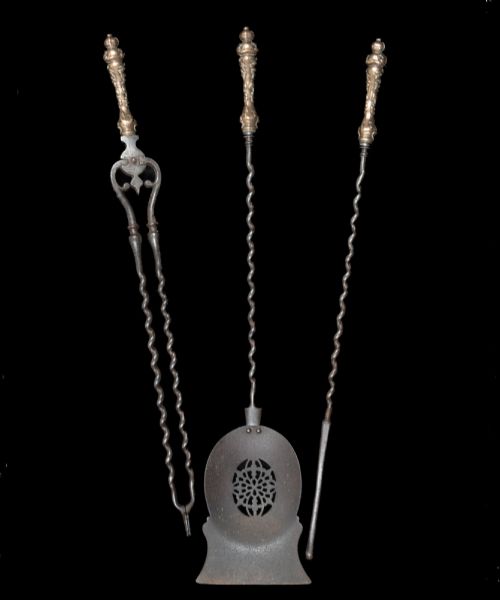
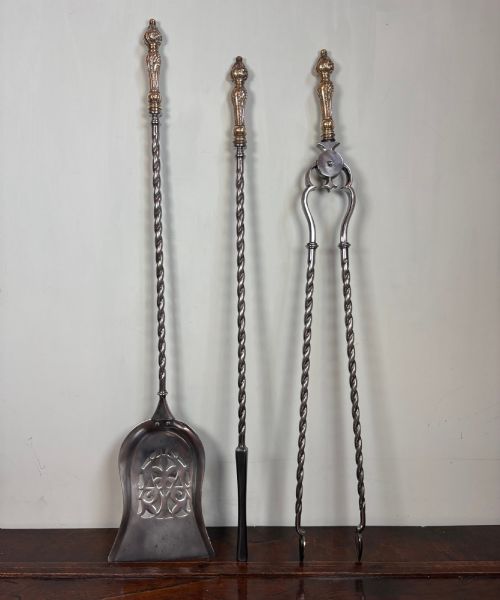
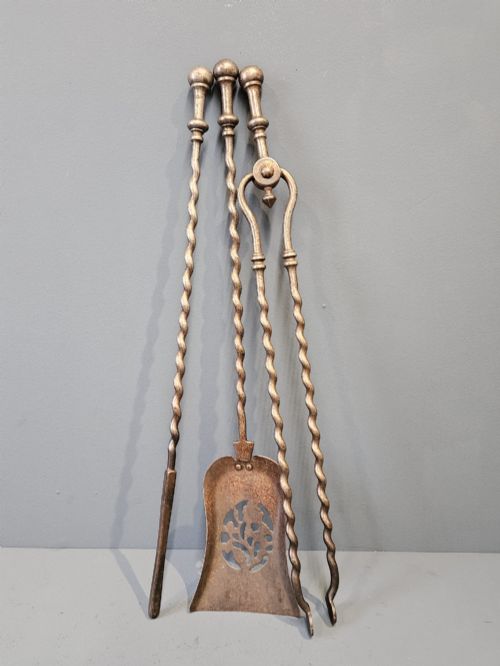
Vintage poker and tongs are functional fireplace accessories designed to manage burning coal and wood within an open grate. When searching for vintage poker and tongs, you encounter complete companion sets alongside matched pairs and individual fire irons intended for daily hearth use.
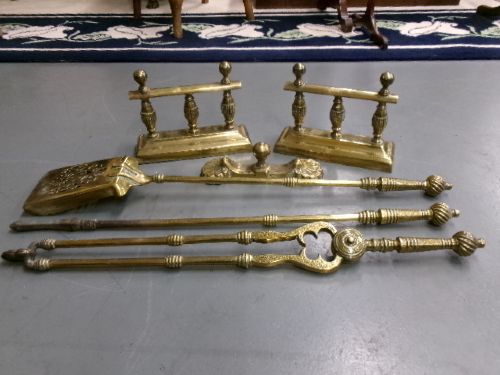
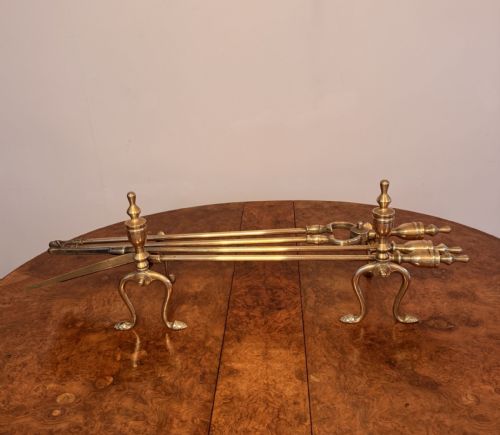
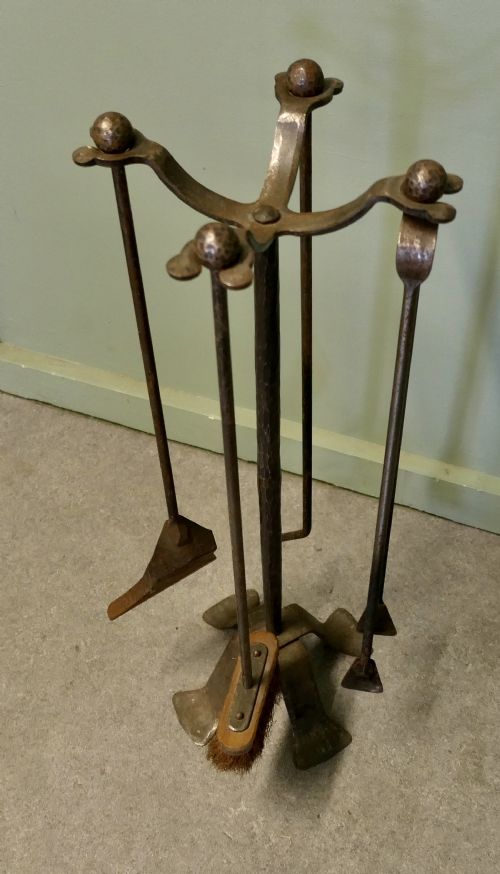
The pieces on this page span several distinct periods, with Victorian examples appearing most frequently alongside Georgian, Edwardian and Arts and Crafts designs. These fireplace tools usually arrive as part of larger sets that include shovels, rests and fire dogs.
Makers and smiths produced these implements to serve both utilitarian and decorative roles in the principal rooms of nineteenth-century and early twentieth-century homes. Their survival reflects the enduring utility of robust metalwork forged for domestic warmth.
How they were made
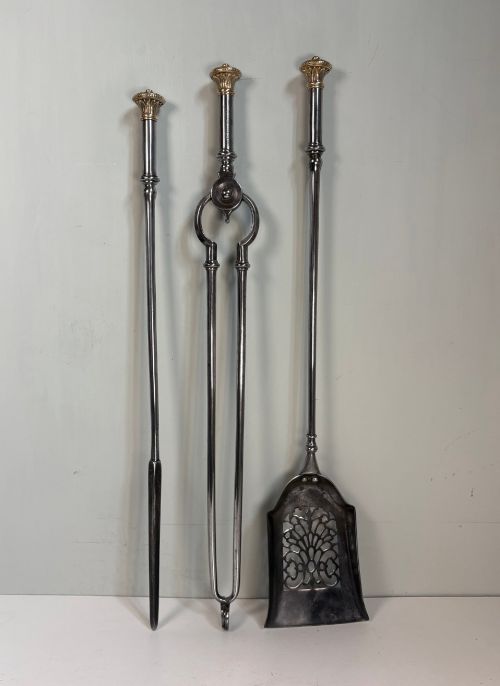
Blacksmiths and metalworkers shaped these fireplace tools primarily from brass, iron and steel, often combining materials within a single set. Steel components frequently received a polished or burnished finish to catch the firelight, whilst brass provided brighter decorative accents and handles.
Makers utilised techniques such as forging, casting and turning to produce sturdy shafts, articulated tongs and decorative finials like rope twists and starbursts. Gunmetal and copper also appear in selected items, demonstrating the variety of metalworking traditions applied to domestic hearth equipment.
Vintage Poker and Tongs Retail Price Guide 2026
Typical asking prices for vintage poker and tongs among the pieces listed under this phrase on Sellingantiques today, from the lower quarter to the upper quarter. They describe what is for sale here now, not the wider market.
The listings here feature iron, steel and brass across Victorian, Georgian and Arts and Crafts styles.
What varies in quality
Quality in these fireside implements rests upon the weight of the metal and the integrity of the construction rather than mere surface decoration. Heavier gauges of steel and solid brass castings distinguish robust companion sets from lighter, purely decorative reproductions.
Finishing details separate standard production items from finer workshop pieces. Crisp casting on handles, balanced proportions in the tongs and well-defined decorative motifs indicate superior craftsmanship from the Victorian and Georgian periods.
The Vintage Poker and Tongs Glossary
- Poker
- A heavy metal rod used to stir and break up coal or wood fires. It requires a rigid shaft and a secure handle to withstand high temperatures.
- Tongs
- A hinged tool used for lifting and positioning fuel onto the fire. Well-made examples feature a responsive spring action in the metal.
- Companion set
- A coordinated collection of fireside tools usually housed together on a stand or with fire dogs. These sets commonly combine a poker, tongs and shovel.
- Fire irons
- The collective term for the principal metal tools used to tend a hearth. They generally comprise pokers, tongs and coal shovels.
- Burnished steel
- Steel that has been mechanically polished to a high, reflective lustre. This finish was especially favoured during the Georgian and Victorian eras for formal drawing room grates.
Vintage Poker and Tongs: Frequently Asked Questions
What is included in a companion set?
A companion set typically groups essential fireplace tools together for convenient hearth management. These collections often unite pokers, tongs and shovels alongside matching fire dogs or rests.
Such sets ensured that all necessary metal implements matched in style and material for formal nineteenth-century reception rooms.
How do I date my fire tools?
Dating fire irons involves examining the prevailing styles, materials and manufacturing methods evident in the metalwork. Georgian pieces often display restrained lines in burnished steel, whilst Victorian items frequently incorporate elaborate brass casting and decorative handles.
Later Edwardian and Arts and Crafts examples shift towards simpler geometric forms or characteristic workshop textures.
Are steel and brass tools used differently?
Steel and polished steel tools were generally chosen for their strength and heat resistance during active fire tending. Brass components frequently served decorative functions or formed handles and finials that caught the light around the hearth.
Many period sets combine both metals, using steel for the working shafts and brass for visual warmth.
How should I clean historic metal tools?
Historic fireside metalwork requires gentle maintenance to preserve its natural patina and protective surface finish. Light dusting and occasional application of appropriate metal wax help protect iron and brass from atmospheric moisture without removing age.
Avoid abrasive cleaners that strip the original polished or burnished surfaces accumulated over decades of use.