


Vintage Plaque Ring
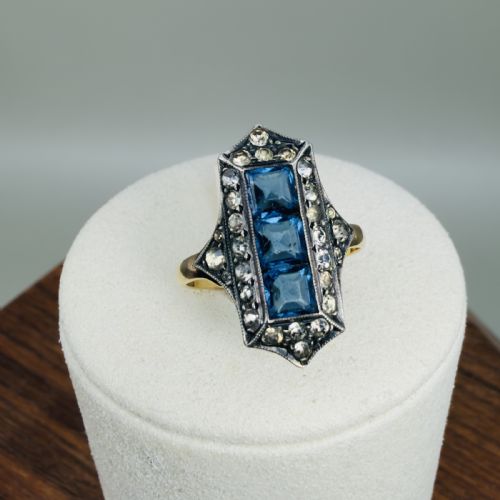
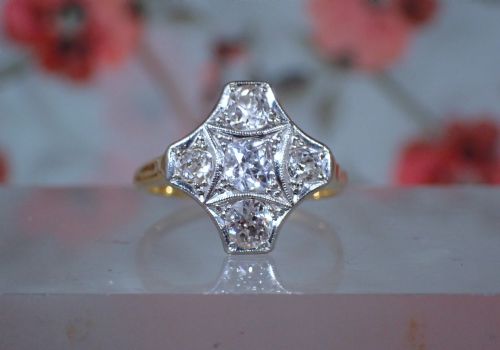
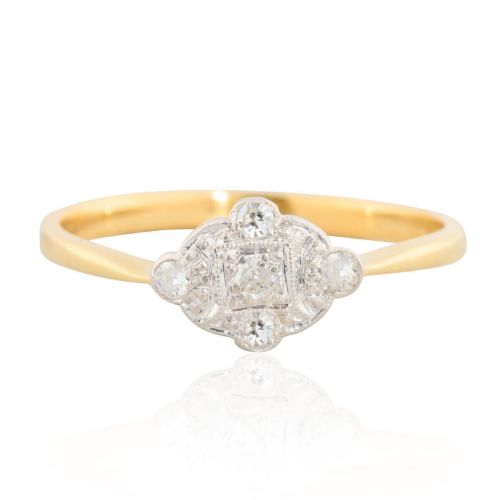
A vintage plaque ring presents a flat, geometric face of diamonds and coloured stones designed to sit low on the hand.
Vintage Plaque Ring
When searching for a vintage plaque ring, buyers encounter flat-topped cluster and panel designs that sit flush against the finger. These pieces span from the late nineteenth century through the Edwardian era into the mid-century decades, with the geometric Art Deco style dominating the selection.
The version most frequently met on this page is the platinum or eighteen-carat white gold Art Deco ring, often featuring an elongated rectangular, navette or square face. These architectural faces are densely pavé set with old cut diamonds alongside calibré cut sapphires, rubies or emeralds.
Beyond the predominant Nineteen-Twenties and Thirties examples, the listings include earlier Edwardian platinum-topped gold panel rings and later retro cocktail designs. Each variant maintains the characteristic low-profile silhouette that defines the form across periods.
How they were made
Master jewellers constructed these plaque rings primarily in platinum or a combination of eighteen-carat gold and platinum settings, taking advantage of platinum's strength to form razor-thin millegrain edges and delicate pierced galleries. This metal pairing allowed workshops to hold small pavé-set stones securely without heavy metal bulk.
Gemstones were meticulously shaped to fit precise geometric channels and borders, incorporating old cut diamonds alongside calibré cut sapphires, rubies, emeralds and black onyx. Hand-cut details such as millegrainbeading and openwork filigree transformed the metal backing into lace-like patterns behind the stones.
Some Edwardian panel rings hide tiny pierced clover motifs beneath their diamond tops, designed purely for the wearer's secret amusement.
What varies in quality
The standard of handwork in the piercing and millegrain decoration dictates the refinement of a plaque ring. Finer examples display crisp, uniform geometric symmetry in their openwork galleries and precise stone alignment without irregular gaps.
The integration of the central stones with the calibré-cut border gems separates standard production from exceptional work. Superior pieces balance the brilliance of old cut diamonds with richly saturated natural sapphires, rubies or emeralds that follow the contour of the plaque without crowding.
The Vintage Plaque Ring Glossary
- Plaque ring
- A ring featuring a flat, ornamental panel that sits parallel to the finger. These broad faces often display intricate pierced metalwork and dense stone settings.
- Calibré cut
- Small gemstones specifically shaped and cut to fit tightly into a designated geometric setting without shared prong interruptions. This technique creates continuous lines of colour in borders and motifs.
- Millegrain
- A decorative technique involving a row of tiny, raised metal beads along the edges of a setting. This textured border softens the transition between metal and skin.
- Old cut
- A diamond cut executed by hand before modern machine precision, characterised by a smaller table, higher crown and larger culet. These stones produce a softer, candlelit sparkle under low light.
- Navette
- A boat-shaped gemstone or ring face that tapers to points at both ends. The silhouette lengthens the appearance of the finger.
Vintage Plaque Ring: Frequently Asked Questions
How do I wear a plaque ring daily?
Because these flat-faced rings sit close to the finger, they catch less on clothing than high-set solitaire rings. This low profile makes them practical for regular wear when paired with sensible care.
However, the delicate millegrain edges and fine platinum wirework benefit from removal during heavy manual tasks to preserve their intricate detail.
What periods do these rings come from?
The pieces span from the nineteenth century through the Edwardian period and the height of the Art Deco era, extending into mid-century retro designs.
Art Deco examples from the nineteen-twenties and thirties form the largest group, recognisable by their strict geometric layouts and platinum construction.
Are the coloured stones natural?
Many period pieces incorporate natural sapphires, rubies and emeralds alongside diamonds and onyx. These coloured gems were often shaped by hand to fit specific channel borders within the plaque.
Certification or specialist examination helps confirm the origin and treatment history of the specific stones in an individual mounting.
How do I determine the ring size?
Plaque rings feature rigid geometric faces that cannot be resized in the same manner as simple gold bands. Adjusting the band requires care to avoid distorting the shoulders or straining the central plaque.
A professional jeweller experienced in antique mounting should assess the band thickness before undertaking any resizing work.