

Vintage Pink Lighting
Vintage pink lighting brings soft, coloured illumination to a room, drawing on oil lamps, chandeliers and glass shades from past centuries.
Vintage Pink Lighting
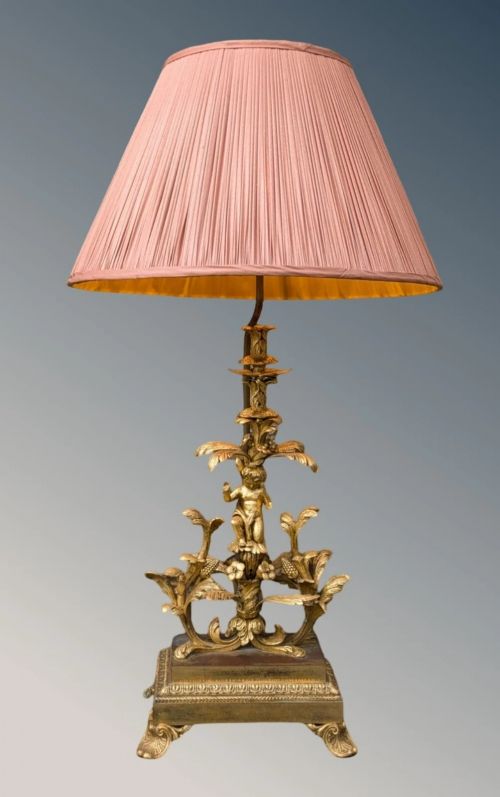
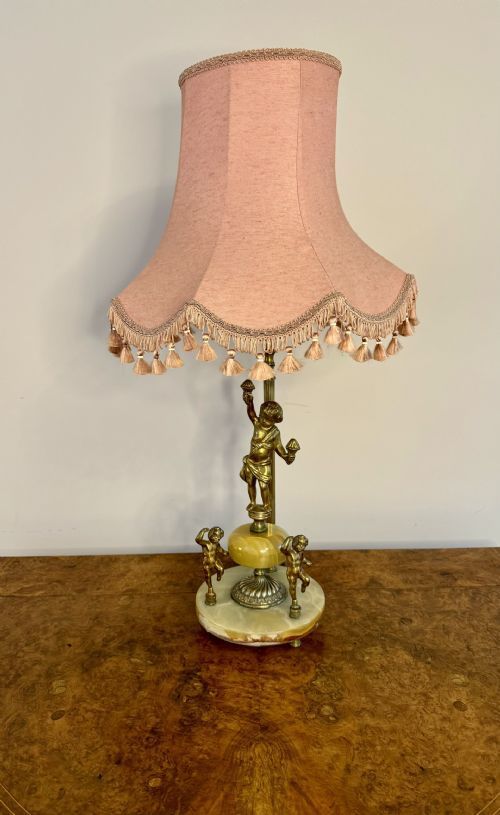
Vintage pink lighting spans oil lamps, chandeliers, table lamps and hanging shades produced across the Victorian, Edwardian and Art Deco periods. Buyers search for these pieces to introduce warm colour and period character into domestic interiors.
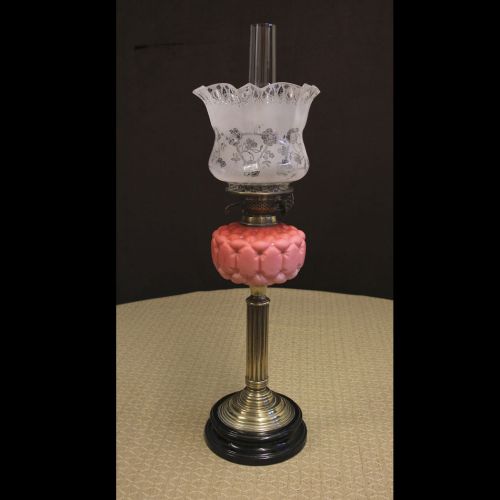
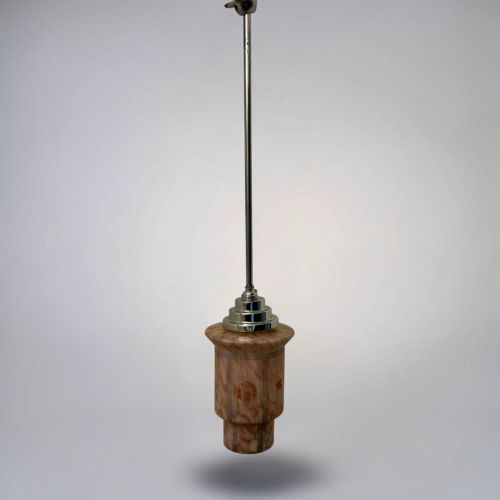
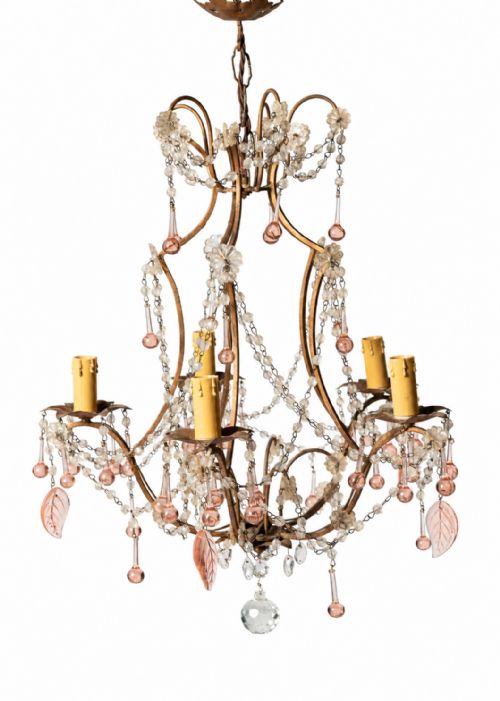
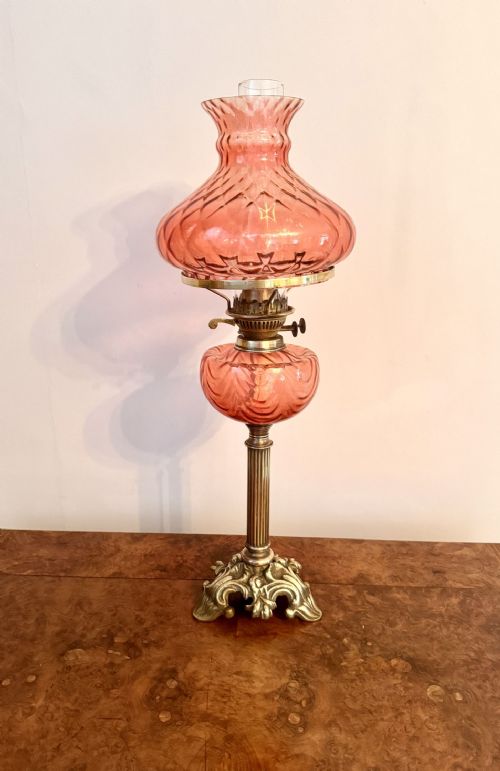
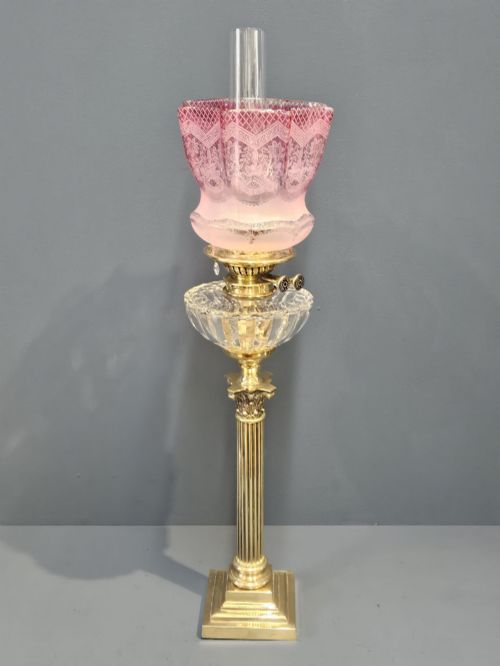
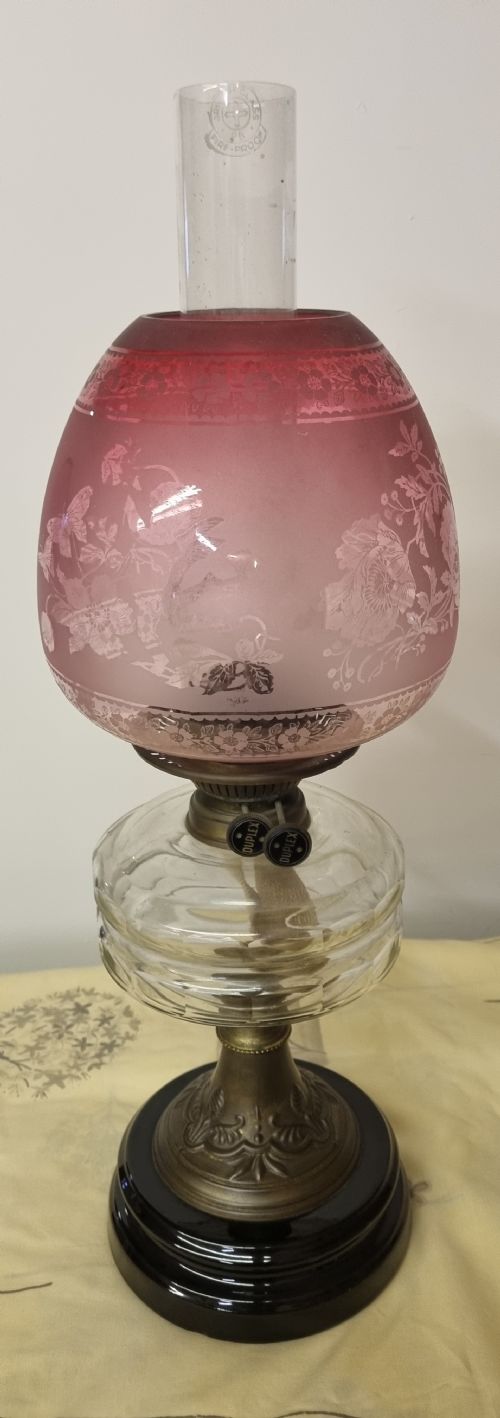
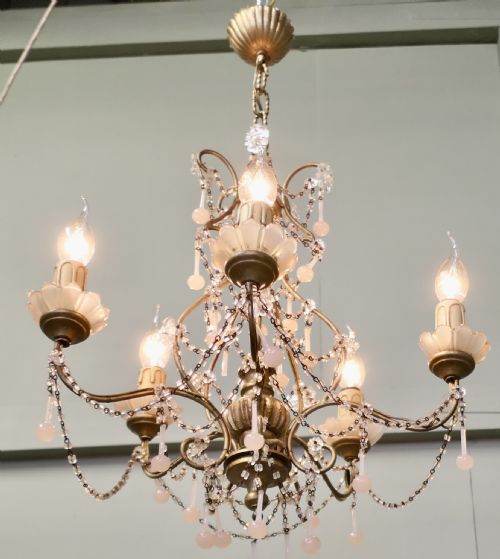
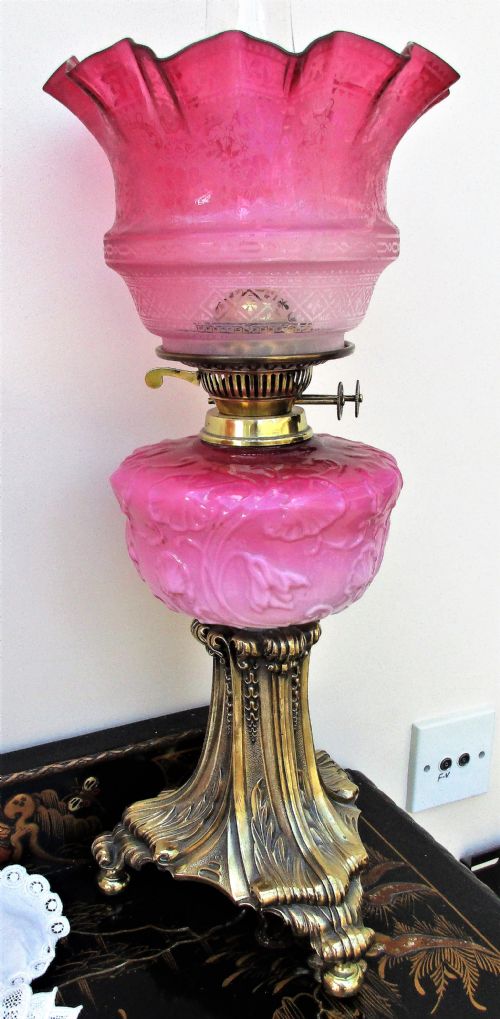
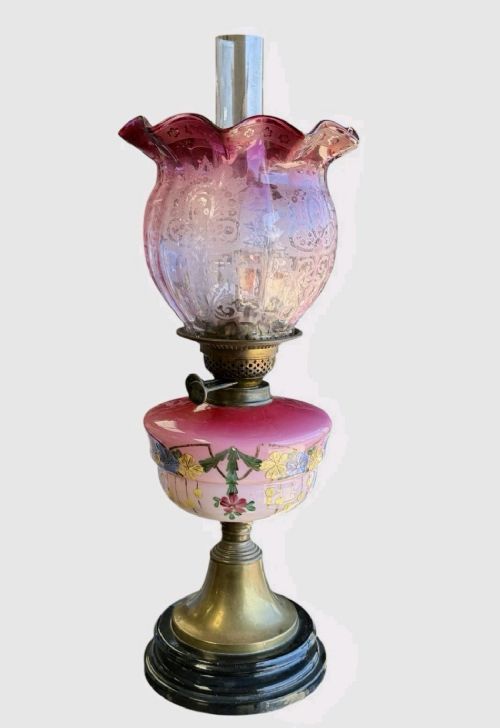
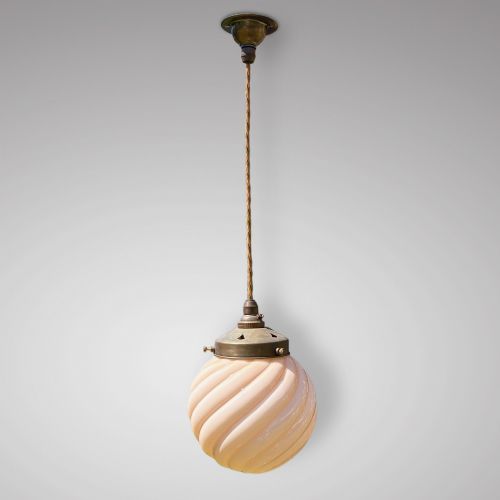
The most common examples on this page are Victorian oil lamps featuring cranberry glass fonts and shades, alongside Art Deco glass chandeliers and pendant lights from the 1920s and 1930s. Brass and gilt metal frequently provide the structural framework for these pink glass elements.
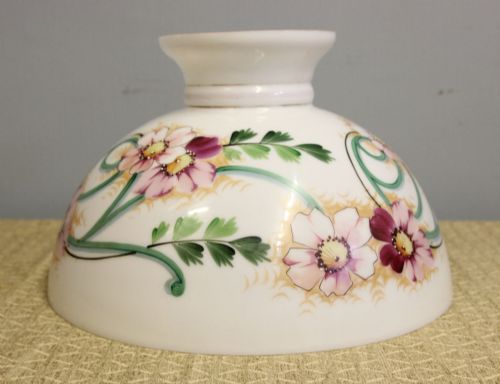
Earlier nineteenth-century examples often rely on hand-painted porcelain or opaline glass, while later twentieth-century items lean towards geometric brass frames and pressed glass drops.
How they were made
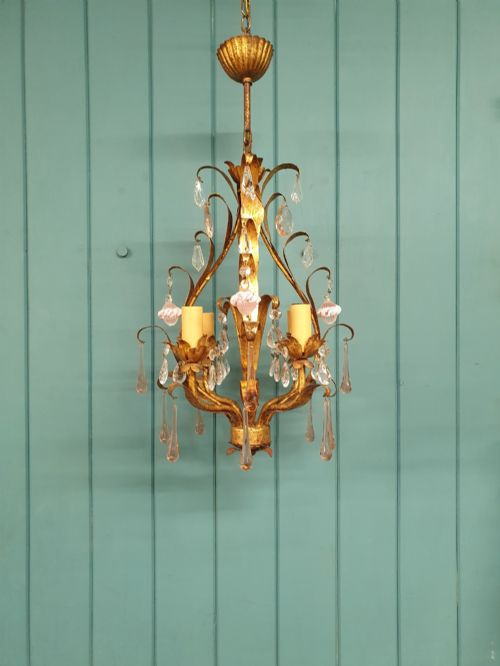
Manufacturers shaped brass, gilt bronze and cast iron into structural bases, columns and chandelier frames, often combining them with onyx, marble or alabaster. Metal components were frequently cast and gilded to complement the soft tones of the glass elements.
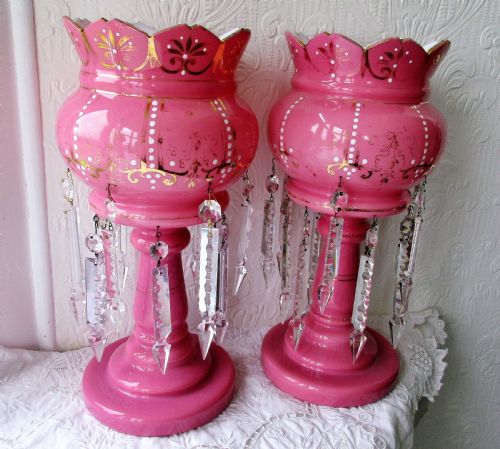
Glassmakers utilised techniques involving cranberry glass, opaline, frosted glass and crystal to produce shades, fonts and hanging drops. Adding gold or metallic salts to the molten glass created the distinct pink and red colourations seen in the shades and lustres.
Hand-painting and acid-etching frequently decorated the surfaces of the glass shades and porcelain fonts with floral or geometric motifs before final assembly.
Vintage Pink Lighting Retail Price Guide 2026
Typical asking prices for vintage pink lighting among the pieces listed under this phrase on Sellingantiques today, from the lower quarter to the upper quarter. They describe what is for sale here now, not the wider market.
Materials recur across brass, crystal, porcelain and several distinct varieties of pink glass including cranberry, opaline and frosted.
What varies in quality
The depth of colour and clarity in the glass separate standard production from finer output. Rich cranberry tones and evenly struck opaline or frosted surfaces indicate superior glassmaking skill.
Casting definition in the metal mounts distinguishes better pieces. Crisp detailing on brass Corinthian columns or gilded bronze frames shows a higher standard of craftsmanship than plain or indistinct castings.
Completeness dictates overall desirability. Matching pairs of lustres, original glass shades paired with their correct brass fonts, and intact crystal drops represent the higher tiers of surviving examples.
The Vintage Pink Lighting Glossary
- Cranberry glass
- A rich red-pink glass made by adding gold chloride to the molten batch. It is widely found in Victorian oil lamp shades and mantel lustres.
- Opaline glass
- An opaque, milky glass with a delicate pastel tint. This material was frequently hand-painted and blown into hanging lamp shades.
- Corinthian column
- A classical architectural column design often utilised for the stems of heavy Victorian and Edwardian standard and table lamps.
- Lustre
- A decorative tabletop vessel hung with cut glass prisms. Pairs of these items were designed to reflect candlelight or gaslight.
Vintage Pink Lighting: Frequently Asked Questions
How do I convert an old oil lamp for electricity?
Most antique oil lamps can be adapted by running a cord discreetly through the existing burner mechanism without damaging the metal or glass font. Professional rewiring ensures the fitting meets current safety standards while preserving the original components.
Retaining the burner collar often allows the original shade gallery to hold a modern bulb fitting and shade securely.
How do I clean antique glass shades?
Wash glass shades gently in warm water using mild soap, avoiding harsh scrubbing that might damage hand-painted details or gilt decoration. Allow them to air dry completely before reassembly.
Take care with cranberry and opaline glass, as sudden temperature changes in the water can cause thermal shock and cracking.
How do I tell a Victorian oil lamp from an Edwardian one?
Victorian oil lamps frequently feature heavy brass Corinthian columns, rich cranberry glass fonts, and hand-painted floral motifs. They often emphasise ornate, classical revival forms.
Edwardian and later examples lean towards simpler brass frames, slender profiles, and smoother opaline or frosted glass shades reflecting early twentieth-century design.
Are chandeliers from the 1920s difficult to hang?
Art Deco and 1920s chandeliers generally require a secure ceiling hook fixed directly into a joist to support the combined weight of the brass frame and glass elements. Professional installation is recommended due to the heavy metal and crystal components.
Checking the wiring condition during installation is essential, as many vintage chandeliers retain outdated internal electrical cables.