


Vintage Pink Glass Light
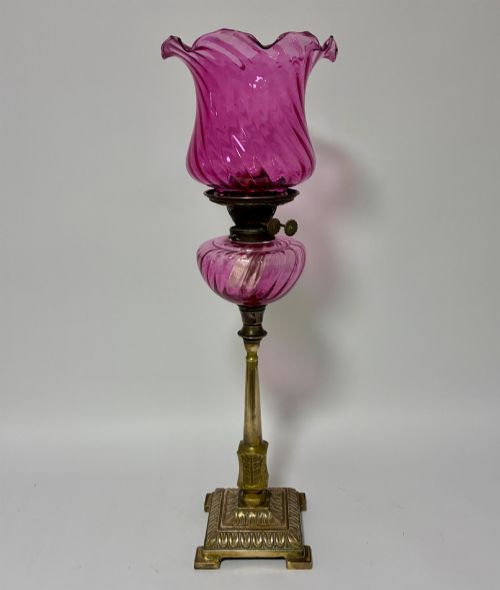
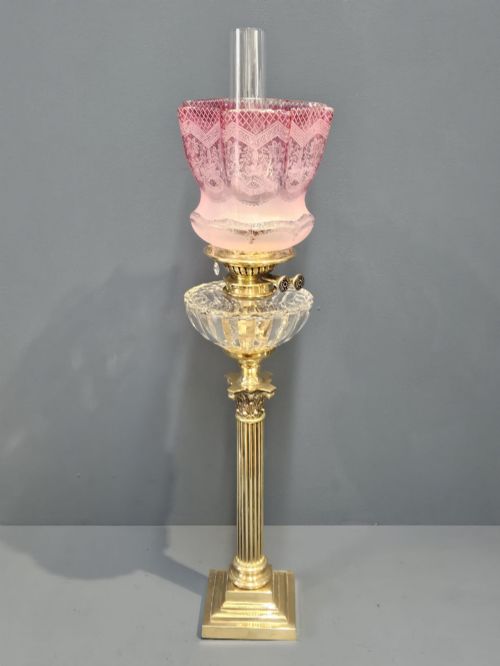
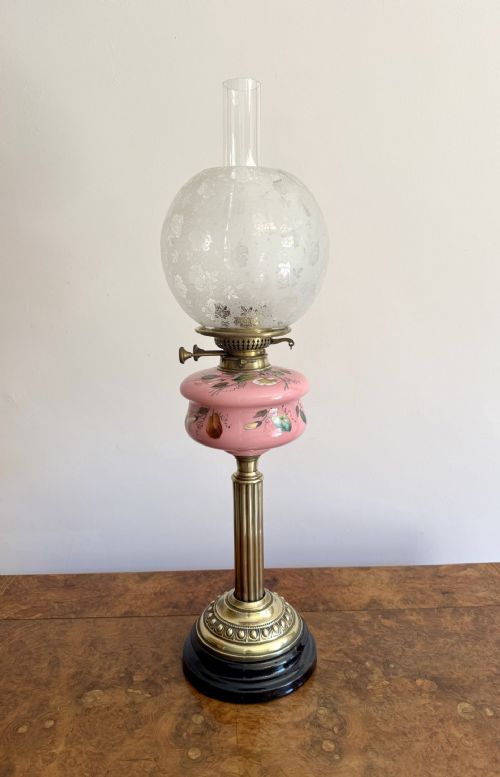
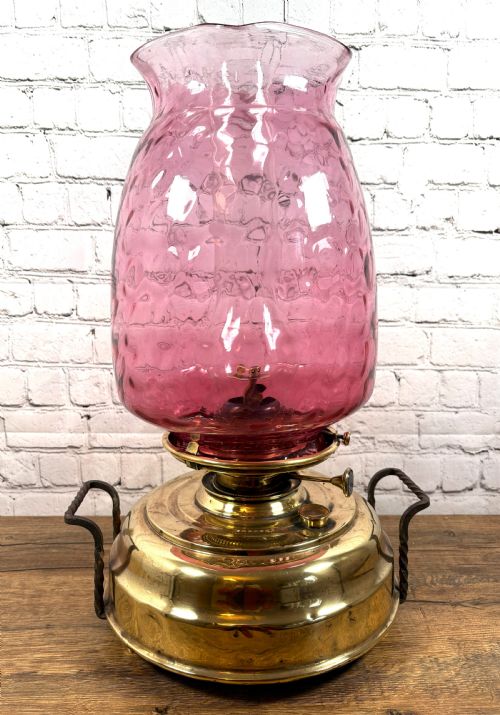
A vintage pink glass light brings warmth to a room, combining brass fittings with tinted or cranberry shades from the Victorian era to the Art Deco period.
Vintage Pink Glass Light
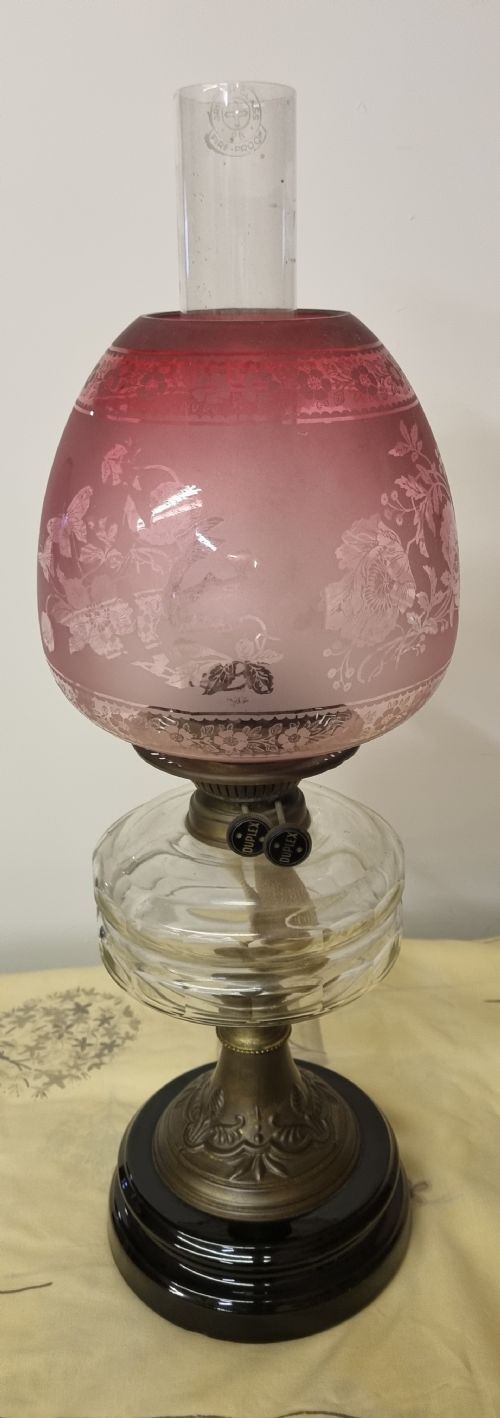
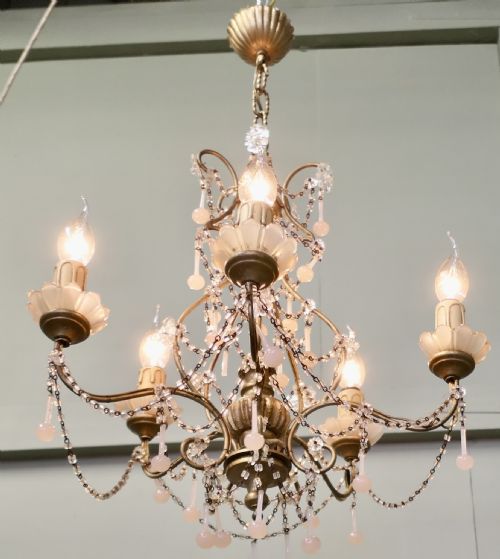
A vintage pink glass light encompasses oil lamps, chandeliers, pendants and table lamps spanning the nineteenth century through the 1930s. Buyers searching this phrase look for illumination featuring pink, cranberry, opaline or opaque glass components paired with brass, crystal or ceramic structures.
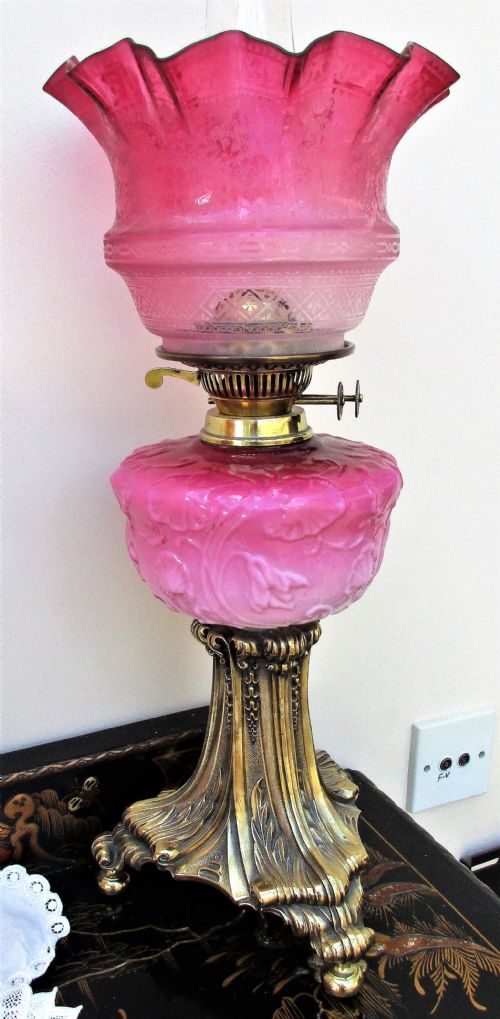
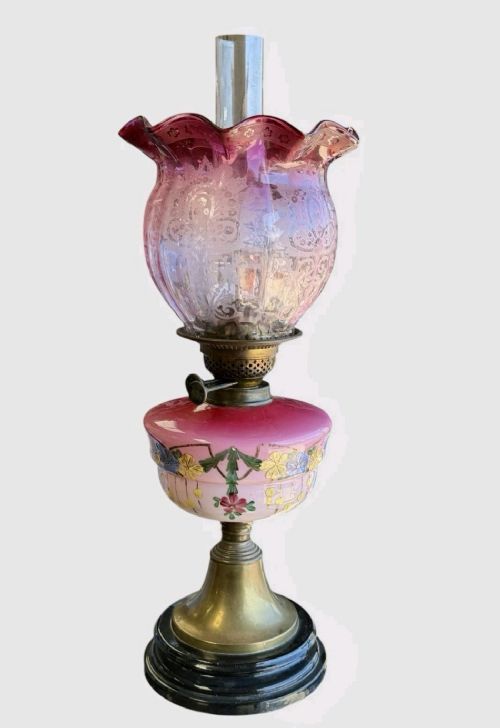
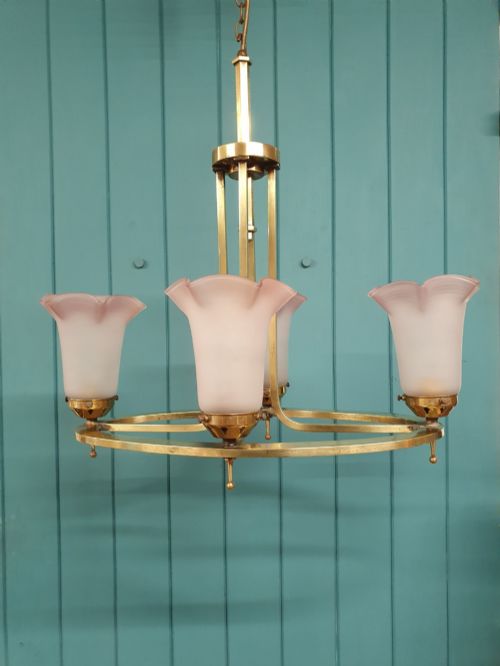
The most common examples on this page are Victorian and Edwardian oil lamps fitted with cranberry or pink glass shades and fonts, alongside 1920s Art Deco chandeliers and pendant lights. These pieces range from simple table lamps to multi-branch ceiling fixtures incorporating frosted glass and gilt decoration.
Materials and construction methods
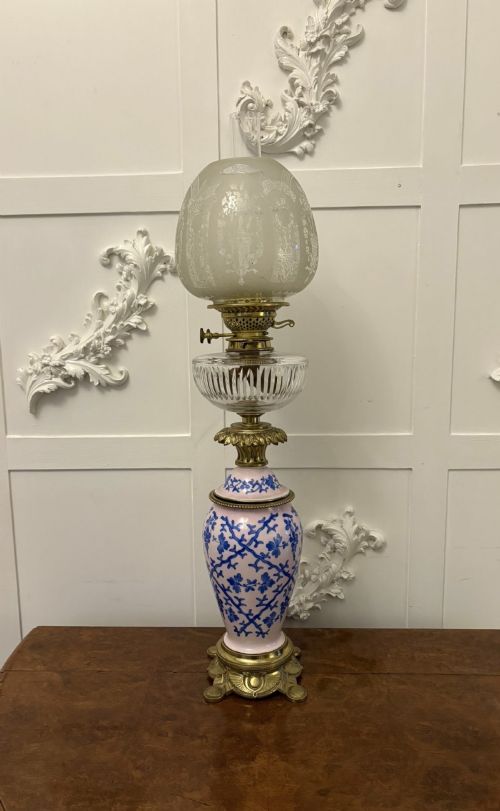
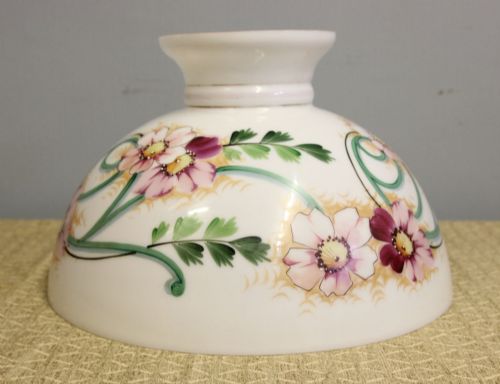
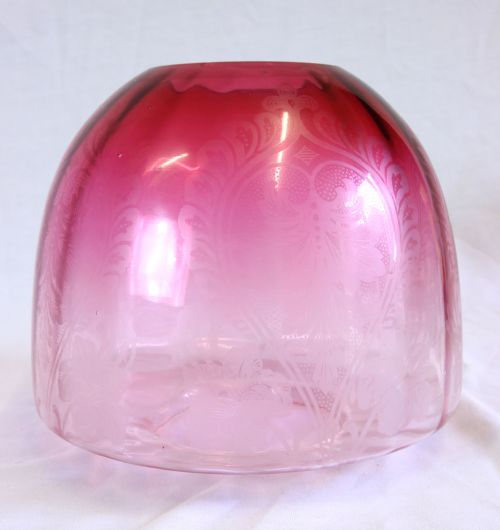
Makers shaped glass through blowing and moulding, using mineral oxides to achieve pink and cranberry tones, while opaline and frosted finishes diffused the light. Hand-painting, enamel work and acid etching frequently decorated the glass shades and fonts of the Victorian period.
Metalwork relies primarily on brass, often formed into columns, swan necks or telescopic standards, complemented occasionally by chrome, marble, spelter and gilt metal. Structural components were cast, turned and joined to support the heavy glass fonts and shades safely.
Some tall Victorian lamps feature telescopic brass stems designed to let readers adjust the height of their cranberry light by day or night.
Distinctions in craftsmanship and design
Quality reveals itself in the depth and saturation of the pink glass colour, the intricacy of hand-painted or etched motifs, and the weight and finish of the brass or crystal mountings. Superior examples display crisp moulding and robust structural engineering.
The integration between the glass vessel and the metal base distinguishes finer manufacturing, particularly in adjustable standards, multi-branch chandeliers and telescopic oil lamps where stability and proportion matter most.
The Vintage Pink Glass Light Glossary
- Cranberry glass
- A rich red-pink glass created by adding gold chloride to the molten batch. It appears frequently in Victorian oil lamp shades.
- Opaline glass
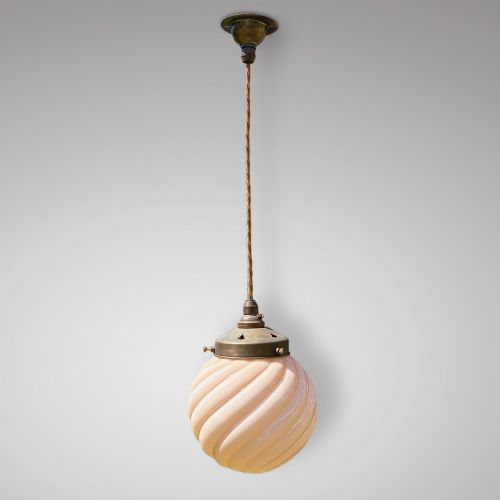
- An opaque or translucent pale glass that diffuses light softly. It is commonly found on early twentieth-century pendant lights and shades.
- Font
- The oil reservoir portion of a lamp, often made of pink glass or porcelain in Victorian examples.
- Lustres
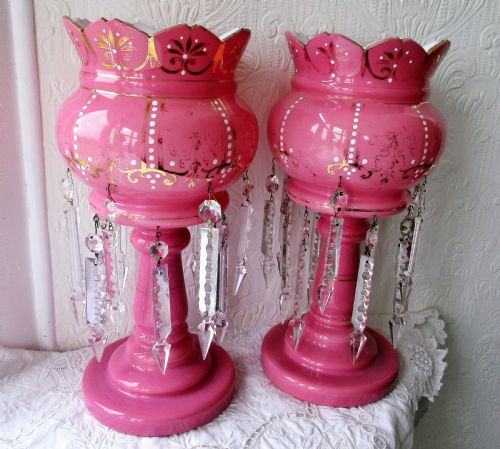
- Mantel ornaments or light fixtures hung with cut crystal prisms. Pairs of these often accompany pink glass table pieces.
- Standard lamp
- A tall floor-standing lamp base, frequently constructed from brass during the Edwardian period.
Vintage Pink Glass Light: Frequently Asked Questions
How do I date a pink glass oil lamp?
Dating relies on combining the burner mechanism patents, the collar style and the manufacturing method of the pink glass font. Victorian examples often feature heavy brass Corinthian columns or opaque vessels.
Later pieces from the Edwardian period shift towards slender standards and simpler brass mountings while retaining cranberry shades.
Are these lights still wired for electricity?
Many surviving oil lamps have been converted for electrical use over time, while chandeliers and pendants from the 1920s and 1930s were manufactured for electric circuits.
Conversion methods vary, so buyers should inspect the internal wiring and fitting types to ensure compatibility with modern standards.
What is the difference between opaline and cranberry glass?
Cranberry glass is transparent with a distinct deep pink or reddish hue derived from gold content. Opaline glass is milky, opaque and diffuses light uniformly in pale pink or white tones.
Both materials appear across different eras, with cranberry dominating Victorian oil lamps and opaline favouring early twentieth-century pendants.
How do I safely clean a vintage glass shade?
Cleaning requires lukewarm water and mild soap, avoiding harsh chemicals that might damage hand-painted enamel or gilt decoration on the pink glass surface. Painted and etched details on nineteenth-century pieces demand gentle handling.
Metal components like brass should be cleaned separately from the glass to prevent staining or moisture damage.