
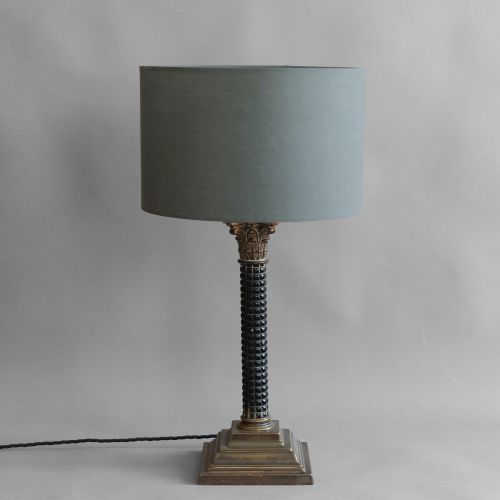
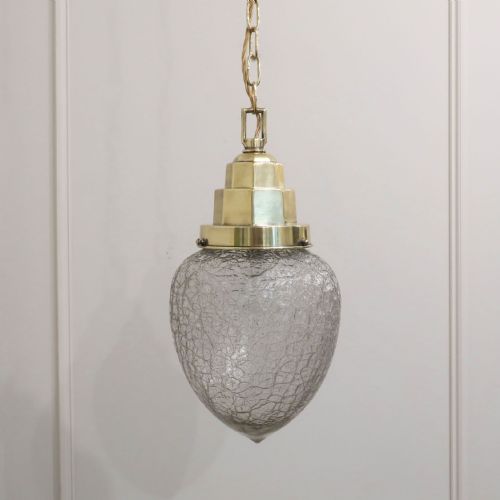


Stepped Glass Shade Lamp
These stepped glass shade lamp options bring distinct period character and focused illumination into a room, making them a practical choice for functional task lighting or atmospheric styling.
Stepped Glass Shade Lamp
A stepped glass shade lamp encompasses a variety of lighting forms designed with layered glass profiles, appearing most frequently as table lamps, pendant lights, and ceiling lights from the Art Deco period. Buyers searching this phrase encounter fixtures that bridge utilitarian function with geometric decorative appeal.
The selection ranges from Victorian oil lamps converted over time to 1930s creations featuring frosted glass, opaline glass, and crackle glass paired with brass, chrome, or wrought iron. Table lamps and wall sconces sit alongside dining carriage lights and ceiling fittings, reflecting diverse domestic applications across different decades.
How they were made
Manufacturers utilised pressed and moulded glass to achieve the characteristic stepped profiles, often employing frosted, opaline, or crackle finishes to diffuse light evenly. These glass shades were then combined with structural metals such as brass, chrome, and wrought iron to form robust bases, stems, and suspension mounts.
Assembly methods relied on traditional mechanical joinery, securing glass components within metal collars or fitting them directly onto weighted bases like green marble. The integration of electrical wiring in later twentieth-century conversions and original designs replaced earlier oil reservoirs while retaining the primary metal and glass housings.
Dining carriage lamps once lit railway journeys before finding new life illuminating modern homes.
What varies in quality
Distinction across the range lies in the weight and clarity of the glass elements, alongside the grade of underlying metalwork such as solid brass or plated chrome. Pieces that integrate complex finishes like crackle glass or substantial wrought iron demonstrate greater ambition in period design.
Construction integrity also defines the standard of a fixture, seen in how securely the stepped glass components fit within their metal mountings and whether auxiliary materials like marble bases retain their original finish without structural compromise.
The Stepped Glass Shade Lamp Glossary
- Art Deco
- A design style prevalent in the 1920s and 1930s characterised by geometric shapes, streamlined forms, and modern industrial materials. It defines the aesthetic of the majority of pieces in this category.
- Opaline glass
- A milky, semi-translucent glass type often used in lighting to soften glare and diffuse illumination evenly. It appears in several period pendants and shades.
- Frosted glass
- Glass treated to obtain a matte surface through acid etching or sandblasting, reducing transparency for a softer glow. This technique is common in ceiling lamps and wall lights.
Stepped Glass Shade Lamp: Frequently Asked Questions
What periods do these lamps come from?
The available lighting spans from Victorian examples dating to the mid-nineteenth century through to early twentieth-century designs, with a heavy concentration originating from the 1920s and 1930s.
Earlier pieces often begin as converted oil lamps, while later decades introduce distinct Art Deco styling with geometric glass and chrome.
How were these lights originally used?
These fixtures served diverse domestic functions, ranging from task illumination on desks and tables to general room lighting via ceiling pendants and wall sconces.
Specialised forms like carriage lamps provided focused illumination in specific transitional spaces within larger properties.
What materials make up these fixtures?
Construction relies primarily on combinations of glass and metal, utilising brass, chrome, wrought iron, and occasionally green marble for structural stability.
The glass components themselves appear in clear, frosted, opaline, crackle, and pink variants to control light diffusion.
How do I identify an Art Deco piece?
Art Deco lighting is typically identified by symmetrical stepped profiles, geometric ornamentation, and the use of modern metals like chrome alongside textured glass.
These designs often embrace streamlined silhouettes that contrast with the more ornate aesthetic of preceding Victorian items.