
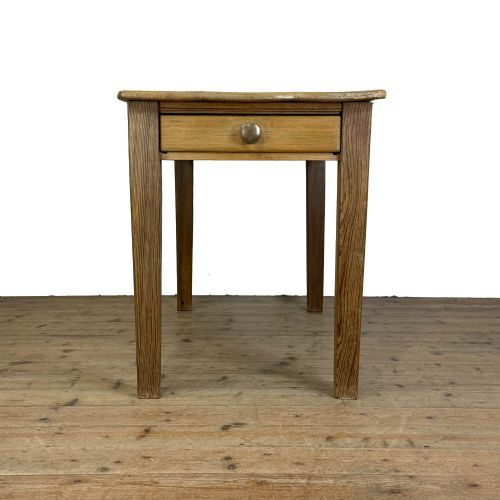
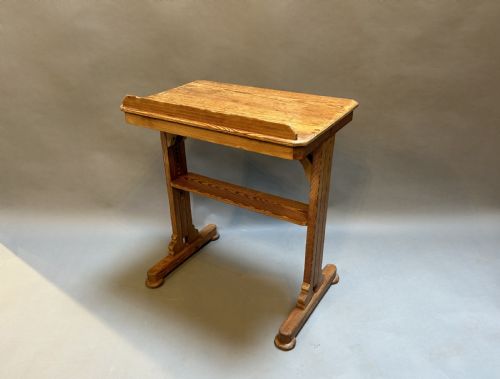
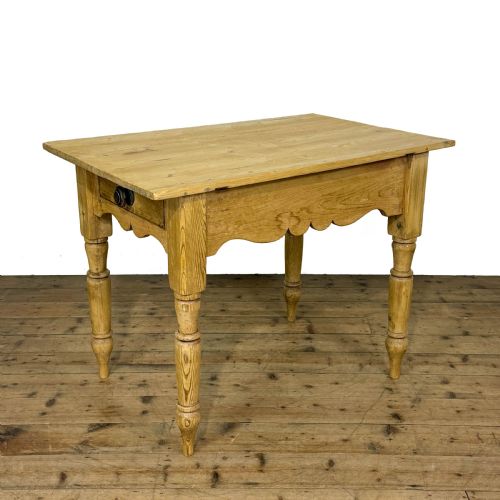
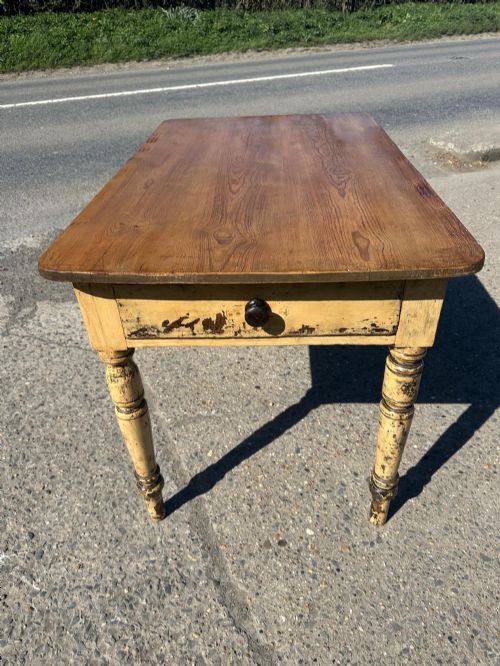
Vintage Pine Writing Table
A vintage pine writing table brings honest utility and warmth to a room, offering a sturdy surface shaped by decades of everyday use.
Vintage Pine Writing Table
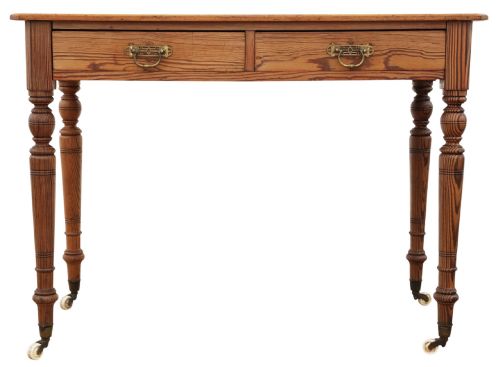
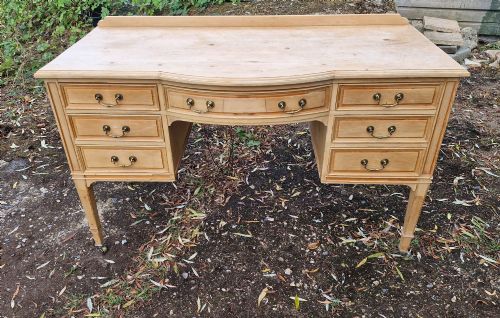
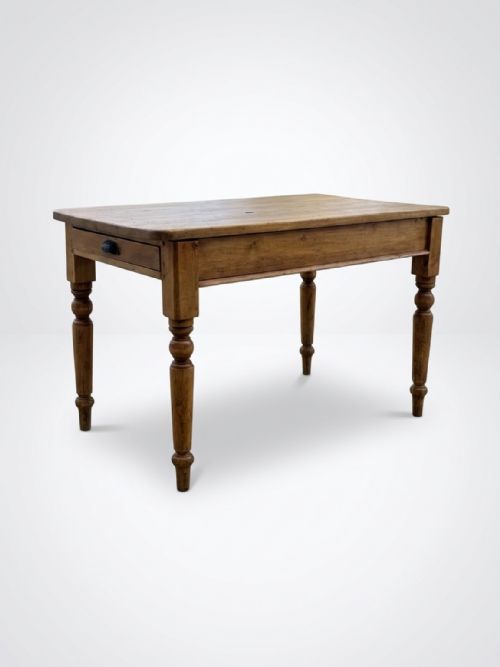
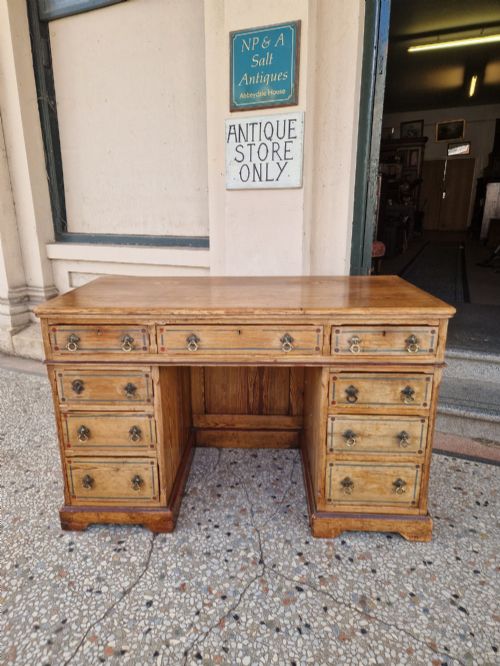
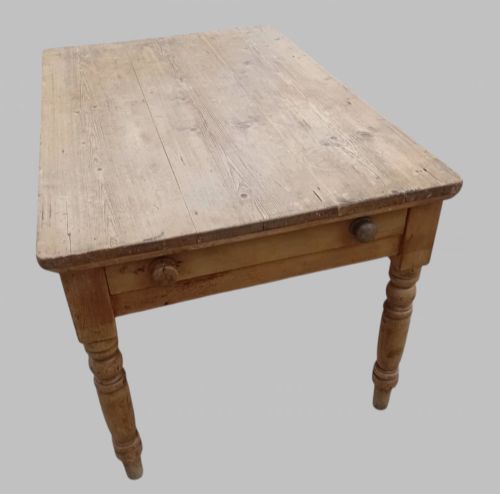
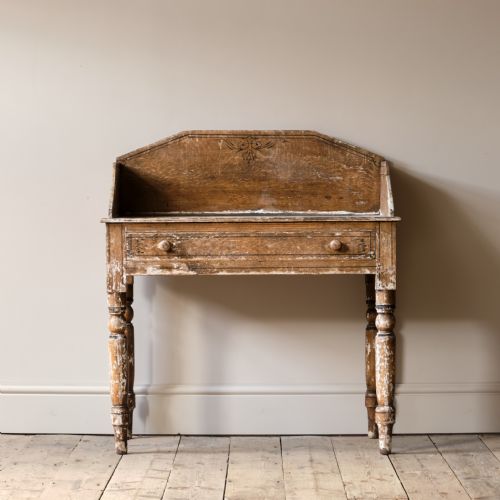
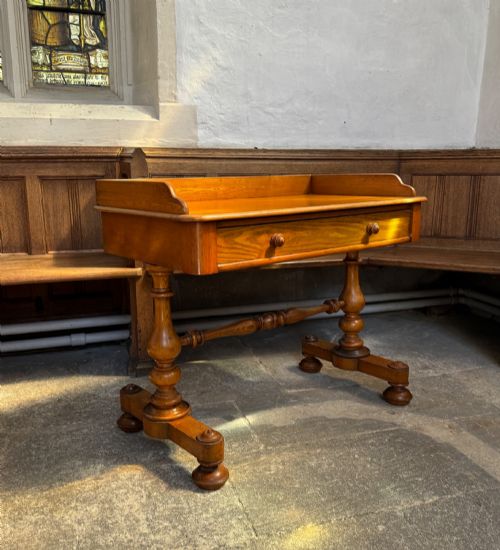
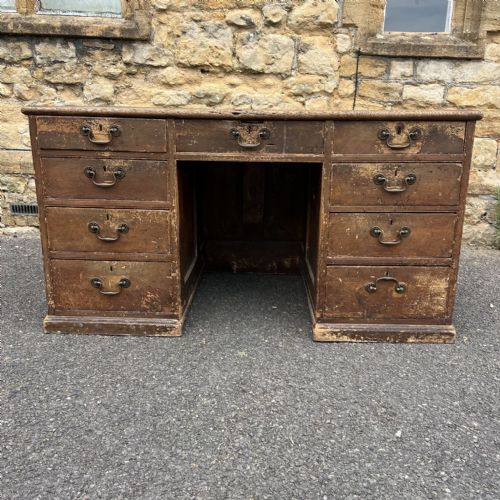
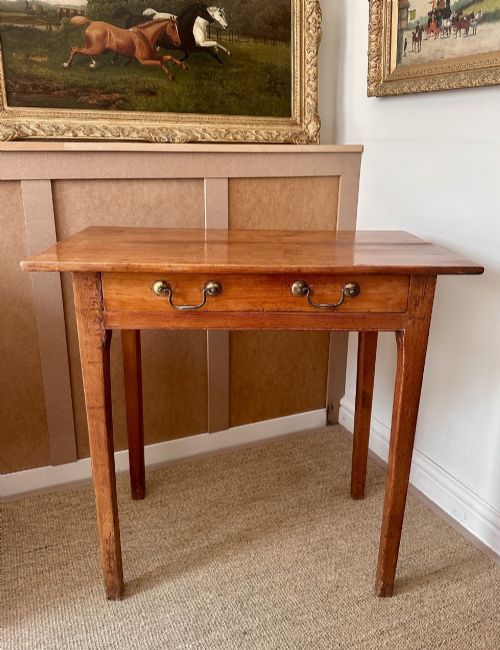
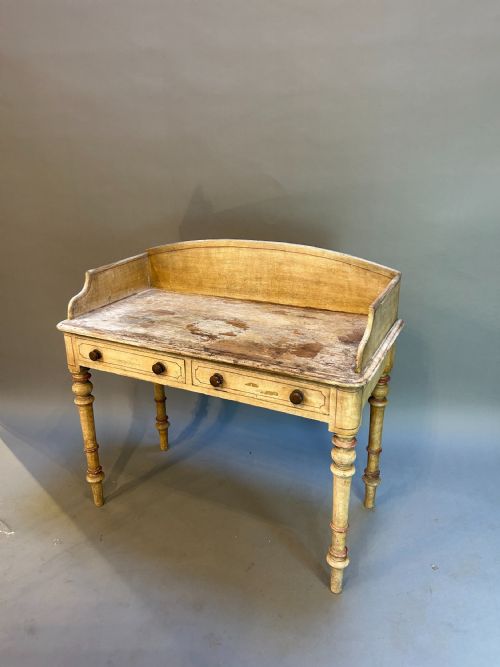
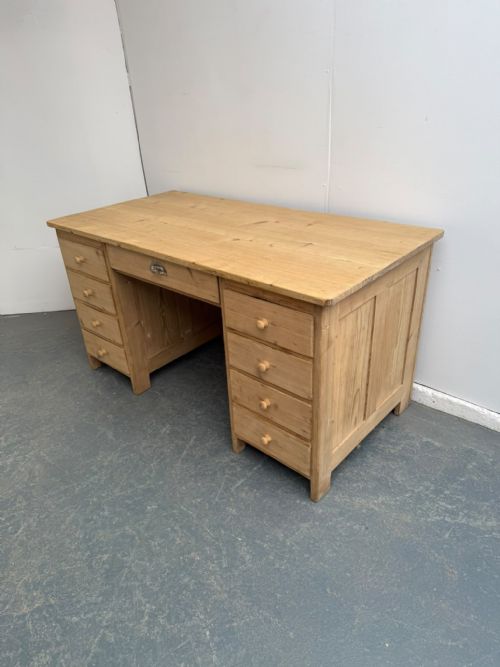
A vintage pine writing table encompasses practical workspace furniture built from softwoods during the Victorian, Edwardian, and nineteenth-century periods. These pieces range from simple side tables and washstands to substantial kneehole pedestal desks and school teacher's tables.
The version most commonly encountered on this page is the nineteenth-century or Victorian pine table, often featuring single drawers or kneehole configurations. Makers utilised durable pitch pine or standard pine, sometimes pairing the timber with oak or applying painted finishes in styles spanning rustic farmhouse, French country, and Scandinavian country.
What varies in quality
Quality in these pieces rests upon the selection of timber, particularly the dense grain found in pitch pine compared to standard softwood. Superior examples often display thoughtful proportions, such as multi-drawer kneehole arrangements or pedestal pedestal formats, rather than simple four-leg side table frames.
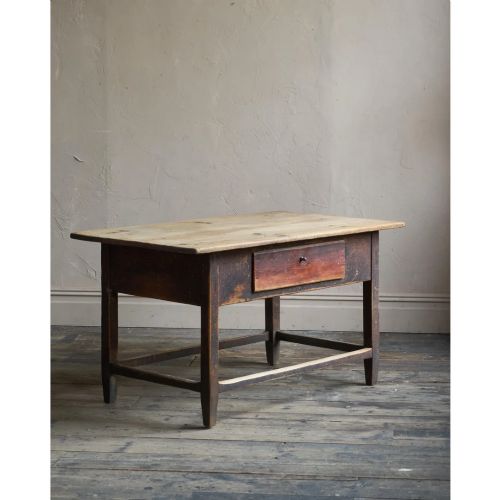
The preservation of original finishes, such as untouched paint on legs or scrubbed tops with authentic patina, elevates a piece above stripped or heavily altered examples. Better construction shows in robust joinery, intact box stretchers, and original metal or brass fittings that have survived generations of use.
Regional styles include Scandinavian country, French country, and rustic farmhouse formats, alongside ecclesiastical pitch pine desks.
The Vintage Pine Writing Table Glossary
- Pitch pine
- A dense, resinous variety of pine timber valued for its durability and strong grain pattern. It frequently appears on nineteenth-century desks and writing tables.
- Kneehole
- A central recessed space beneath a desk or dressing table designed to accommodate the user's legs while seated. These configurations often feature banks of drawers on either side.
- Scrub-top
- A wooden tabletop left unpainted and repeatedly scrubbed clean, typical of traditional kitchen and work tables. This surface treatment develops a pale, smooth texture over decades.
- Box stretcher
- An interconnected frame of wooden rails running between the lower legs of a table to increase stability. They are common on Swedish painted tables and heavy work desks.
- Pedestal desk
- A large freestanding writing table supported by two columns of drawers or cupboards rather than simple legs. Examples in this category utilise pitch pine and Victorian pedestal formats.
Vintage Pine Writing Table: Frequently Asked Questions
How do I identify a Victorian pine writing table?
Victorian examples typically display nineteenth-century construction methods, heavier proportions, and sometimes pitch pine timbers. Look for utilitarian drawer arrangements and traditional hardware suited for school or office environments.
Details such as original painted legs or dark wax finishes help distinguish period pieces from later reproductions. The presence of period wear provides additional context for dating the timber.
What is the difference between a side table and a writing table?
A writing table generally incorporates drawers, kneehole recesses, or specific working heights designed for sitting and writing. Side tables are simpler surface furniture with fewer functional compartments.
Many pieces listed span both categories, functioning as washstands, side tables, or desks depending on their original ecclesiastical, school, or domestic purpose.
Are painted pine tables original?
Many nineteenth-century and Scandinavian pieces feature original or early painted surfaces, including scraped paint effects and painted legs. Paint was routinely applied to protect softwoods or match domestic interiors.
Distinguishing between original paint and later decoration involves examining the wear patterns and adherence to the underlying pine timber.
How should I care for a vintage pine surface?
Maintain waxed pine surfaces with appropriate soft waxes and dust regularly with a dry cloth. Avoid excessive moisture on scrub-top or unsealed tables to prevent water staining.
Protect painted finishes from harsh solvents and direct sunlight to preserve the historical patina and integrity of the original wood.