
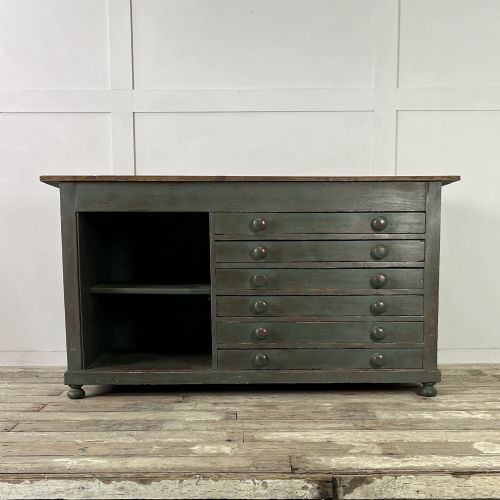


Vintage Pine Side Cabinet
These vintage pine side cabinet examples bring honest utility and historic timber into a room, offering practical storage with genuine character.
Vintage Pine Side Cabinet
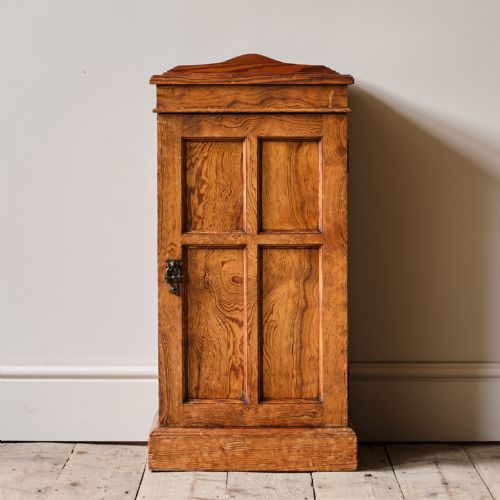
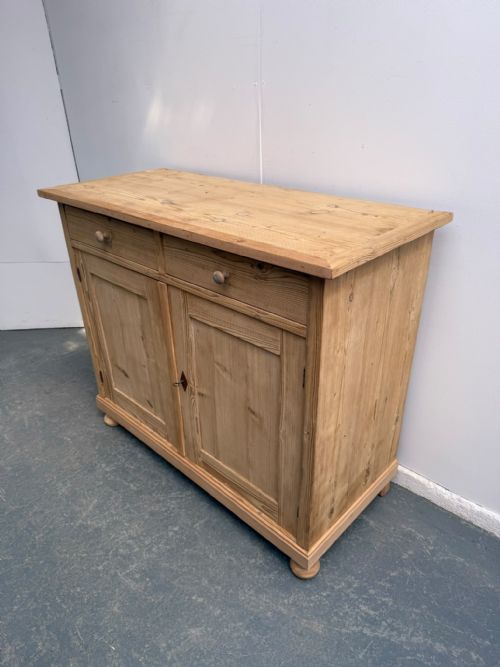
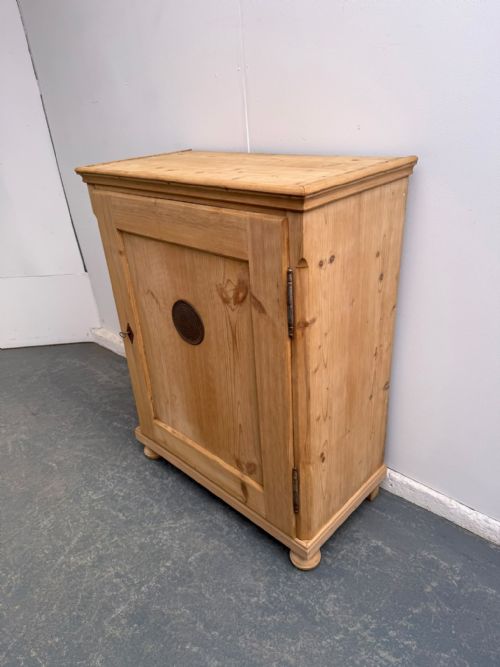
A vintage pine side cabinet encompasses a diverse group of practical wooden storage forms, ranging from compact bedside cupboards and tall chiffoniers to substantial dresser bases and multi-drawer shop fittings. Buyers searching for a vintage pine side cabinet will encounter robust pieces spanning the Georgian, Victorian, and Edwardian eras, alongside continental examples.
The forms vary considerably in scale and layout, incorporating configurations with drawers, vented doors, and tiled surfaces. Whether retained in their original paint finishes or stripped down for waxing, these cabinets serve as functional storage units with distinct historical provenance.
How they were made
Construction relies heavily on pine and Oregon pine timbers, sometimes paired with secondary woods like oak, forming sturdy carcases designed for everyday utility. Joinery techniques range from traditional cabinetry to robust workshop fabrication suitable for shop fittings and domestic storage.
Surface finishes are a defining characteristic, with many pieces retaining original layers of paint in colours such as white, cream, grey, blue, and black. Alternatively, unfinished or stripped surfaces are prepared specifically for waxing or painting by the owner.
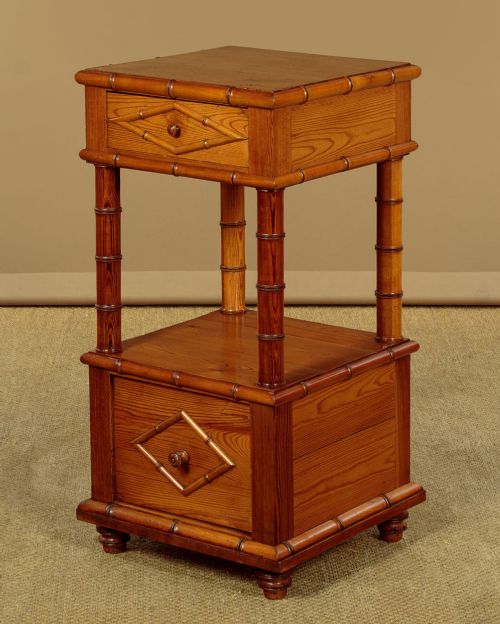
Hardware details incorporate iron, brass, and metal fixtures, while specific variants utilise ceramic elements and decorative wood carving such as faux bamboo turnings or Gothic revival details.
Materials recorded across the inventory include pine, Oregon pine, pitch pine, iron, brass, ceramic, and applied paint.
What varies in quality
The scale and complexity of the form also influence the standing of a piece, separating simple utilitarian boxes from elaborate multi-drawer shop fittings, carved bedside cabinets, or architectural Gothic Revival examples.
The Vintage Pine Side Cabinet Glossary
- Pine
- A softwood timber commonly utilised for domestic furniture and utilitarian storage due to its accessibility and workability. It accepts paint and wax finishes readily.
- Chiffonier
- A compact sideboard or low cabinet featuring drawers and cupboards, developed during the nineteenth century for convenient dining room storage.
- Shop Fitting
- Commercial furniture built for retail environments, such as multi-drawer banks and counters, prized for robust construction and industrial utility.
- Dresser Base
- The lower section of a kitchen dresser, comprising a sturdy surface above cupboards or rows of drawers used for food preparation and storage.
- Faux Bamboo
- A decorative technique where timber is turned and carved to imitate the segmented stalks of bamboo, popular during the late nineteenth century.
Vintage Pine Side Cabinet: Frequently Asked Questions
What is a pine side cabinet?
A pine side cabinet is a versatile wooden storage unit designed for domestic or commercial use, encompassing forms such as cupboards, bedside tables, and small sideboards.
These pieces utilise softwood construction and appear in finishes ranging from historic painted surfaces to raw timber ready for waxing.
How do I date a pine cabinet?
Dating involves examining construction methods, hardware, timber characteristics, and stylistic markers associated with periods like the Georgian, Victorian, and Edwardian eras.
Design details such as faux bamboo turnings or Gothic revival motifs provide further clues to the manufacturing decade.
Are these cabinets painted or bare wood?
The inventory includes both pieces with original historic paint finishes and items prepared for wax or paint.
Original paint schemes span various colours and regional traditions, while other items showcase the natural grain of the pine.
Where were these cabinets made?
The selection includes British country pieces alongside continental examples originating from Scandinavia, Holland, and Hungary.
Each region imparted distinct stylistic traits and construction methods to the utilitarian pine furniture they produced.
How do I care for antique pine?
Care typically involves maintaining stable humidity levels and applying appropriate wax to nourish the softwood timber over time.
Original painted surfaces require gentle dusting and protection from harsh cleaning agents to preserve the historic finish.