






Vintage Percussion Pistol
A vintage percussion pistol brings nineteenth-century mechanics and military history directly to your cabinet.
Vintage Percussion Pistol
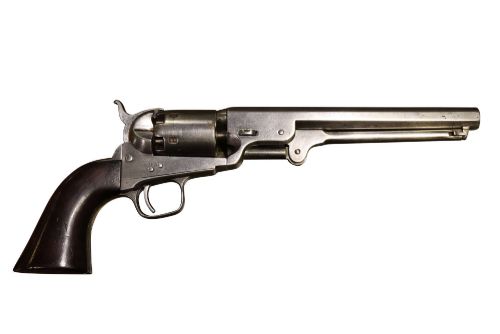
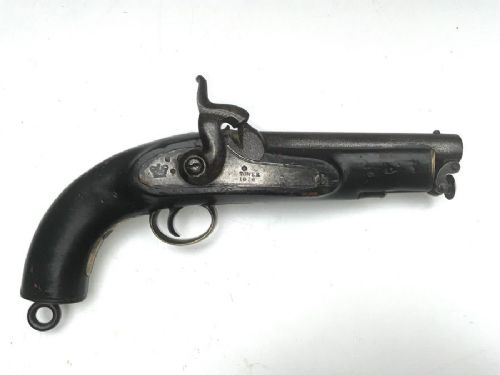
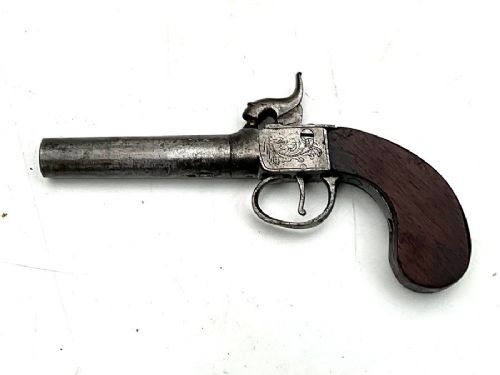
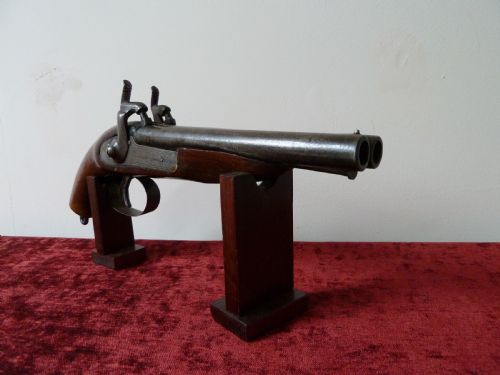
A vintage percussion pistol is a nineteenth-century firearm operating on the percussion cap ignition system, replacing older flintlock mechanisms. When you search for a vintage percussion pistol, you encounter various forms originating from the Georgian, Regency, and Victorian periods.
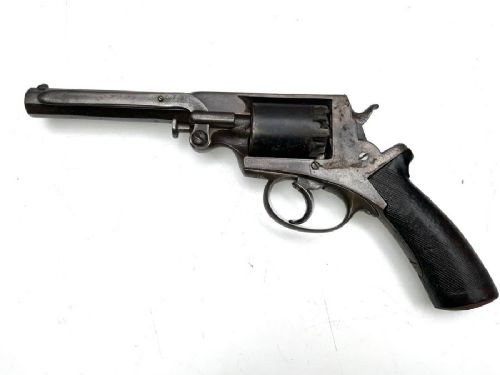
The pieces on this page span the mid-nineteenth century, encompassing pocket pistols, belt pistols, heavy cavalry arms, and revolving systems. Military issues, British and American martial pieces, and boxed sets with accessories represent the most common forms you will meet.
Makers and military depots produced these arms in steel, iron, and brass, mounted with walnut or mahogany stocks. Styles range from plain military contracts to fine officer pieces with engraved details and sliding rear sights.
Materials and Construction
Makers utilised forged steel and iron for barrels and lock mechanisms, pairing them with brass trigger guards, mounts, and occasionally inlaid wire. Stocks were shaped from dense hardwoods such as walnut, oak, and mahogany to withstand the shock of firing.
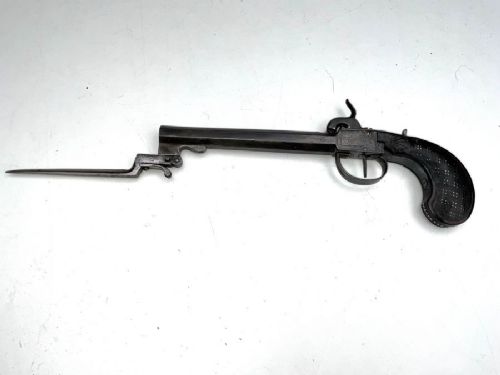
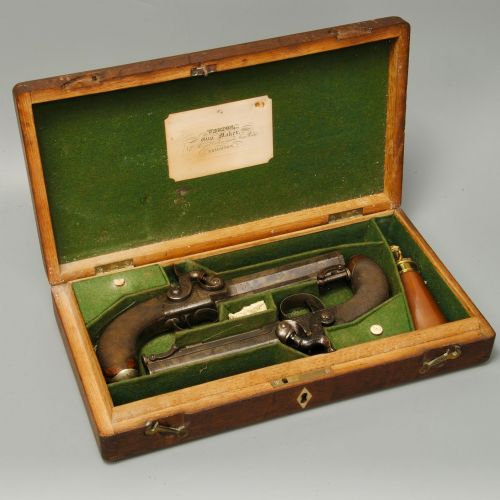
Individual gunsmiths and larger factories finished these arms with smoothbore or rifled barrels, sometimes integrating folding bayonets, hidden triggers, or box-lock frames. Cased examples frequently included fitted wooden boxes lined with velvet to house accessories like bullet moulds and flasks.
Vintage Percussion Pistol Retail Price Guide 2026
Typical asking prices for vintage percussion pistol among the pieces listed under this phrase on Sellingantiques today, from the lower quarter to the upper quarter. They describe what is for sale here now, not the wider market.
Some nineteenth-century pocket pistols feature cleverly hidden triggers that pop down only when the hammer is cocked.
Assessing Quality and Execution
Quality in a vintage percussion pistol rests upon the crispness of the mechanical action, the legibility of maker stamps or government marks, and the preservation of original metal finishes. Finer examples display sharp engraving on the lockplate and hammer, alongside well-fitted wooden stocks without major timber replacement.
The presence of matching serial numbers across components, particularly on revolvers, separates standard utility arms from superior collector pieces. Complete original accessories and contemporary fitted wooden boxes further elevate the standing of a piece within its period.
Colt·Tower·Mortimer·Beaumont Adams·Auguste Francotte·A.W Spires
The Vintage Percussion Pistol Glossary
- Percussion cap
- A small copper or brass detonating nipple containing fulminate of mercury, placed over the cone to ignite the main powder charge when struck by the hammer. This innovation superseded the flintlock system in the nineteenth century.
- Smoothbore
- A barrel lacking internal rifling grooves, designed to fire lead balls or shot without imparting spin. Many military and officer sidearms of this era retained smoothbore barrels.
- Calibre
- The internal diameter of the firearm barrel, determining the size of the ammunition used. Common nineteenth-century dimensions include specific sizing measurements such as thirty-six or forty-four calibre.
- Matching numbers
- Serial numbers stamped uniformly across multiple metal components of a firearm to confirm original factory assembly. This characteristic is particularly significant on revolvers.
- Martial issue
- Firearms officially procured and marked for government military service, such as U.S. martial issue or British Army contracts. These pieces often bear ordnance inspection stamps.
Vintage Percussion Pistol: Frequently Asked Questions
What is a percussion pistol?
A percussion pistol is a firearm that uses a percussion cap struck by a hammer to ignite gunpowder. This nineteenth-century invention provided reliable ignition in damp weather compared to earlier flintlocks.
These arms served military officers, travellers, and civilians for personal defence throughout the mid-nineteenth century.
How do I date a percussion pistol?
Dating relies on proof marks, maker signatures, patent dates, and specific military contract models recorded in historical registries. Styling details like frame design and grips also provide a reliable chronological window.
Many pieces carry specific year stamps or reflect the standard regulation patterns of periods such as the American Civil War or the Victorian era.
Were these pistols used in combat?
Many surviving examples saw active service with British and American forces during conflicts like the American Civil War and colonial campaigns. Military contracts and martial issue stamps confirm government procurement for active duty.
Officer sidearms and private purchase belt pistols were commonly carried in the field by military personnel.
How should I display my pistol?
Displaying these pieces requires stable indoor humidity and temperature away from direct sunlight to protect wooden stocks and metal surfaces. Secure wall displays, glass-fronted cabinets, or original fitted presentation boxes suit these artefacts well.
Keeping the steel and brass lightly oiled prevents oxidation and preserves the historic finish of the metal.