




Vintage Percussion Handguns
These vintage percussion handguns bring nineteenth-century mechanics and military history directly to your collection.
Vintage Percussion Handguns
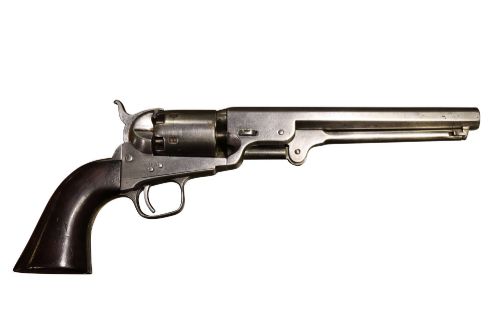
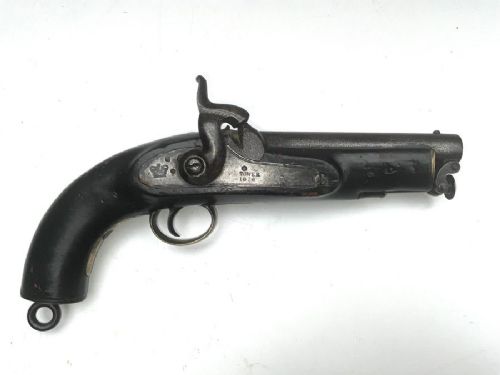
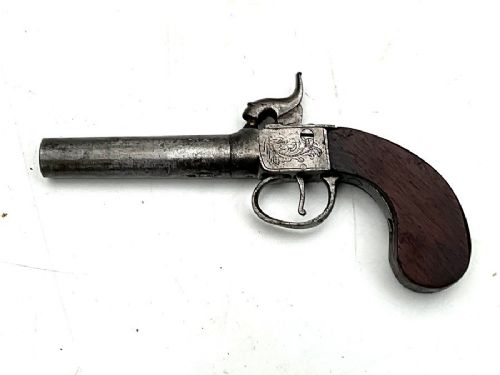
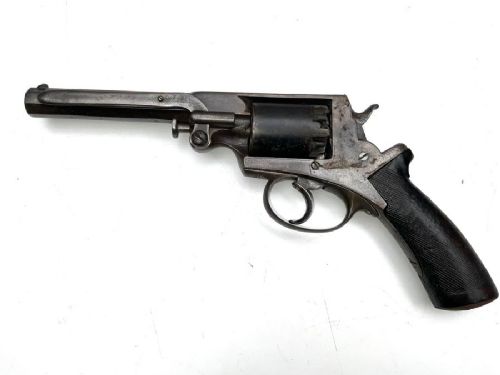
Vintage percussion handguns span the nineteenth century, encompassing pocket pistols, belt pistols, and military revolvers from the 1850s and 1860s. These pieces represent a major technological shift in firearm ignition, moving away from flintlock mechanisms toward the percussion cap system.
The selections on this page heavily feature mid-century American and British military designs, alongside civilian pocket models. You will encounter boxed revolvers complete with accessories, matched pairs, and single service arms marked by government or maker stamps.
How they were made
Makers utilised forged steel and iron for barrels, frames, and lock mechanisms to withstand the pressures of black powder charges. Stocks and grips were typically fashioned from dense hardwoods like walnut, mahogany, and oak, shaped to fit the hand securely.
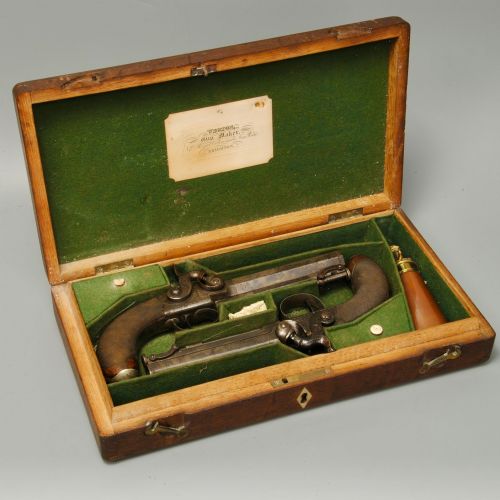
Fine examples often integrated brass furniture, engraved metal plates, and fitted wooden boxes lined with velvet for storage. Mechanics relied on precise hand-fitting of internal springs, hammers, and cylinders to ensure smooth operation during firing.
Some pocket pistols feature clever folding triggers that spring out only when the hammer is pulled back.
What varies in quality
Quality rests on the crispness of the mechanical action, the legibility of maker signatures or military stamps, and the integrity of the metal and wood. Surviving finish, such as original bluing or case hardening, elevates an example significantly.
The presence of matching serial numbers across components, original fitted accessories, and robust presentation cases distinguishes standard service pieces from higher-grade bespoke or officer-issue firearms.
Colt·Tower·Mortimer·Auguste Francotte·A.W Spires·Beaumont-Adams
The Vintage Percussion Handguns Glossary
- Percussion cap
- A small metal cup containing fulminate of mercury placed on the nipple of a firearm to ignite the powder charge when struck by the hammer. This innovation replaced the earlier flintlock ignition system during the nineteenth century.
- Calibre
- The internal diameter of the firearm barrel, which determines the appropriate ammunition size. Common measurements on these pieces include thirty-six and forty-four hundredths of an inch.
- Smoothbore
- A barrel lacking internal rifling grooves, designed to fire lead balls without imparting spin. These were standard on many military officer and belt pistols of the mid-nineteenth century.
- Matching numbers
- Serial numbers stamped on multiple component parts of a firearm to indicate they were fitted together during original manufacture. Surviving pieces with identical numbers retain greater historical integrity.
- Revolver
- A repeating handgun with a revolving cylinder containing multiple chambers for firing successive shots without reloading. Models by Colt and Beaumont-Adams defined this category during the civil war period.
Vintage Percussion Handguns: Frequently Asked Questions
How do I identify a percussion pistol?
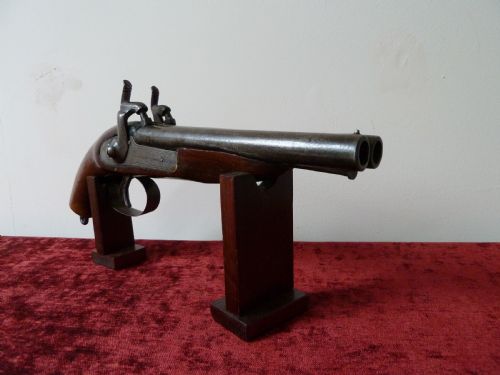
Look for a small nipple or cone on the breech end of the barrel where a percussion cap was placed. The hammer strikes this nipple directly to create the spark that ignites the powder.
Most examples date from the nineteenth century and lack the external flint mechanism found on earlier firearms.
What is the difference between a pocket and belt pistol?
Pocket pistols are smaller, often shorter-barreled firearms designed for discreet civilian carry and personal defence. They typically lack protruding belt hooks and feature concealed triggers.
Belt pistols are larger military or civilian sidearms equipped with a metal hook on the side for securing directly to a waist belt.
Were these used in the American Civil War?
Yes, several models listed here originate from the mid-nineteenth century and include U.S. martial issues actively carried during the civil war period. Revolvers in thirty-six and forty-four calibre saw extensive service with both Union and Confederate forces.
Inspect the frame for military acceptance stamps and serial numbers to confirm government contract status.
How should I display a boxed revolver set?
House the firearm in a stable environment away from direct sunlight and excessive humidity to protect the wood and velvet linings. Keep the pistol unloaded and secured within its fitted presentation case alongside the original accessories.
Avoid applying harsh modern cleaners to the metal or wooden surfaces to preserve the historic patina.