

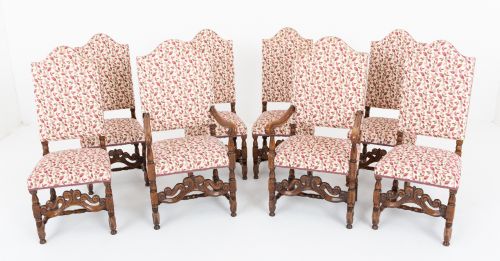
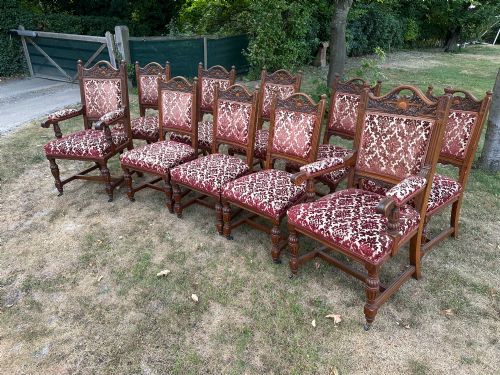
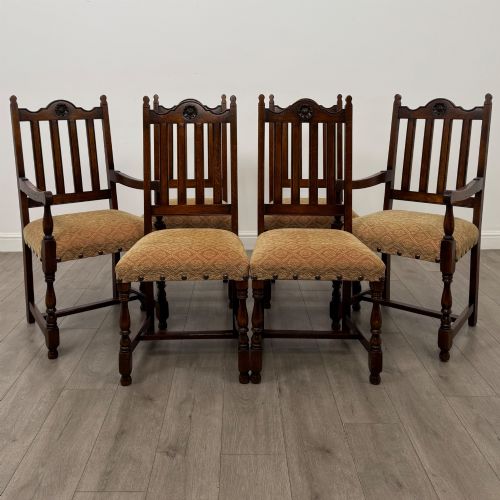
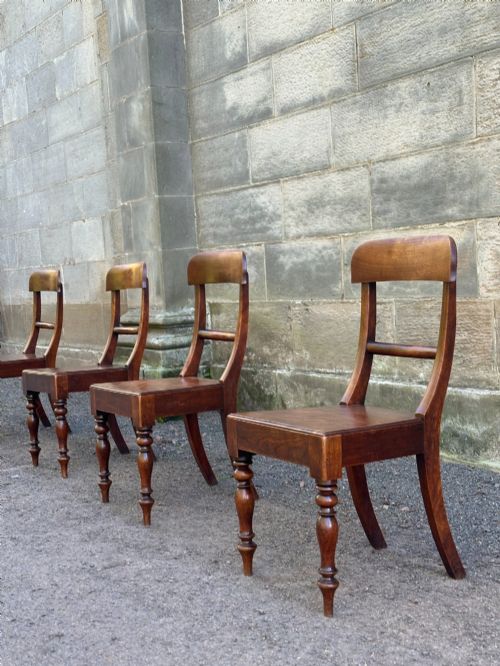
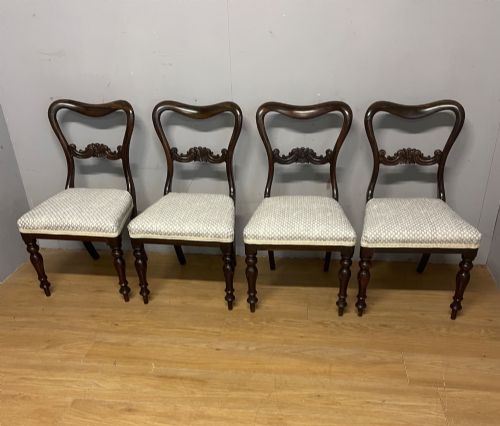
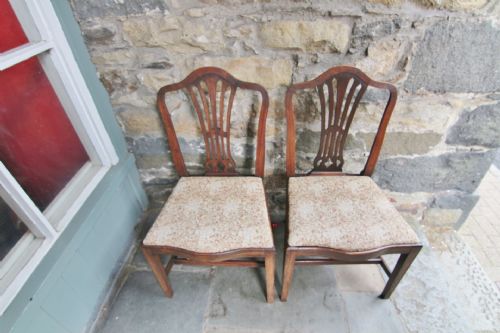


Vintage Patterned Side Chair
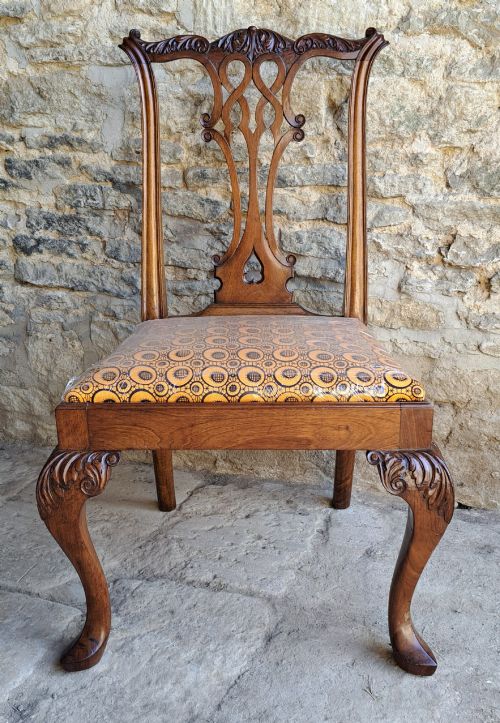
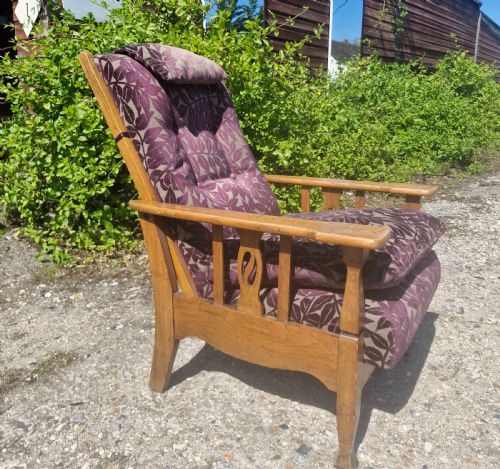
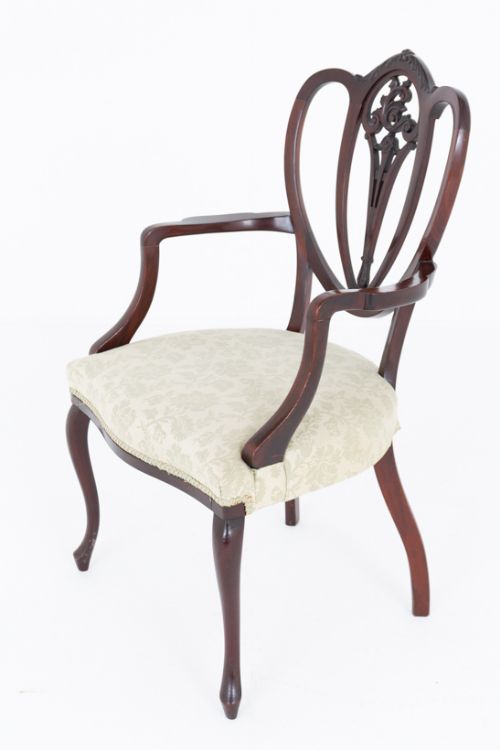
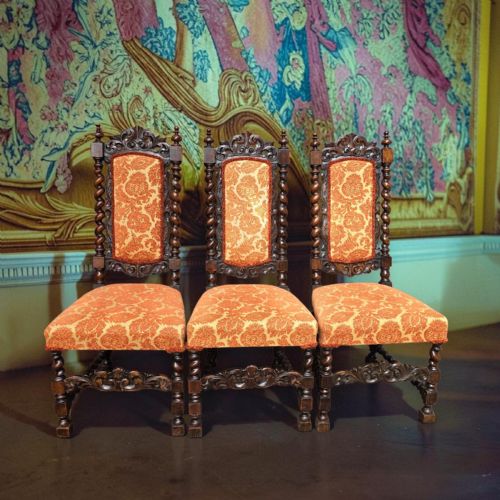
A vintage patterned side chair brings character to a room through traditional timber frames and textile upholstery.
Vintage Patterned Side Chair
A vintage patterned side chair is a compact seating form designed for dining, parlours, or occasional use, appearing across multiple periods including Victorian and Edwardian eras. Buyers searching for a vintage patterned side chair will encounter examples rooted in styles such as Arts and Crafts, Art Deco, and various revival movements.
The selections available range from single pieces to sets of matched chairs, constructed in timbers like oak, mahogany, walnut, and rosewood. These chairs combine functional wooden framing with textile coverings, velvet, and upholstery fabric to create varied decorative effects.
Materials and construction methods
Makers utilised dense hardwoods such as oak, mahogany, walnut, and rosewood to build the structural frames of these chairs, often employing turning, carving, or inlay techniques. Timber selection dictated the weight and visual tone of each piece.
Upholstery completed the design, incorporating fabric, velvet, and textile coverings secured over internal padding. Brass elements occasionally appeared as decorative studs or castors, finishing the construction.
Vintage Patterned Side Chair Retail Price Guide 2026
Typical asking prices for vintage patterned side chair among the pieces listed under this phrase on Sellingantiques today, from the lower quarter to the upper quarter. They describe what is for sale here now, not the wider market.
The listed pieces span the nineteenth and twentieth centuries, incorporating oak, mahogany, walnut, rosewood, and birch timbers.
Distinguishing quality in period seating
Quality rests in the precision of the timber framing, the integrity of the joinery, and the richness of the wood grain. Heavier timber frameworks and crisper carved details separate standard utility chairs from finer examples.
The treatment of the upholstery and the fidelity of revival styles, whether Georgian, Chippendale, or Hepplewhite, influence the overall character of the piece. Coherence between the frame design and the textile pattern determines the success of the execution.
Wheelers of Arncroach·Waring
The Vintage Patterned Side Chair Glossary
- Side chair
- A chair without arms, traditionally used at a dining table or placed against a wall.
- Revival style
- A design approach that reinterprets historical aesthetics from earlier centuries, such as Georgian or Chippendale.
- Upholstery
- The padded and covered components of a chair that provide a soft surface for the sitter.
- Barley twist
- A type of turned wooden furniture leg resembling a spiral rope.
- Art Deco
- A twentieth-century design style characterised by sleek geometric lines and modern ornamentation.
Vintage Patterned Side Chair: Frequently Asked Questions
How do I date a vintage side chair?
Dating relies on observing the timber species, construction joints, and stylistic revival markers present in the frame.
Comparing the turned elements, carving styles, and upholstery methods against known period examples helps narrow down the decade of production.
Are these chairs suitable for daily dining use?
Many of these chairs were originally built for dining rooms and retain sturdy hardwood frames suited for regular seating.
Checking the stability of the joinery ensures the timber can handle everyday weight and movement without loosening.
What is the difference between a side chair and an armchair?
A side chair lacks armrests, making it narrower and easier to tuck away around a table or into a compact corner.
Armchairs include side supports for the arms, offering a broader and more relaxed seating experience.
How do I match patterned chairs with existing decor?
Patterned upholstery brings focal points into a room, so pairing them works best when the textile tones echo other soft furnishings.
Consider the timber colour of the frame to ensure it coordinates with other wooden items in the interior.