





Vintage Pastoral Canvas
These vintage pastoral canvas works capture rural life and agricultural scenes, offering collectors a traditional window into the countryside.
Vintage Pastoral Canvas
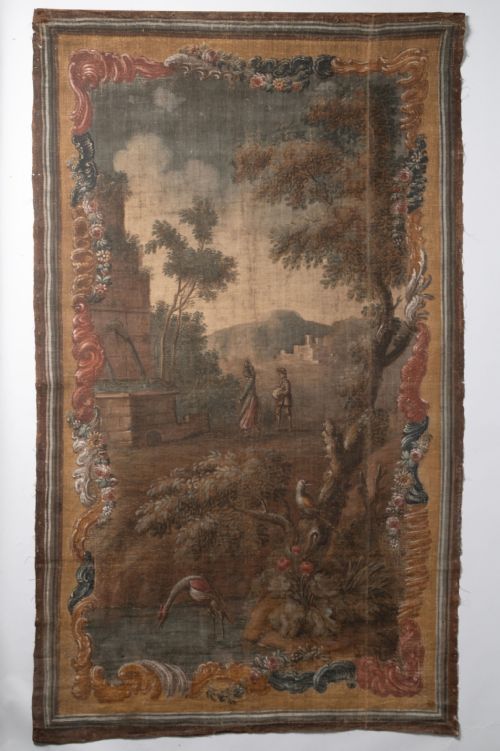
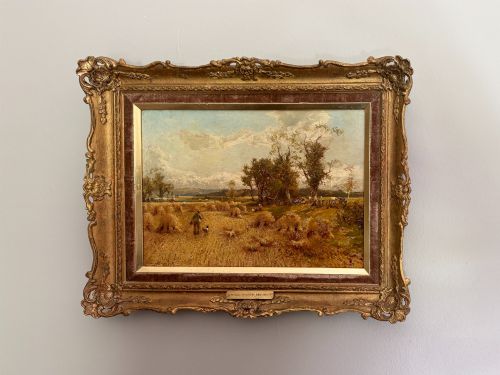
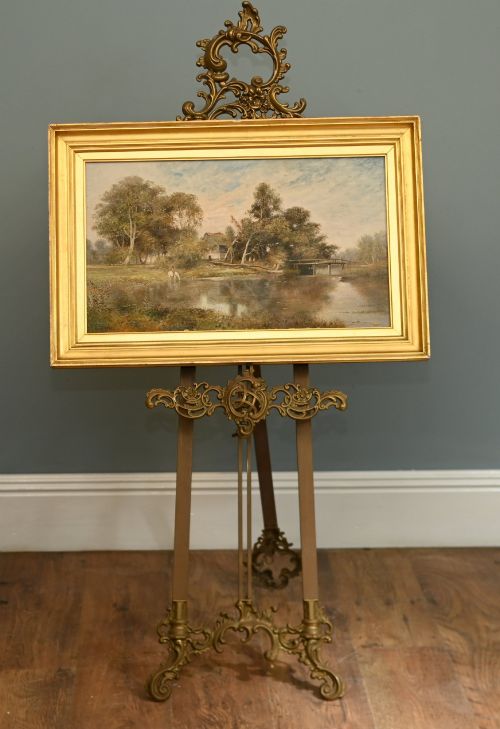
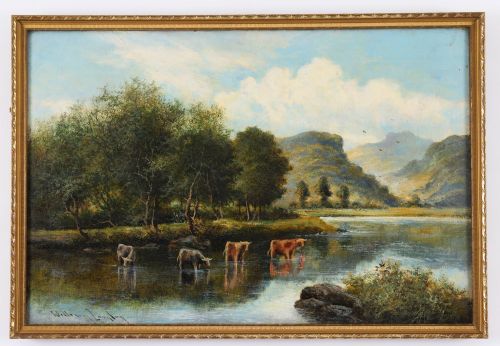
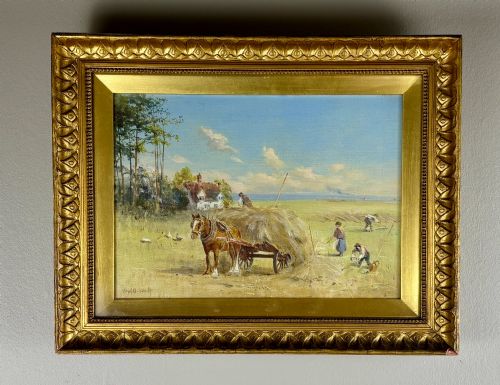
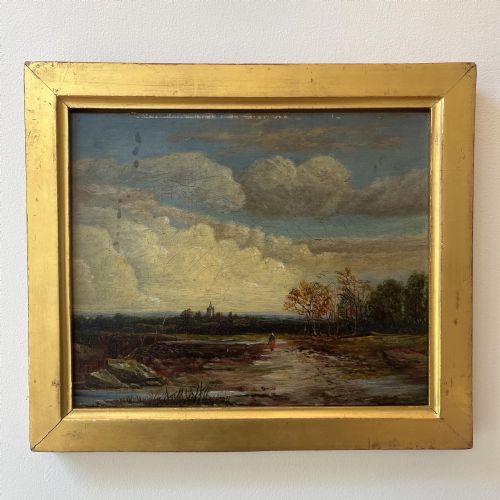
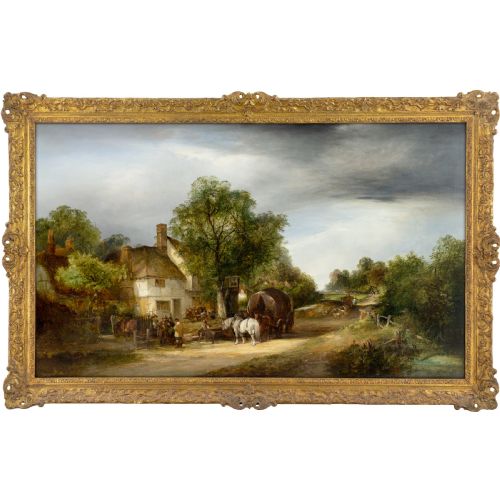
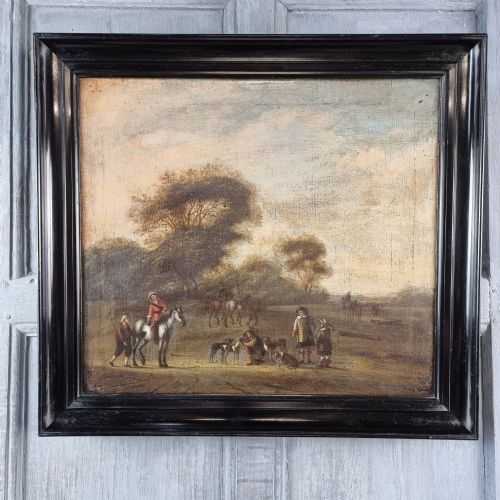
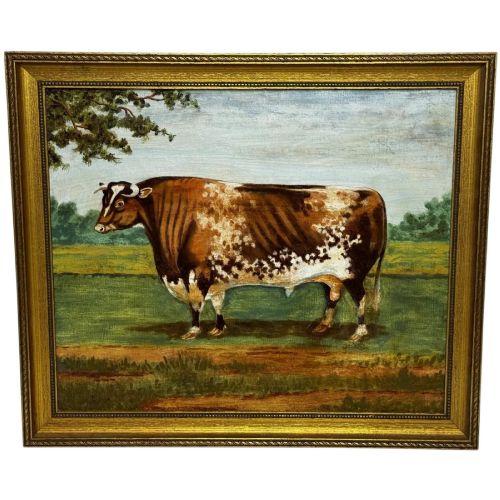
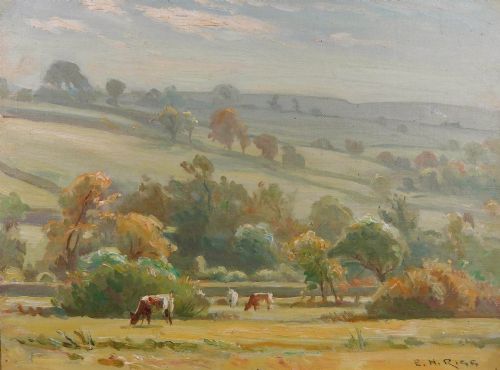
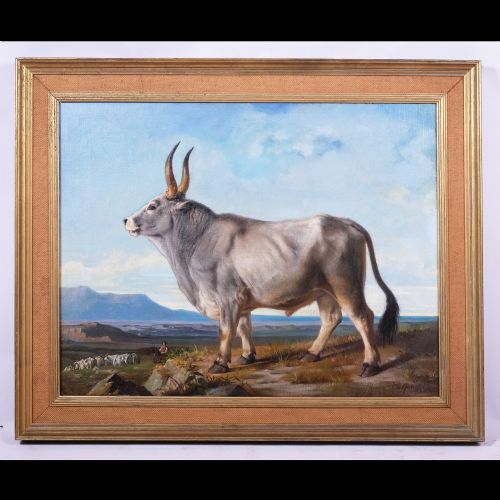
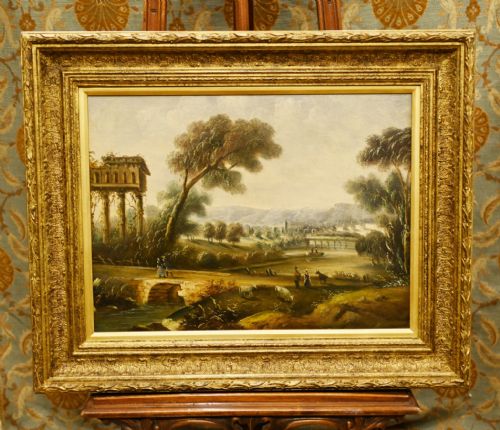
When you examine a vintage pastoral canvas, you find oil paintings depicting rural landscapes, farm animals, river valleys, and agricultural labour. The most frequent examples span the nineteenth century through the mid-twentieth century, capturing British and European country life.
The subjects range from cattle and sheep grazing in meadows to haymakers gathering harvests and figures fishing by rivers. These works represent established schools of pastoral art, including Victorian pastoral scenes and early twentieth-century British impressionism.
Many bear signatures of regional artists or come from the British School, presented in oil on canvas alongside occasional framed prints and wall art. They serve as historical records of rural trades and changing agrarian landscapes.
How they were made
The primary technique relies on oil paint applied to woven canvas stretched over wooden frames, often housed in gilded wood mouldings. Artists built up textures using brushwork and layering to render natural light across fields, rivers, and skies.
Support materials include traditional canvas and wooden stretchers that age naturally over decades. Some works feature textured prints or mixed treatments, reflecting the period's standard studio practices for fine art painting.
Vintage Pastoral Canvas Retail Price Guide 2026
Typical asking prices for vintage pastoral canvas among the pieces listed under this phrase on Sellingantiques today, from the lower quarter to the upper quarter. They describe what is for sale here now, not the wider market.
Several canvases feature remarkably stubborn-looking sheep that appear entirely unimpressed by the artist attempting to paint them.
What varies in quality
The distinction between ordinary and superior works rests upon the artist's handling of light, anatomical precision in animal and human figures, and compositional depth. Master painters render atmospheric conditions and textures with confidence, whereas weaker pieces rely on formulaic foliage and stiff subjects.
Conservation history also affects the standing of a piece, including original canvas tension, stability of the oil paint layer, and the appropriateness of the framing. Stronger examples retain their original surface vibrancy without heavy overpainting.
William Langley·Hugh Barry-Scott·William Manners·Edward Charles Williams·William Shayer·William H Myers·George Graham·Ernest Higgins Rigg·John Emms·A M Gauci·Charles Clair·Margaret Maitland Howard·John Sanderson Wells·Owen Bowen·Henry John Boddington·Frederick James Knowles·Willem Anton Alexander Knip·Eugene Joseph Verboeckhoven·Giulio Cecchini·Charles Vickers·Frederick W Jackson·Benjamin Williams Leader·Maud Raphael Jones·James William Booth
The Vintage Pastoral Canvas Glossary
- Canvas
- A heavy woven fabric, usually linen or cotton, used as the primary support surface for oil paintings. It is stretched tightly across a wooden frame before painting begins.
- Oil paint
- A slow-drying paint made by mixing pigments with oils, most commonly linseed oil. This medium allows artists to blend colours smoothly and build rich surface textures.
- Gilt
- A thin layer of gold leaf or gold paint applied to wooden picture frames. It adds a decorative metallic finish that catches ambient light in a room.
- British School
- A term used to classify works produced by British artists sharing common stylistic influences or training traditions. It often describes unsigned or regional paintings from specific historical eras.
Vintage Pastoral Canvas: Frequently Asked Questions
What periods do these paintings cover?
The available works predominantly span the nineteenth century through to the mid-twentieth century. You will encounter Victorian and Edwardian examples alongside later pieces from the 1930s and 1950s.
Styles range from traditional realism and romanticism to early twentieth-century British impressionism. Each era brings distinct framing choices and colour palettes to the canvas.
How should I hang a canvas?
Choose a wall away from direct sunlight and steady heat sources to protect the oil paint and canvas fibres. Proper wall anchoring ensures the wooden frame and gilt mount remain level and secure.
Keep rooms at a stable humidity level to prevent the canvas from slackening on its stretcher bars. Good ambient lighting will bring out the subtle tones in the landscape.
Are these paintings signed?
Many works feature artist signatures, studio inscriptions, or legible exhibition notes on the canvas or frame. Others remain indistinctly signed or are attributed to the broader British School based on style and period characteristics.
Signatures help establish attribution to known painters of the nineteenth and twentieth centuries. Unsigned pieces are judged on their technical merit, brushwork, and subject matter.
What subjects are most common?
Rural landscapes dominate this category, featuring river valleys, country inns, and coastal views. Agricultural scenes such as harvesting hay and grazing livestock appear frequently across the collection.
Animals feature prominently, including shorthorn bulls, sheep, ponies, and working dogs in natural settings. Mythological pastoral subjects occasionally appear alongside traditional farming views.