

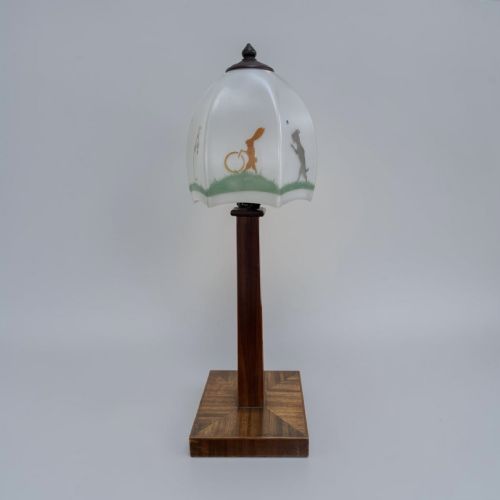
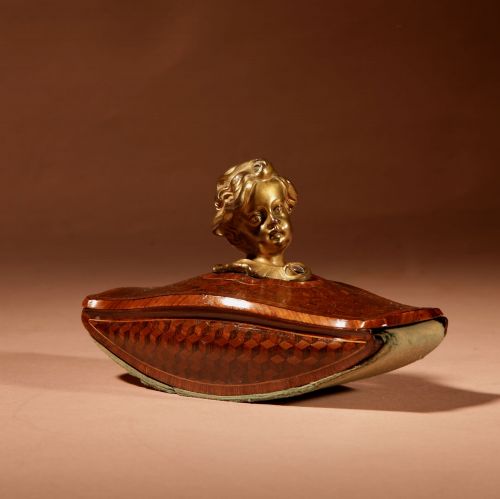
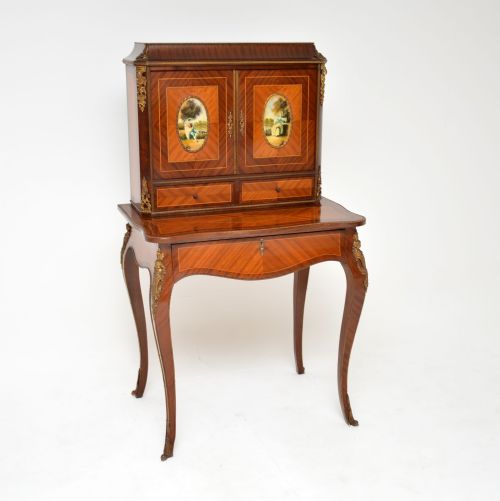
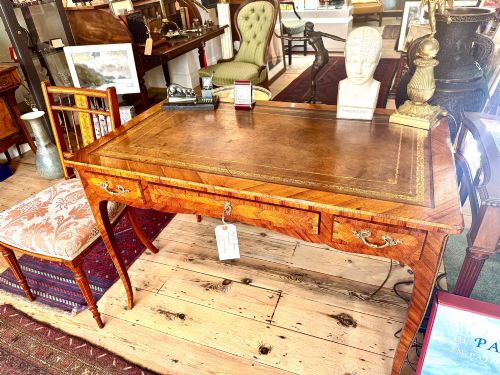
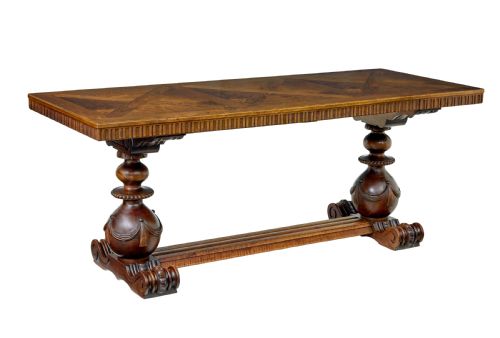


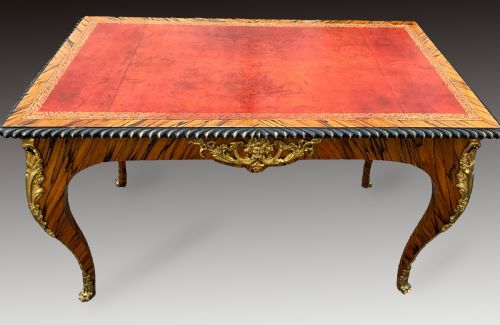

Vintage Parquetry Desk
A vintage parquetry desk brings geometric woodcraft and continental elegance directly to your study.
Vintage Parquetry Desk
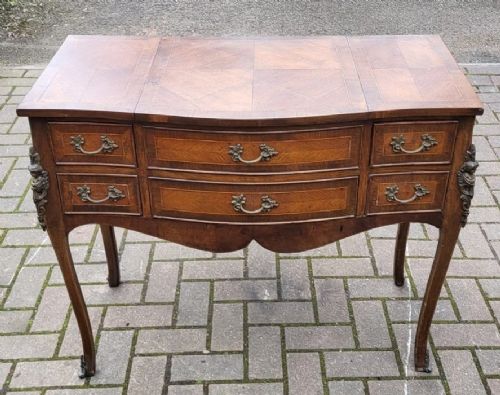
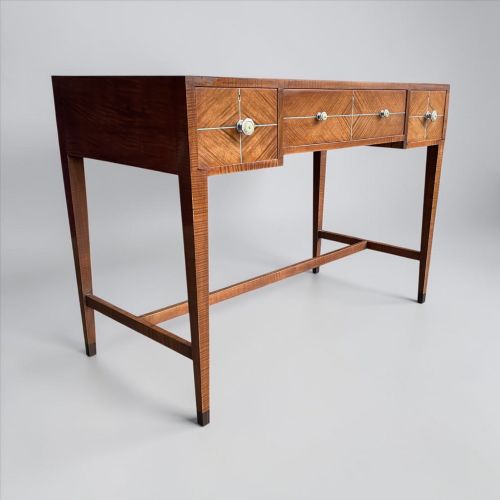
A vintage parquetry desk combines functional writing space with meticulous geometric wood inlay, forming a distinctive surface pattern. You will frequently encounter nineteenth-century French examples influenced by Louis XV and Louis XVI styles, alongside Art Deco iterations from the twentieth century.
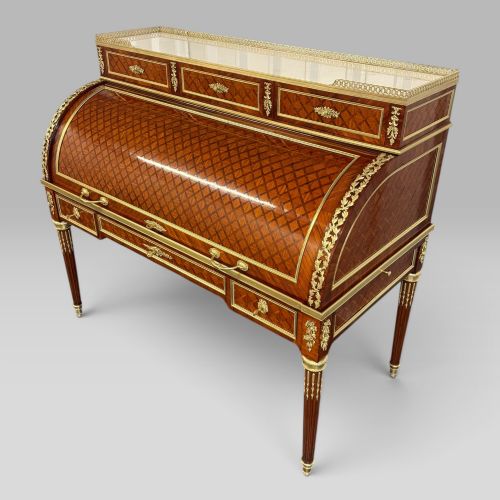
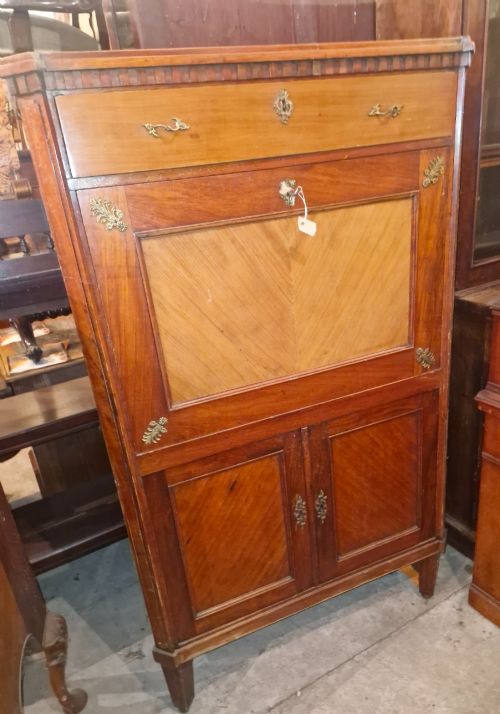
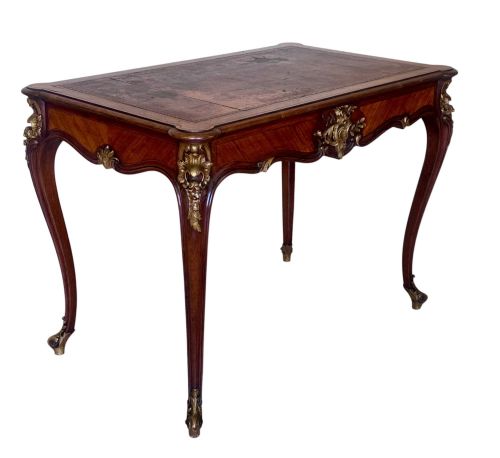
The category encompasses various forms designed for correspondence and paperwork, including bureau plat writing tables, cylinder desks, and fall-front escritoires. These pieces typically originate from continental European workshops and British makers working in traditional revival idioms.
Makers utilised rich hardwoods and intricate veneers to create surfaces that catch the light from multiple angles. Selecting such a desk means welcoming centuries of cabinet-making tradition into a modern interior.
Materials and Construction
Cabinet-makers constructed these desks using sturdy foundational timbers such as oak or walnut, upon which they applied elaborate geometric veneers. Kingwood, satinwood, tulipwood, and rosewood provided contrasting natural tones essential for crisp geometric patterns.
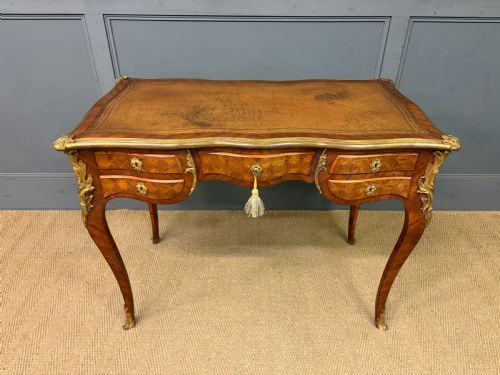
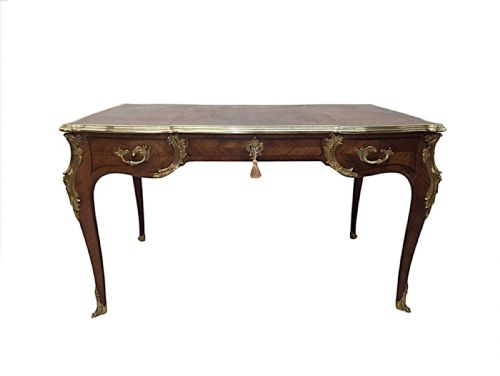
Gilt bronze and ormolu mounts were frequently cast and applied to corners, legs, and drawer edges to accentuate the contours of the timber. Writing surfaces were routinely inset with fitted leather panels, often bordered by subtle blind tooling.
Marquetry and parquetry techniques demanded immense precision, requiring artisans to hand-cut small wooden tesserae and fit them snugly onto a solid carcase. This meticulous method ensured the patterned surfaces remained stable despite seasonal humidity changes.
Vintage Parquetry Desk Retail Price Guide 2026
Typical asking prices for vintage parquetry desk among the pieces listed under this phrase on Sellingantiques today, from the lower quarter to the upper quarter. They describe what is for sale here now, not the wider market.
Materials appearing across current selections include kingwood, ormolu, satinwood, and original leather writing surfaces.
Defining Quality
The standard of a vintage parquetry desk rests primarily on the complexity and precision of the geometric wood arrangement. Superior examples demonstrate seamless alignment where individual veneer tiles meet, with no visible gaps or awkward filler.
The choice of secondary woods and the quality of the cast ormolu mounts indicate workshop pedigree. Finely chased bronze mounts and substantial hardwood drawer linings signal higher execution than pressed brass sheeting and softwood frames.
Originality of components, including leather inserts and hardware, elevates a piece significantly. Desks retaining their patinated finish and authentic structural integrity command greater respect among collectors.
Bath Cabinet Makers·CH. Jeanselme and Co·Maurice Dufrene·Maples
The Vintage Parquetry Desk Glossary
- Parquetry
- A geometric mosaic of wood veneers laid down in repeating patterns such as cubes, chevrons, or triangles. This technique transforms a simple writing surface into a decorative centrepiece.
- Ormolu
- Gilded bronze ornamentation applied to furniture edges and mounts during the eighteenth and nineteenth centuries. It provides a bright metallic contrast against dark exotic woods.
- Bureau Plat
- A freestanding double-sided writing table featuring drawers across the frieze, developed in France. These tables are finished on all sides to allow placement in the middle of a room.
- Kingwood
- A dense, heavy Brazilian timber featuring rich dark brown colouring with vivid golden or violet streaks. It was a favourite material for fine French cabinet-makers.
- Escritoire
- A tall writing cabinet, often incorporating a fall-front writing flap that conceals smaller drawers and pigeonholes. These pieces maximise vertical storage while offering a dedicated workspace.
Vintage Parquetry Desk: Frequently Asked Questions
How do I clean a parquetry surface?
Dust the geometric top regularly with a soft, dry lint-free cloth to prevent grit accumulation.
Apply a microcrystalline wax sparingly once or twice a year to nourish the timber and protect the old polish.
Can I use a vintage desk daily?
These desks were built for writing and administrative work, so they handle normal daily use comfortably.
Protect the antique leather top with a blotter when writing to prevent accidental ink stains or pressure indentations.
What is the difference between marquetry and parquetry?
Parquetry strictly uses geometric tiles to form repeating patterns like squares, diamonds, and cubes.
Marquetry employs varied veneers to create pictorial scenes, foliage, or floral arrangements across the wood surface.
Where should I place my desk?
Freestanding bureau plat designs look best positioned in the middle of a study where all sides remain visible.
Keep wooden furniture away from direct radiator heat and strong sunlight to prevent veneer cracking and fading.