
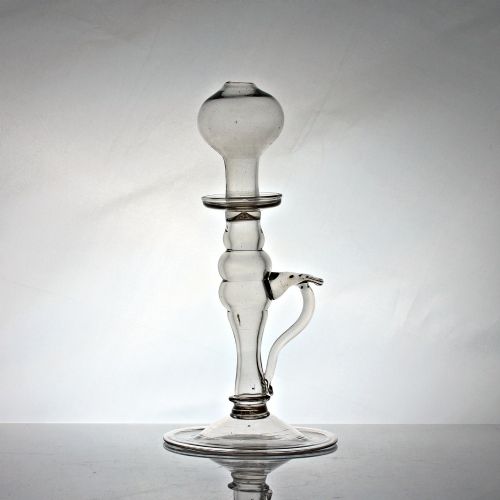
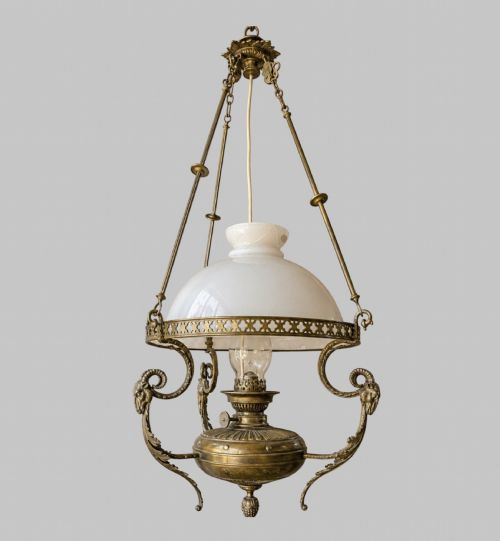


Vintage Paraffin Lantern
These vintage paraffin lantern pieces offer practical domestic utility and industrial history, bringing authentic period illumination into modern spaces.
Vintage Paraffin Lantern
When you search for a vintage paraffin lantern, you encounter domestic oil lamps, hanging fixtures, and railway signals spanning from the eighteenth century through to the mid-twentieth century. The pieces recorded here predominantly comprise Victorian and Edwardian household oil lamps alongside industrial railway examples from the nineteen thirties and forties.
Domestic versions range from tall glass vessels to heavy brass table lamps fitted with burners by makers such as Hinks, whilst railway and signal variants utilise painted steel and clear glass for robust outdoor service.
How they were made
Construction relies heavily on cast brass, blown glass, milk glass, and painted steel, combined to create durable lighting vessels for both parlour and railway use. Metal components are cast or spun, whilst fonts utilise coloured lead glass and ceramic bodies.
Working mechanisms incorporate specialised burners like the Hinks patent, alongside applied handles, mounting brackets, and structural elements designed to withstand daily handling and heat.
Materials recorded on this page include lead glass, milk glass, ceramic, painted steel, and heavy brass.
What varies in quality
Quality rests in the weight of the metal casting, the clarity and colour depth of the glass font, and the presence of original branded burner mechanisms. Heavy brass bases and intact applied handles distinguish superior domestic examples from standard utility items.
Industrial railway pieces derive their standing from original painted finishes, clear maker markings, and complete bracket hardware rather than domestic ornamentation.
Eli Griffiths And Sons·Hinks
The Vintage Paraffin Lantern Glossary
- Font
- The reservoir that holds the paraffin oil before it reaches the burner. It is frequently made of coloured glass, ceramic, or brass.
- Burner
- The mechanical assembly sitting atop the font that controls the wick and flame. Famous examples include the Hinks mechanism.
- Paraffin
- A petroleum-derived fuel used to power these lamps for illumination. It requires a clean cotton wick to burn correctly.
- Bracket
- A metal arm or wall fixture designed to support a hanging lamp. These allow the light source to project outward from a vertical surface.
Vintage Paraffin Lantern: Frequently Asked Questions
How do I use a vintage paraffin lantern?
Fill the glass or metal font with clean paraffin oil, allow the cotton wick to saturate thoroughly, and then light it carefully.
Keep the flame adjusted to a moderate height to prevent smoke and soot accumulation on the glass chimney.
Where were these lamps typically placed?
Domestic versions sat upon tables or hung from ceilings and wall brackets in Victorian and Edwardian parlours.
Railway variants served on locomotives and signal posts for British transport networks during the early twentieth century.
How do I identify a Victorian oil lamp?
Victorian pieces frequently feature heavy brass construction, decorative ceramic or blue glass fonts, and marked brass burners.
Stylistic cues often align with the broader aesthetic movements of the late nineteenth century.
Are railway lamps different from domestic ones?
Railway lamps utilise robust painted steel and heavy glass lenses built to withstand harsh outdoor weather and constant motion.
Domestic lamps prioritize decorative glass and polished brass suitable for indoor illumination.